耐

耐 U+8010, 耐
CJK UNIFIED IDEOGRAPH-8010
← 耏
[U+800F]
CJK Unified Ideographs 耑 →
[U+8011]

Translingual

Han character

耐 (Kangxi radical 126, 而+3, 9 strokes, cangjie input 一月木戈 (MBDI), four-corner 14200, composition ⿰而寸)

Derived characters

  • 𭱈, 𪹅

References

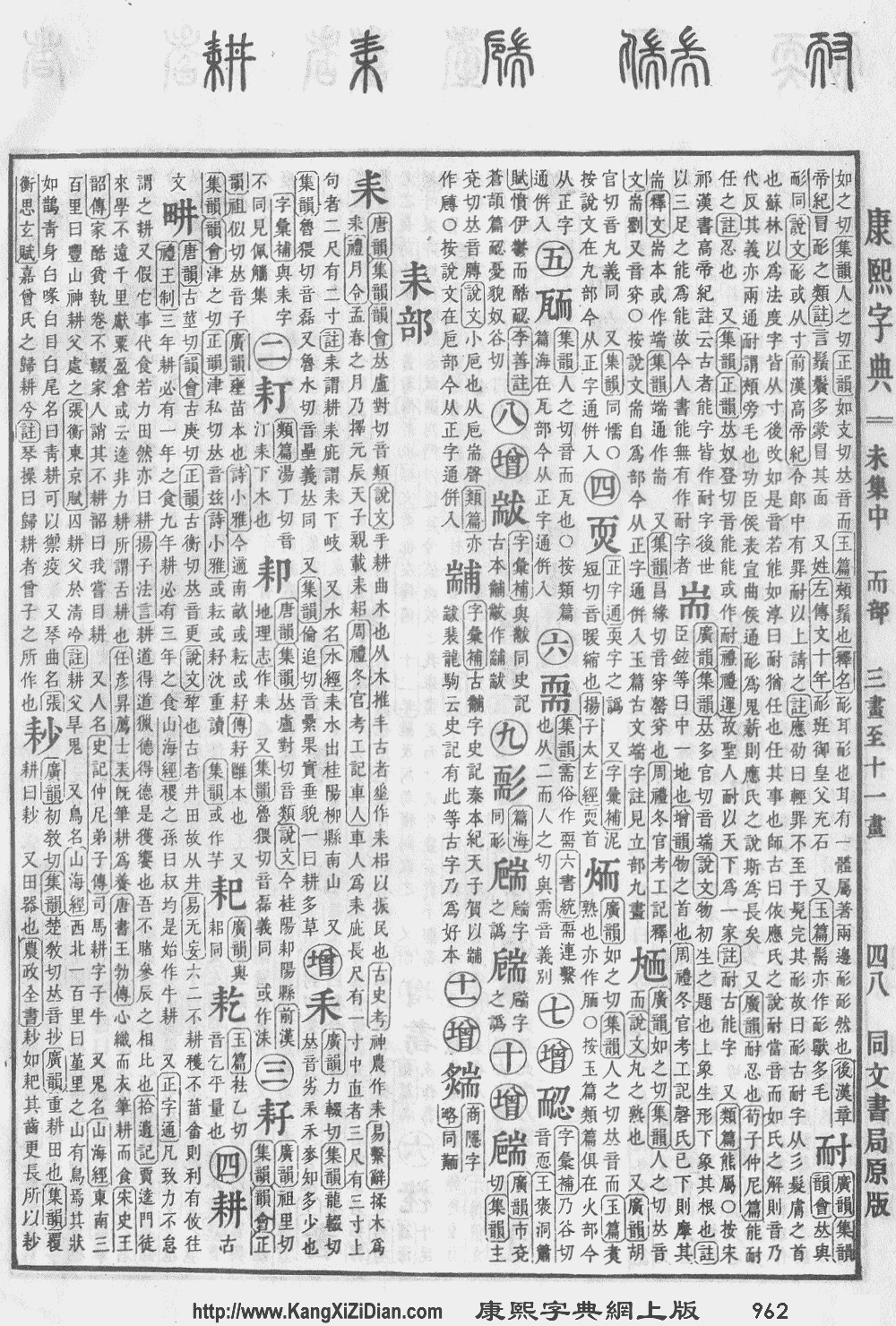
  • KangXi: page 962, character 1
  • Dai Kanwa Jiten: character 28879
  • Dae Jaweon: page 1409, character 24
  • Hanyu Da Zidian (first edition): volume 4, page 2811, character 3
  • Unihan data for U+8010

Chinese

simp. and trad.
耐
alternative forms 耏
𡬪
𦓎
𩈃
能 “to bear”

Glyph origin

Phono-semantic compound (形聲, OC *nɯːs) : phonetic 而 (OC *njɯ) + semantic 寸.

Etymology 1

STEDT compares this to 難 (OC *n̥ʰaːn, *naːns) and Proto-Tibeto-Burman *na-n/t (“ill, pain, sore, ache, difficult, evil spirit”)

Pronunciation


Rime
Character 耐
Reading # 1/1
Initial (聲) 泥 (8)
Final (韻) 咍 (41)
Tone (調) Departing (H)
Openness (開合) Open
Division (等) I
Fanqie 奴代切
Baxter nojH
Reconstructions
Zhengzhang
Shangfang
/nʌiH/
Pan
Wuyun
/nəiH/
Shao
Rongfen
/nɒiH/
Edwin
Pulleyblank
/nəjH/
Li
Rong
/nᴀiH/
Wang
Li
/nɒiH/
Bernard
Karlgren
/nɑ̆iH/
Expected
Mandarin
Reflex
nài
Expected
Cantonese
Reflex
noi6
Baxter–Sagart system 1.1 (2014)
Character 耐
Reading # 1/1
Modern
Beijing
(Pinyin)
nài
Middle
Chinese
‹ nojH ›
Old
Chinese
/*nˁə-s/
English endure

Notes for Old Chinese notations in the Baxter–Sagart system:

* Parentheses "()" indicate uncertain presence;
* Square brackets "[]" indicate uncertain identity, e.g. *[t] as coda may in fact be *-t or *-p;
* Angle brackets "<>" indicate infix;
* Hyphen "-" indicates morpheme boundary;

* Period "." indicates syllable boundary.
Zhengzhang system (2003)
Character 耐
Reading # 1/1
No. 2718
Phonetic
component
而
Rime
group
之
Rime
subdivision
0
Corresponding
MC rime
耐
Old
Chinese
/*nɯːs/
Notes 說文同耏

Definitions

耐

  1. to be durable; to be able to withstand
    耐火  ―  nàihuǒ  ―  fire resistant
  2. to bear; to endure
    吃苦耐勞/吃苦耐劳  ―  chīkǔnàiláo  ―  (literally) to consume bitterness and to endure hardship
  3. (Cantonese, of time) long; taking a long time to happen
    我已經等咗好耐呀! [Cantonese, trad.]
    我已经等咗好耐呀! [Cantonese, simp.]
    ngo5 ji5 ging1 dang2 zo2 hou2 noi6 aa3! [Jyutping]
    I've already waited forever!
    你去咗咁死耐先買咗一件衫? [Cantonese, trad.]
    你去咗咁死耐先买咗一件衫? [Cantonese, simp.]
    nei5 heoi3 zo2 gam3 sei2 noi6 sin1 maai5 zo2 jat1 gin6 saam1? [Jyutping]
    You were gone for so long and only bought one shirt?
  4. (literary) to be worth; to merit; to deserve; to be worthy of
  5. (literary) suitable; appropriate
  6. (literary) an ancient punishment involving shaving one's beard and temples
Synonyms
  • (to bear):
  • (long):
  • (to be worth):
  • 足 (zú) (literary, or in compounds)
  • 值當/值当 (zhídàng) (colloquial, Mandarin, including Jin)
  • (suitable):

Compounds

Pronunciation


Definitions

耐

  1. Alternative form of 能 (néng, “to be able to”).

Etymology 3

For pronunciation and definitions of 耐 – see 倷 (“you; you; etc.”).
(This character, 耐, is a variant form of 倷.)

Japanese

Kanji

耐

(common “Jōyō” kanji)

  1. to withstand

Readings

Korean

Hanja

耐 (eumhun 견딜 내 (gyeondil nae))

  1. Hanja form? of 내 (“endure, bear”).
  2. Hanja form? of 내 (“resist”).
  3. Hanja form? of 내 (“patient”).

Vietnamese

Han character

耐: Hán Việt readings: nại[1]
耐: Nôm readings: nại[1][2], nề[1][2], nài[2]

  1. This term needs a translation to English. Please help out and add a translation, then remove the text {{rfdef}}.

References

  1. Trần (2004).
  2. Hồ (1976).
This article is issued from Wiktionary. The text is licensed under Creative Commons - Attribution - Sharealike. Additional terms may apply for the media files.