僅

See also: 仅
僅 U+50C5, 僅
CJK UNIFIED IDEOGRAPH-50C5
← 僄
[U+50C4]
CJK Unified Ideographs 僆 →
[U+50C6]

Translingual

Alternative forms

Note that in Japanese, the official version of the character is written ⿰亻堇 (the component on the right, 堇 is not simplified to 𦰌). However, handwritten form of ⿰亻𦰌 is allowed.

Han character

僅 (Kangxi radical 9, 人+11, 13 strokes, cangjie input 人廿中一 (OTLM), four-corner 24214, composition ⿰亻堇)

References

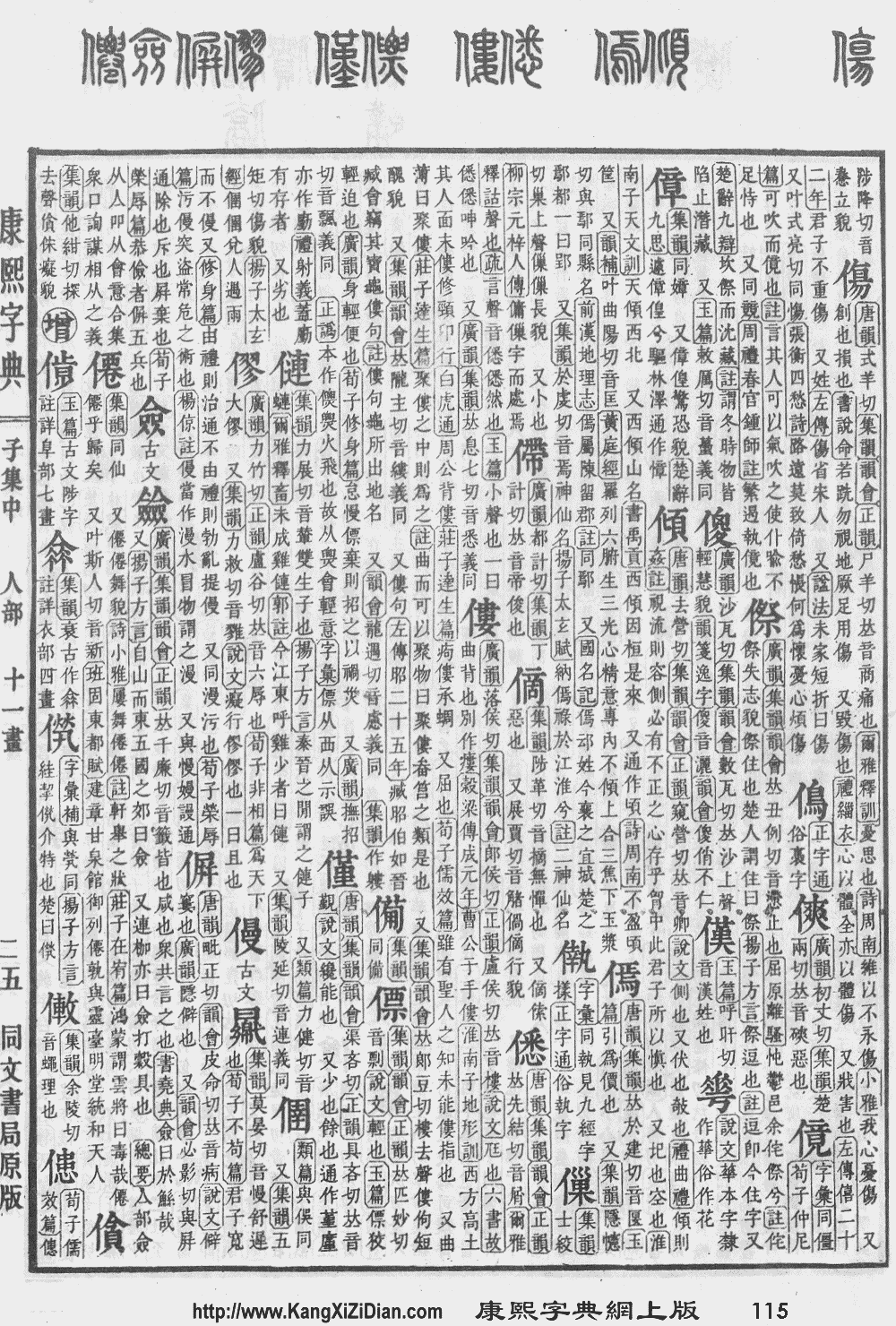
  • KangXi: page 115, character 20
  • Dai Kanwa Jiten: character 1048
  • Dae Jaweon: page 246, character 8
  • Hanyu Da Zidian (first edition): volume 1, page 208, character 2
  • Unihan data for U+50C5

Chinese

trad. 僅
simp. 仅*
alternative forms 堇 ancient

Glyph origin

Historical forms of the character 僅


References:

Mostly from Richard Sears' Chinese Etymology site (authorisation),
which in turn draws data from various collections of ancient forms of Chinese characters, including:

  • Shuowen Jiezi (small seal),
  • Jinwen Bian (bronze inscriptions),
  • Liushutong (Liushutong characters) and
  • Yinxu Jiaguwen Bian (oracle bone script).

Phono-semantic compound (形聲, OC *ɡrɯns) : semantic 人 + phonetic 堇 (OC *ɡrɯn, *kɯnʔ).

Pronunciation 1


Note: gan6 - rare variant.

Rime
Character 僅
Reading # 1/1
Initial (聲) 群 (30)
Final (韻) 眞 (44)
Tone (調) Departing (H)
Openness (開合) Open
Division (等) III
Fanqie 渠遴切
Reconstructions
Zhengzhang
Shangfang
/ɡˠiɪnH/
Pan
Wuyun
/ɡᵚinH/
Shao
Rongfen
/ɡienH/
Edwin
Pulleyblank
/gjinH/
Li
Rong
/ɡjĕnH/
Wang
Li
/ɡǐĕnH/
Bernard
Karlgren
/gi̯ĕnH/
Expected
Mandarin
Reflex
jìn
Expected
Cantonese
Reflex
gan6
Baxter–Sagart system 1.1 (2014)
Character 僅
Reading # 1/1
Modern
Beijing
(Pinyin)
jìn
Middle
Chinese
‹ ginH ›
Old
Chinese
/*[ɡ]rə[r]-s/
English barely

Notes for Old Chinese notations in the Baxter–Sagart system:

* Parentheses "()" indicate uncertain presence;
* Square brackets "[]" indicate uncertain identity, e.g. *[t] as coda may in fact be *-t or *-p;
* Angle brackets "<>" indicate infix;
* Hyphen "-" indicates morpheme boundary;

* Period "." indicates syllable boundary.
Zhengzhang system (2003)
Character 僅
Reading # 1/1
No. 6734
Phonetic
component
堇
Rime
group
文
Rime
subdivision
1
Corresponding
MC rime
僅
Old
Chinese
/*ɡrɯns/

Definitions

僅

  1. only; merely
  2. a surname

Compounds

  • 僅可/仅可
  • 僅夠/仅够
  • 僅容旋馬/仅容旋马
  • 僅有/仅有 (jǐnyǒu)

Pronunciation 2


Rime
Character 僅
Reading # 1/1
Initial (聲) 群 (30)
Final (韻) 眞 (44)
Tone (調) Departing (H)
Openness (開合) Open
Division (等) III
Fanqie 渠遴切
Reconstructions
Zhengzhang
Shangfang
/ɡˠiɪnH/
Pan
Wuyun
/ɡᵚinH/
Shao
Rongfen
/ɡienH/
Edwin
Pulleyblank
/gjinH/
Li
Rong
/ɡjĕnH/
Wang
Li
/ɡǐĕnH/
Bernard
Karlgren
/gi̯ĕnH/
Expected
Mandarin
Reflex
jìn
Expected
Cantonese
Reflex
gan6
Baxter–Sagart system 1.1 (2014)
Character 僅
Reading # 1/1
Modern
Beijing
(Pinyin)
jìn
Middle
Chinese
‹ ginH ›
Old
Chinese
/*[ɡ]rə[r]-s/
English barely

Notes for Old Chinese notations in the Baxter–Sagart system:

* Parentheses "()" indicate uncertain presence;
* Square brackets "[]" indicate uncertain identity, e.g. *[t] as coda may in fact be *-t or *-p;
* Angle brackets "<>" indicate infix;
* Hyphen "-" indicates morpheme boundary;

* Period "." indicates syllable boundary.
Zhengzhang system (2003)
Character 僅
Reading # 1/1
No. 6734
Phonetic
component
堇
Rime
group
文
Rime
subdivision
1
Corresponding
MC rime
僅
Old
Chinese
/*ɡrɯns/

Definitions

僅

  1. (literary) nearly; almost

References

Japanese

Kanji

僅

(common “Jōyō” kanji)

  1. merely, small quantity

Readings

Compounds

Korean

Hanja

僅 (eumhun 겨우 근 (gyeou geun))

  1. Hanja form? of 근 (“only, merely, solely, just”).

Vietnamese

Han character

僅: Hán Nôm readings: cẩn, cận, cấn, cẫn

  1. This term needs a translation to English. Please help out and add a translation, then remove the text {{rfdef}}.
This article is issued from Wiktionary. The text is licensed under Creative Commons - Attribution - Sharealike. Additional terms may apply for the media files.