劃

See also: 划
劃 U+5283, 劃
CJK UNIFIED IDEOGRAPH-5283
← 劂
[U+5282]
CJK Unified Ideographs 劄 →
[U+5284]

Translingual

Han character

劃 (Kangxi radical 18, 刀+12, 14 strokes, cangjie input 中一中弓 (LMLN), four-corner 52100, composition ⿰畫刂)

References

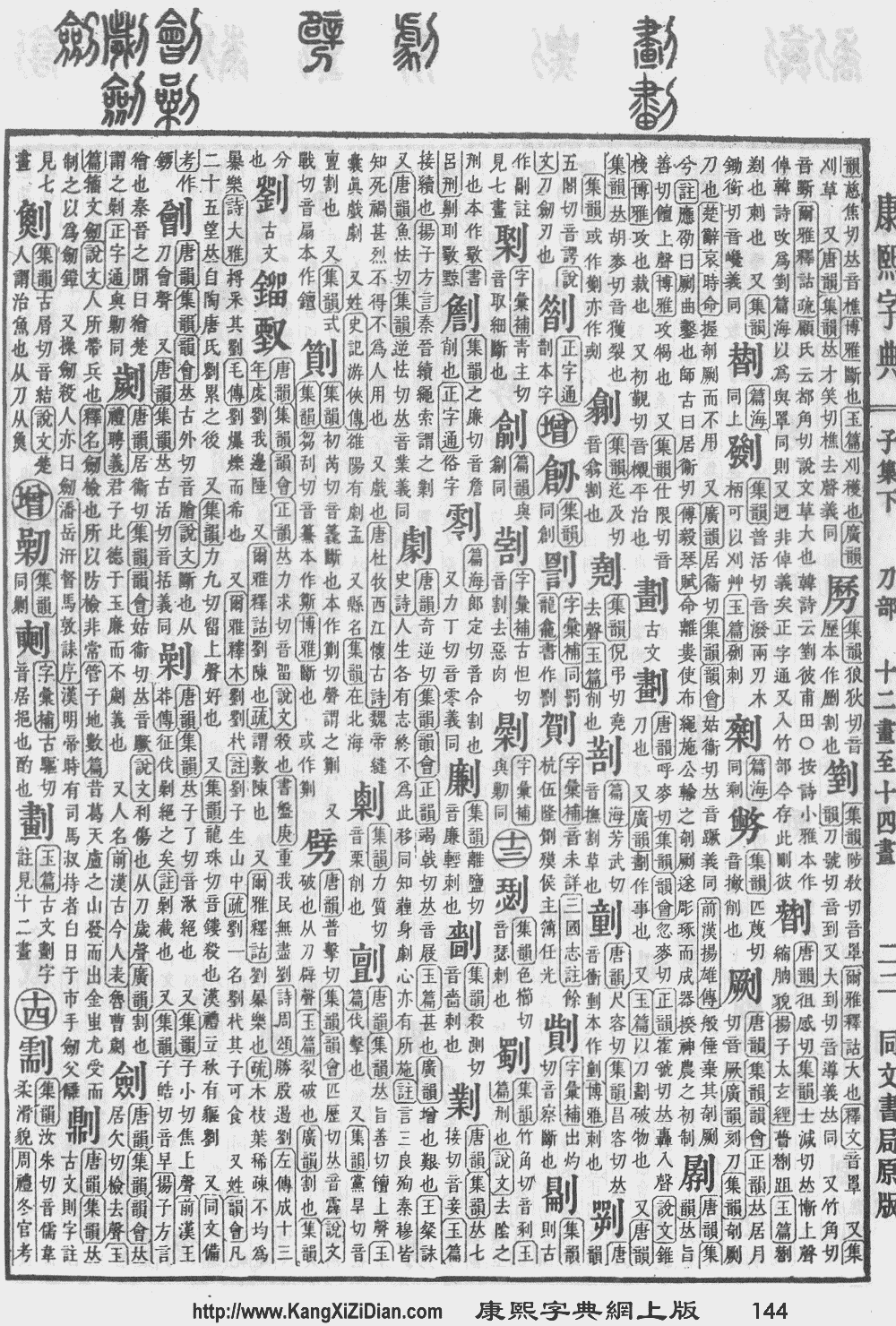
  • KangXi: page 144, character 10
  • Dai Kanwa Jiten: character 2193
  • Dae Jaweon: page 325, character 6
  • Hanyu Da Zidian (first edition): volume 1, page 356, character 8
  • Unihan data for U+5283

Chinese

trad. 劃
simp. 划*
alternative forms 㓰
𠜻
𠟱
𠟷

Glyph origin

Phono-semantic compound (形聲, OC *qʰʷreːɡ, *ɡʷreːɡ) : phonetic 畫 (OC *ɡʷreːɡs, *ɡʷreːɡ) + semantic 刂 (“knife”).

Pronunciation 1


Note:
  • huá - “to rub with a sharp thing”;
  • huà - “to mark off”.
Note:
  • oe̍h/u̍ih/ōa - vernacular;
  • hōa/hia̍k/he̍k/oa̍h - literary.

Rime
Character 劃 劃
Reading # 1/2 2/2
Initial (聲) 匣 (33) 曉 (32)
Final (韻) 耕 (120) 耕 (120)
Tone (調) Checked (Ø) Checked (Ø)
Openness (開合) Closed Closed
Division (等) II II
Fanqie 胡麥切 呼麥切
Baxter hweak xweak
Reconstructions
Zhengzhang
Shangfang
/ɦˠwɛk̚/ /hˠwɛk̚/
Pan
Wuyun
/ɦʷᵚæk̚/ /hʷᵚæk̚/
Shao
Rongfen
/ɣuɐk̚/ /xuɐk̚/
Edwin
Pulleyblank
/ɦwəɨjk̚/ /hwəɨjk̚/
Li
Rong
/ɣuɛk̚/ /xuɛk̚/
Wang
Li
/ɣwæk̚/ /xwæk̚/
Bernard
Karlgren
/ɣwæk̚/ /xwæk̚/
Expected
Mandarin
Reflex
huó huo
Expected
Cantonese
Reflex
wak6 fak1
Baxter–Sagart system 1.1 (2014)
Character 劃
Reading # 1/1
Modern
Beijing
(Pinyin)
huà
Middle
Chinese
‹ hwɛk ›
Old
Chinese
/*ɡʷˁrek/
English draw (v.)

Notes for Old Chinese notations in the Baxter–Sagart system:

* Parentheses "()" indicate uncertain presence;
* Square brackets "[]" indicate uncertain identity, e.g. *[t] as coda may in fact be *-t or *-p;
* Angle brackets "<>" indicate infix;
* Hyphen "-" indicates morpheme boundary;

* Period "." indicates syllable boundary.
Zhengzhang system (2003)
Character 劃 劃
Reading # 2/2 1/2
No. 5337 5334
Phonetic
component
畫 畫
Rime
group
錫 錫
Rime
subdivision
0 0
Corresponding
MC rime
獲 剨
Old
Chinese
/*ɡʷreːɡ/ /*qʰʷreːɡ/

Definitions

劃

  1. to divide; to mark off
  2. to plan
  3. to scratch; to cut (the surface)
  4. to strike (a match); to wipe
  5. Alternative form of 畫/画 (“stroke (line drawn with a writing implement)”).
  6. Used in 劃然/划然.

Compounds

References

Pronunciation 2


Definitions

劃

  1. Only used in 㓦劃/㓦划 (bāihuai).

Japanese

Kanji

劃

(uncommon “Hyōgai” kanji)

Readings

  • On (unclassified): かく (kaku)
  • Kun: くぎる (kugiru); わかつ (wakatsu)

Compounds

Etymology

Kanji in this term
劃
かく
Hyōgaiji
kan’on
For pronunciation and definitions of 劃 – see the following entry.
【画かく】2
[noun] delimiter, demarcation, stopping point
[noun] plan, strategy
(This term, 劃, is an alternative (dated) spelling of the above term.)

Usage notes

In modern Japanese, 劃 is mostly replaced by 画, due to the deprecation of non-tōyō kanji caused by the Japanese script reform.

Japanese terms with 劃 replaced by daiyōji 画

Korean

Etymology

From Middle Chinese 劃 (MC ɦˠwɛk̚).

Historical Readings
Dongguk Jeongun Reading
Dongguk Jeongun, 1448ᅘᅬᆨ〮 (Yale: hhwóyk)
Middle Korean
TextEumhun
Gloss (hun)Reading
Sinjeung Yuhap, 1576긋 (Yale: kus)획 (Yale: hwoyk)

Pronunciation

  • (SK Standard/Seoul) IPA(key): [ɸwe̞k̚] ~ [hø̞k̚]
  • Phonetic hangul: [훽/획]

Hanja

Wikisource 劃 (eumhun 그을 획 (geueul hoek))

  1. Hanja form? of 획 (“to carve; to set in stone”).
  2. Hanja form? of 획 (“to plan”).
  3. Hanja form? of 획 (“to draw a line; to mark”).

Compounds

References

  • 국제퇴계학회 대구경북지부 (國際退溪學會 大邱慶北支部) (2007). Digital Hanja Dictionary, 전자사전/電子字典.

Vietnamese

Han character

劃: Hán Nôm readings: vạch, hoạch, đạch, gạch, hoa

  1. This term needs a translation to English. Please help out and add a translation, then remove the text {{rfdef}}.
This article is issued from Wiktionary. The text is licensed under Creative Commons - Attribution - Sharealike. Additional terms may apply for the media files.