呭
| ||||||||
Translingual
Han character
呭 (Kangxi radical 30, 口+5, 8 strokes, cangjie input 口心廿 (RPT), composition ⿰口世)
References
- KangXi: page 182, character 6
- Dai Kanwa Jiten: character 3449
- Dae Jaweon: page 401, character 8
- Hanyu Da Zidian (first edition): volume 1, page 598, character 2
- Unihan data for U+546D
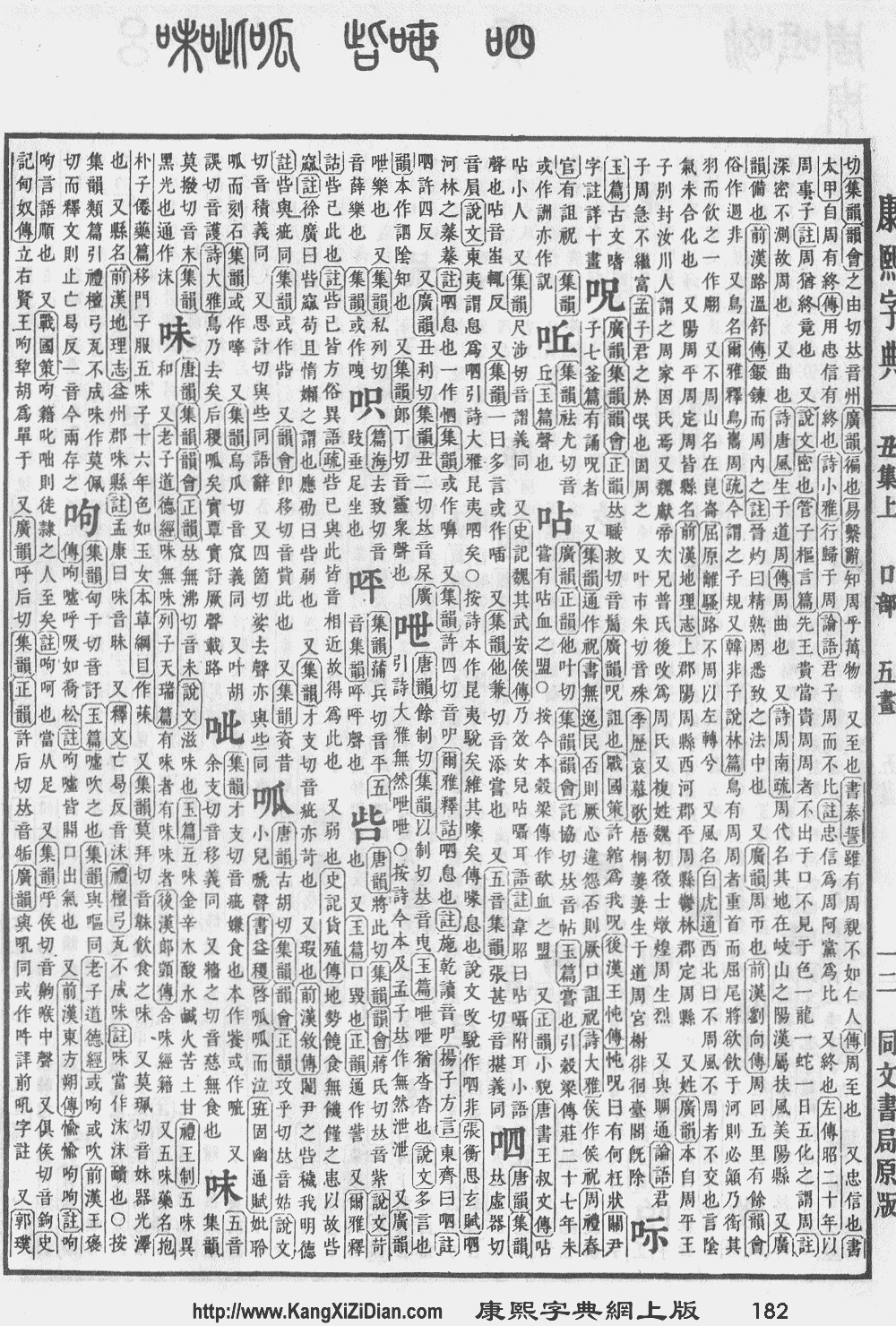
Chinese
| simp. and trad. |
呭 | |
|---|---|---|
Glyph origin
Characters in the same phonetic series (世) (Zhengzhang, 2003)
| Old Chinese | |
|---|---|
| 貰 | *ɦljebs, *hljebs |
| 跇 | *l̥ʰebs, *lebs |
| 迣 | *ʔljebs |
| 世 | *hljebs |
| 泄 | *lebs, *sled |
| 枻 | *lebs |
| 詍 | *lebs |
| 靾 | *lebs |
| 袣 | *lebs |
| 抴 | *lebs, *led |
| 呭 | *lebs |
| 勩 | *lebs, *libs |
| 屜 | *l̥ʰeːbs |
| 鰈 | *l̥ʰaːb, *l'eːb |
| 渫 | *zreːb, *sled |
| 煠 | *zreːb, *l̥ʰeb, *leb |
| 喋 | *rlaːb, *ʔl'eːb, *l'eːb |
| 鞢 | *rlaːb, *sleːb |
| 殜 | *l'eb, *leb, *lab |
| 葉 | *hljeb, *leb |
| 弽 | *hljeb, *hleːb |
| 韘 | *hljeb, *sleːb |
| 枼 | *leb |
| 楪 | *leb |
| 揲 | *leb, *l'eːb, *ɦljed |
| 鍱 | *leb |
| 偞 | *leb, *hleːb |
| 蝶 | *l̥ʰeːb, *l'eːb |
| 牒 | *l'eːb |
| 蹀 | *l'eːb |
| 諜 | *l'eːb |
| 堞 | *l'eːb |
| 牃 | *l'eːb |
| 褋 | *l'eːb |
| 惵 | *l'eːb |
| 碟 | *l'eːb |
| 屧 | *sleːb |
| 屟 | *sleːb |
| 紲 | *sled |
| 齛 | *sled |
| 疶 | *sled |
| 緤 | *sled |
| 媟 | *sled |
Pronunciation
Definitions
呭
- This term needs a translation to English. Please help out and add a translation, then remove the text
{{rfdef}}.
Japanese
Kanji
呭
- This term needs a translation to English. Please help out and add a translation, then remove the text
{{rfdef}}.
Korean
Hanja
呭 (eum 예 (ye))
- This term needs a translation to English. Please help out and add a translation, then remove the text
{{rfdef}}.
Vietnamese
This article is issued from Wiktionary. The text is licensed under Creative Commons - Attribution - Sharealike. Additional terms may apply for the media files.