啼
| ||||||||
Translingual
Han character
啼 (Kangxi radical 30, 口+9, 12 strokes, cangjie input 口卜月月 (RYBB), four-corner 60027, composition ⿰口帝)
Derived characters
- 𮟍
References
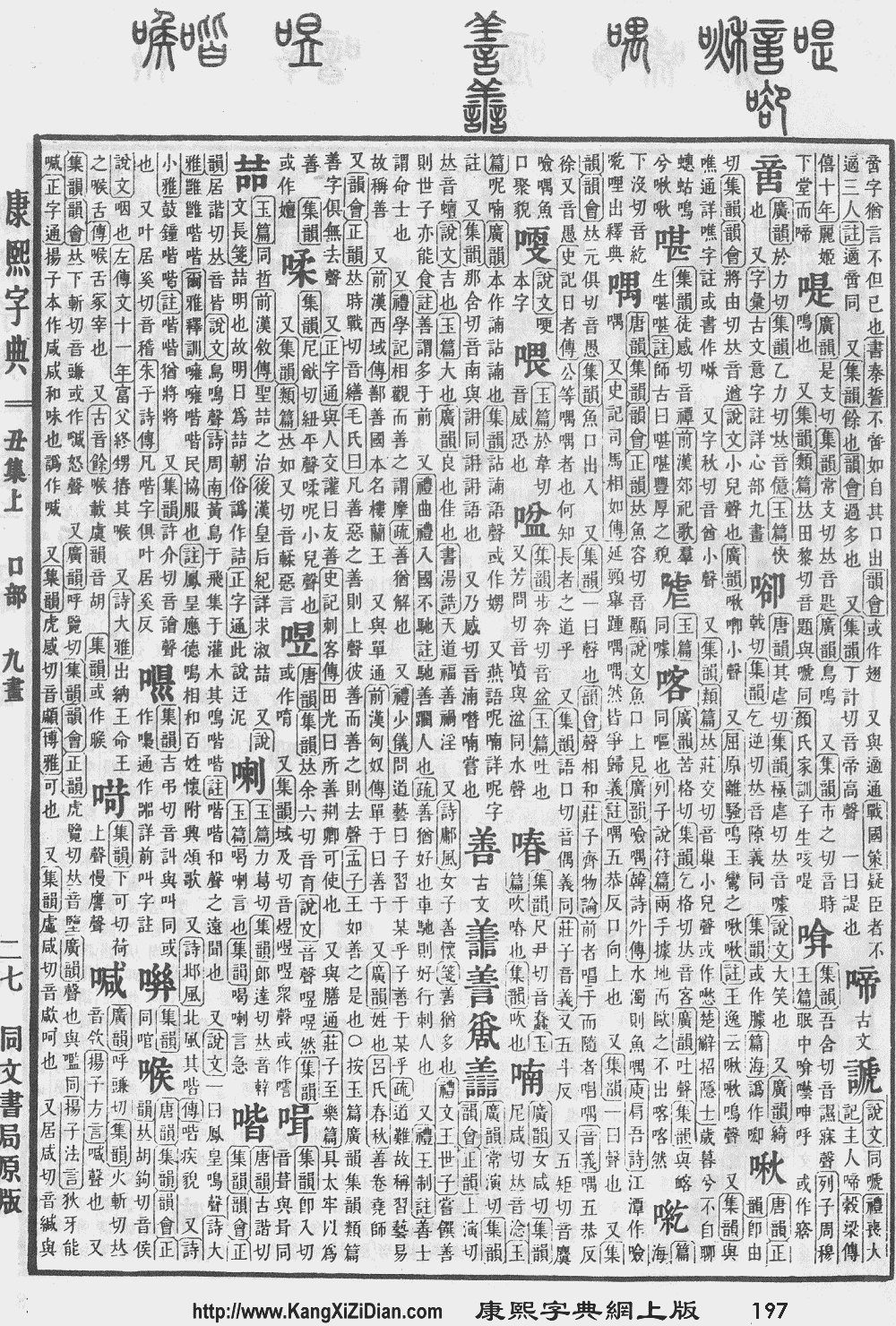
- KangXi: page 197, character 1
- Dai Kanwa Jiten: character 3887
- Dae Jaweon: page 418, character 22
- Hanyu Da Zidian (first edition): volume 1, page 659, character 10
- Unihan data for U+557C
Chinese
| simp. and trad. |
啼 | |
|---|---|---|
| alternative forms | ||
Glyph origin
Characters in the same phonetic series (帝) (Zhengzhang, 2003)
| Old Chinese | |
|---|---|
| 膪 | *rtaːɡs, *rteːɡs |
| 揥 | *tʰeds, *teː |
| 腣 | *teː, *teːɡs |
| 諦 | *teːɡs |
| 偙 | *teːɡs |
| 渧 | *teːɡs |
| 帝 | *teːɡs |
| 楴 | *tʰeːɡs |
| 啼 | *deː |
| 蹄 | *deː |
| 締 | *deː, *deːɡs |
| 崹 | *deː |
| 鶙 | *deː |
| 禘 | *deːɡs |
| 啻 | *hljeɡs |
| 嫡 | *rteɡ, *teːɡ |
| 摘 | *rteːɡ, *tʰeːɡ |
| 謫 | *rteːɡ |
| 讁 | *rteːɡ |
| 擿 | *deɡ |
| 蹢 | *deɡ, *teːɡ |
| 適 | *tjeɡ, *hljeɡ, *teːɡ |
| 啇 | *teːɡ |
| 滴 | *teːɡ |
| 鏑 | *teːɡ |
| 甋 | *teːɡ |
| 樀 | *teːɡ, *deːɡ |
| 敵 | *deːɡ |
Phono-semantic compound (形聲, OC *deː) : semantic 口 (“mouth”) + phonetic 帝 (OC *teːɡs).
Pronunciation
Definitions
啼
- ⁜ to cry loudly; to wail
- 啼哭 ― tíkū ― to cry loudly; to wail
- 哭哭啼啼 ― kūkū-títí ― to cry continuously
- 啼笑皆非 ― tíxiàojiēfēi ― to be so ridiculous that it is both saddening and provokes laughter at the same time
- 呼天而啼,盡哀而止。 [Classical Chinese, trad.]
- From: Lü Buwei, Master Lü's Spring and Autumn Annals, 239 BCE
- Hūtiān ér tí, jìn'āi ér zhǐ. [Pinyin]
- (please add an English translation of this example)
呼天而啼,尽哀而止。 [Classical Chinese, simp.]
- (dialectal, by extension) to cry; to weep
- ⁜ (of birds or beasts) to call; to cry; to howl
- a surname
Synonyms
- (to cry):
Synonyms of 啼
Dialectal synonyms of 哭 (“to cry; to weep”) [map]
Compounds
Derived terms from 啼
References
- “啼”, in 漢語多功能字庫 (Multi-function Chinese Character Database), 香港中文大學 (the Chinese University of Hong Kong), 2014–
Japanese
Korean
Hanja
啼 • (je) (hangeul 제, revised je, McCune–Reischauer che, Yale cey)
- This term needs a translation to English. Please help out and add a translation, then remove the text
{{rfdef}}.
Vietnamese
This article is issued from Wiktionary. The text is licensed under Creative Commons - Attribution - Sharealike. Additional terms may apply for the media files.