嫡
| ||||||||
Translingual
Han character
嫡 (Kangxi radical 38, 女+11, 14 strokes, cangjie input 女卜金月 (VYCB), four-corner 40427, composition ⿰女啇)
References
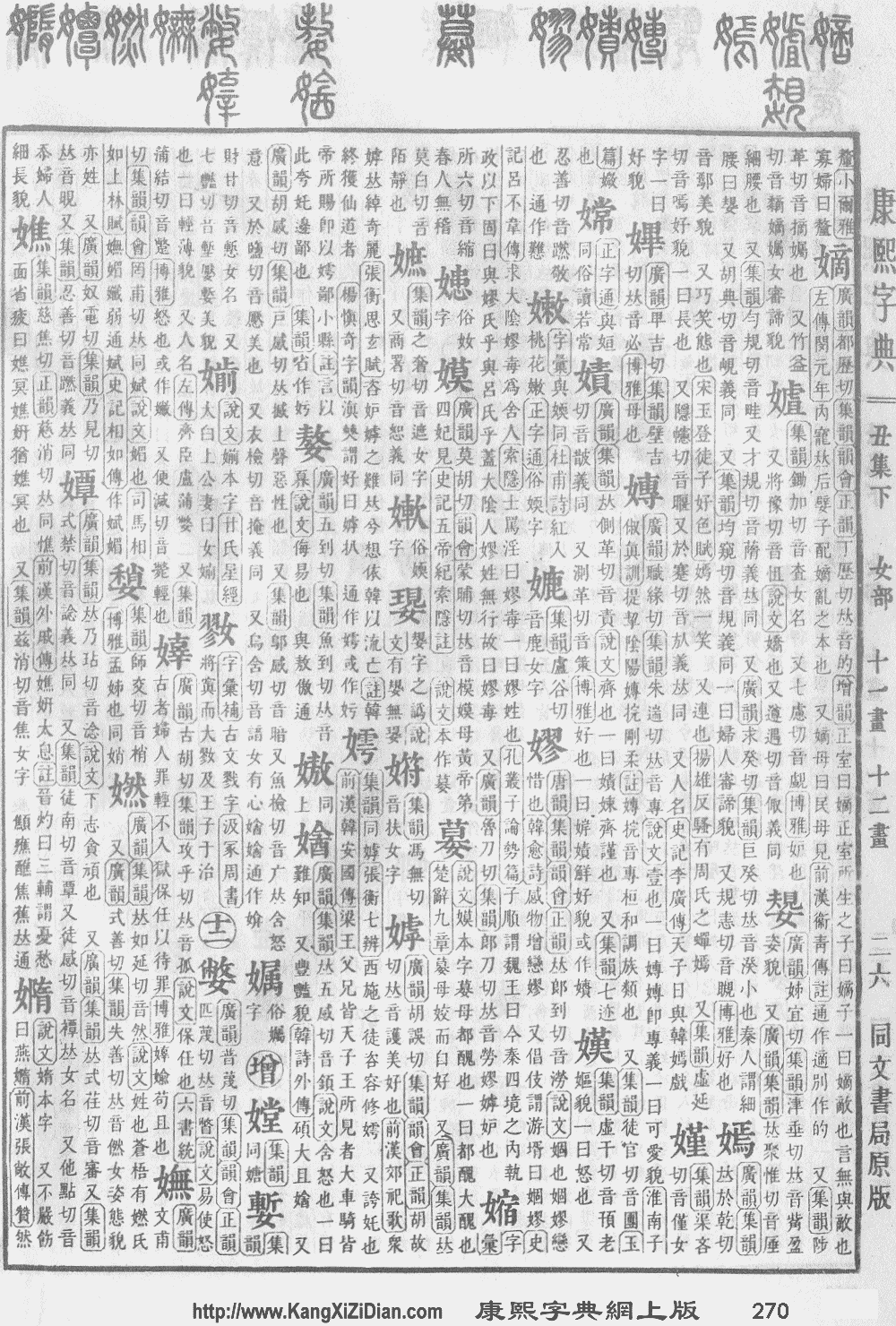
- KangXi: page 270, character 1
- Dai Kanwa Jiten: character 6656
- Dae Jaweon: page 537, character 27
- Hanyu Da Zidian (first edition): volume 2, page 1078, character 6
- Unihan data for U+5AE1
Chinese
| trad. | 嫡 | |
|---|---|---|
| simp. # | 嫡 | |
| alternative forms | 適/适 | |
Glyph origin
Characters in the same phonetic series (帝) (Zhengzhang, 2003)
| Old Chinese | |
|---|---|
| 膪 | *rtaːɡs, *rteːɡs |
| 揥 | *tʰeds, *teː |
| 腣 | *teː, *teːɡs |
| 諦 | *teːɡs |
| 偙 | *teːɡs |
| 渧 | *teːɡs |
| 帝 | *teːɡs |
| 楴 | *tʰeːɡs |
| 啼 | *deː |
| 蹄 | *deː |
| 締 | *deː, *deːɡs |
| 崹 | *deː |
| 鶙 | *deː |
| 禘 | *deːɡs |
| 啻 | *hljeɡs |
| 嫡 | *rteɡ, *teːɡ |
| 摘 | *rteːɡ, *tʰeːɡ |
| 謫 | *rteːɡ |
| 讁 | *rteːɡ |
| 擿 | *deɡ |
| 蹢 | *deɡ, *teːɡ |
| 適 | *tjeɡ, *hljeɡ, *teːɡ |
| 啇 | *teːɡ |
| 滴 | *teːɡ |
| 鏑 | *teːɡ |
| 甋 | *teːɡ |
| 樀 | *teːɡ, *deːɡ |
| 敵 | *deːɡ |
Pronunciation
Definitions
嫡
Japanese
Korean
Etymology
From Middle Chinese 嫡 (MC tek̚). Recorded as Middle Korean 뎍〮 (tyék) (Yale: tyek) in Hunmong Jahoe (訓蒙字會 / 훈몽자회), 1527.
Vietnamese
This article is issued from Wiktionary. The text is licensed under Creative Commons - Attribution - Sharealike. Additional terms may apply for the media files.