噏
| ||||||||
Translingual
Han character
噏 (Kangxi radical 30, 口+12, 15 strokes, cangjie input 口人口卜 (RORY), composition ⿰口翕)
References
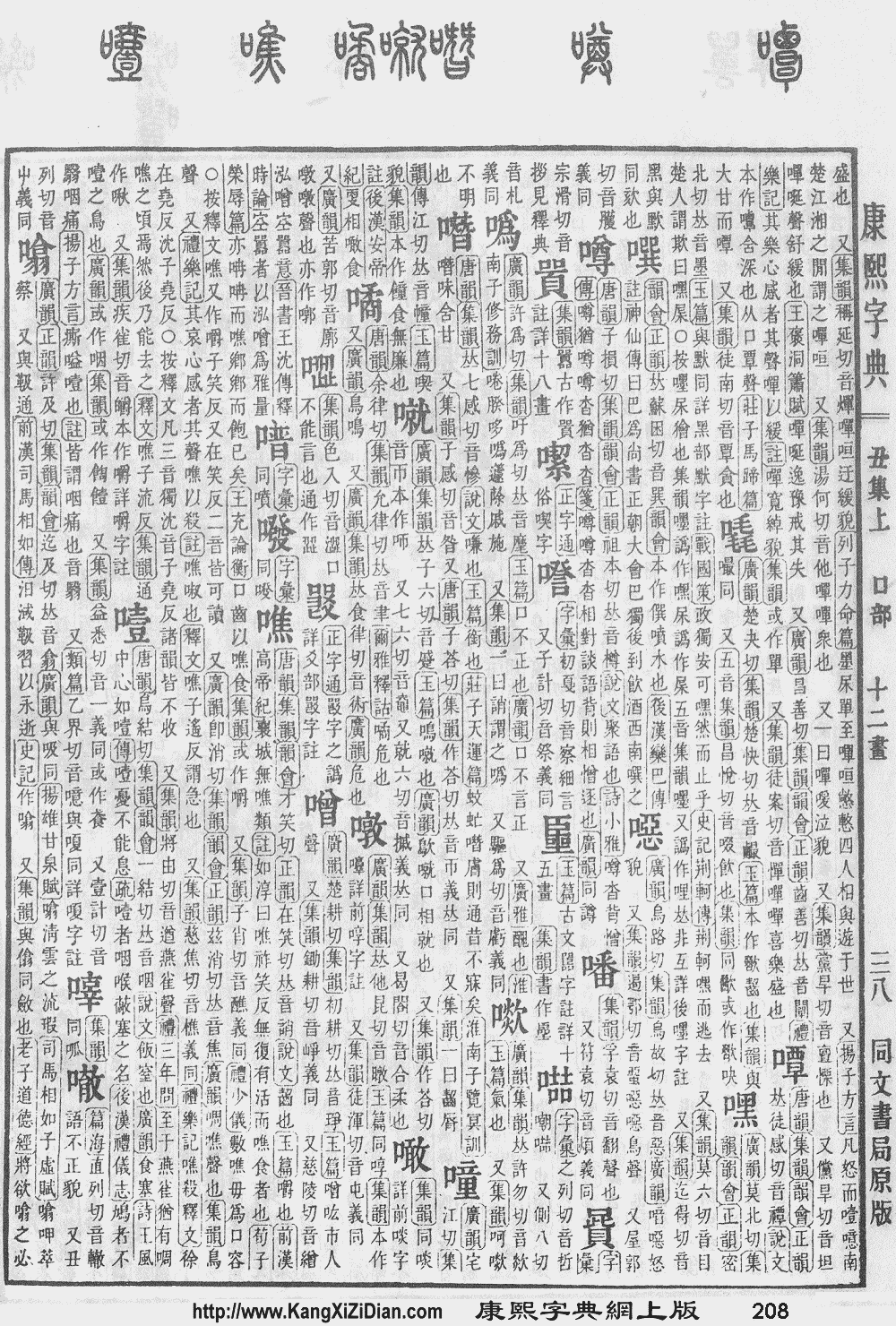
- KangXi: page 208, character 31
- Dai Kanwa Jiten: character 4310
- Dae Jaweon: page 431, character 23
- Hanyu Da Zidian (first edition): volume 1, page 685, character 7
- Unihan data for U+564F
Chinese
Glyph origin
Characters in the same phonetic series (合) (Zhengzhang, 2003)
| Old Chinese | |
|---|---|
| 龕 | *kʰuːm |
| 媕 | *quːm, *qromʔ, *qɯːm, *qramʔ, *qɯːb |
| 頜 | *ɡuːmʔ, *kuːb |
| 答 | *tkuːb |
| 畣 | *tkuːb |
| 荅 | *tkuːb |
| 嗒 | *tuːb, *tʰoːb |
| 褡 | *tuːb, *toːb |
| 撘 | *tuːb |
| 搭 | *tuːb, *tʰoːb |
| 榙 | *tkuːb, *ɡuːb |
| 佮 | *tkʰuːb, *kuːb, *quːb, *quːb |
| 蛤 | *kuːb |
| 鴿 | *kuːb |
| 合 | *kuːb, *ɡuːb |
| 郃 | *kuːb, *ɡuːb |
| 匌 | *kuːb, *kʰuːb |
| 鉿 | *kuːb |
| 閤 | *kuːb |
| 鞈 | *kuːb, *kruːb |
| 韐 | *kuːb, *kruːb |
| 鮯 | *kuːb |
| 哈 | *ŋɡuːb |
| 姶 | *quːb, *quːb |
| 欱 | *qʰuːb, *qʰruːb |
| 盒 | *ɡuːb |
| 耠 | *ɡuːb |
| 詥 | *ɡuːb |
| 塔 | *tʰuːb |
| 鞳 | *tʰoːb |
| 劄 | *rtuːb |
| 跲 | *kruːb, *kob, *ɡob |
| 袷 | *kruːb, *ŋkob |
| 餄 | *kruːb |
| 恰 | *kʰruːb |
| 帢 | *kʰruːb |
| 洽 | *ɡruːb |
| 祫 | *ɡruːb |
| 珨 | *ɡruːb |
| 烚 | *ɡruːb |
| 歙 | *qʰjob, *qʰrub |
| 湁 | *tkʰub |
| 拾 | *ɡjub |
| 給 | *krub |
| 翕 | *qʰrub |
| 噏 | *qʰrub |
| 潝 | *qʰrub |
| 熻 | *qʰrub |
| 嬆 | *qʰrub |
| 翖 | *qʰrub |
| 闟 | *qʰrub |
Phono-semantic compound (形聲, OC *qʰrub) : semantic 口 + phonetic 翕 (OC *qʰrub).
Pronunciation
Compounds
|
|
Etymology 2
| trad. | 噏 | |
|---|---|---|
| simp. # | 噏 | |
| alternative forms | up | |
Possibly related to 吟 (ngam4) via Cantonese nasal-stop alternation.
Pronunciation
Definitions
噏
Compounds
Etymology 3
| For pronunciation and definitions of 噏 – see 罨 (“musty; with an unpleasant smell due to wetness; to leave something that is wet in a stuffy environment; etc.”). (This character, 噏, is a variant form of 罨.) |
Japanese
Korean
Vietnamese
This article is issued from Wiktionary. The text is licensed under Creative Commons - Attribution - Sharealike. Additional terms may apply for the media files.