請
See also: 请
| ||||||||
| ||||||||
Translingual
| Stroke order (Chinese) | |||
|---|---|---|---|
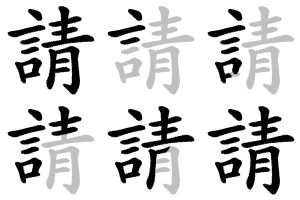 | |||
| Stroke order (Japan) | |||
|---|---|---|---|
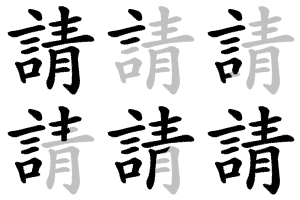 | |||
Han character
請 (Kangxi radical 149, 言+8, 15 strokes, cangjie input 卜口手一月 (YRQMB), four-corner 05627, composition ⿰訁青 or ⿰訁靑)
Derived characters
- 𡃑
References
- KangXi: page 1167, character 18
- Dai Kanwa Jiten: character 35640
- Dae Jaweon: page 1632, character 28
- Hanyu Da Zidian (first edition): volume 6, page 3981, character 3
- Unihan data for U+8ACB
- Unihan data for U+FABB
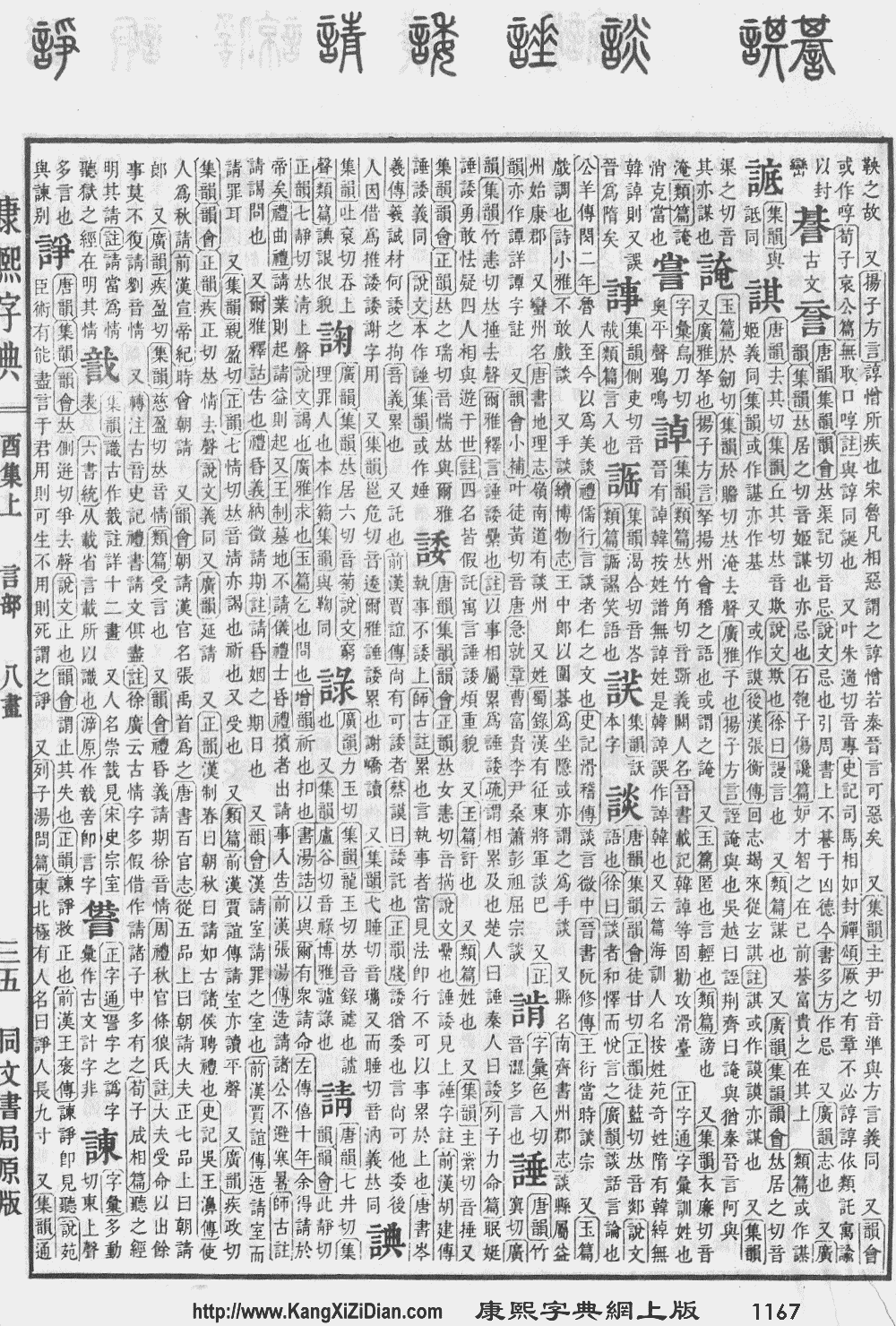
Chinese
Glyph origin
Characters in the same phonetic series (生) (Zhengzhang, 2003)
| Old Chinese | |
|---|---|
| 猜 | *sʰlɯː |
| 輤 | *sʰleːns |
| 綪 | *sʰleːns, *ʔsreːŋ |
| 倩 | *sʰleːns, *sʰleŋs |
| 棈 | *sʰleːns |
| 蒨 | *sʰeːns |
| 篟 | *sʰeːns |
| 生 | *sʰleːŋ, *sreŋs |
| 牲 | *sreŋ |
| 笙 | *sreŋ |
| 甥 | *sreŋ |
| 鉎 | *sreŋ, *sleːŋ |
| 珄 | *sreŋ |
| 鼪 | *sreŋ, *sreŋs |
| 猩 | *sreŋ, *seːŋ |
| 狌 | *sreŋ |
| 眚 | *sreŋʔ |
| 貹 | *sreŋs |
| 崝 | *zreːŋ |
| 精 | *ʔsleŋ, *ʔsleŋs |
| 菁 | *ʔsleŋ |
| 鶄 | *ʔsleŋ, *sʰleːŋ |
| 蜻 | *ʔsleŋ, *sʰleːŋ |
| 鼱 | *ʔsleŋ |
| 婧 | *ʔsleŋ, *zleŋs, *zleŋʔ |
| 睛 | *ʔsleŋ, *sʰleŋʔ |
| 箐 | *ʔsleŋ |
| 聙 | *ʔsleŋ |
| 旌 | *ʔsleŋ |
| 清 | *sʰleŋ |
| 圊 | *sʰleŋ |
| 請 | *sʰleŋʔ, *zleŋs, *zleŋ |
| 凊 | *sʰleŋs |
| 䝼 | *zleŋs, *zleŋ |
| 靚 | *zleŋs |
| 情 | *zleŋ |
| 晴 | *zleŋ |
| 夝 | *zleŋ |
| 靜 | *zleŋʔ |
| 靖 | *zleŋʔ |
| 睲 | *seŋʔ, *seːŋs |
| 惺 | *seŋʔ, *seːŋ |
| 性 | *sleŋs |
| 姓 | *sleŋs |
| 靗 | *l̥ʰeŋs |
| 鯖 | *ʔljeŋ, *sʰleːŋ |
| 青 | *sʰleːŋ |
| 靘 | *sʰleːŋ, *sʰleːŋs |
| 掅 | *sʰleːŋs |
| 胜 | *sleːŋ |
| 曐 | *sleːŋ |
| 星 | *sleːŋ |
| 鮏 | *sleːŋ |
| 腥 | *seːŋ, *seːŋs |
| 鯹 | *seːŋ |
| 醒 | *seːŋ, *seːŋʔ, *seːŋs |
| 篂 | *seːŋ |
Phono-semantic compound (形聲, OC *sʰleŋʔ, *zleŋs, *zleŋ) : semantic 言 (“say”) + phonetic 青 (OC *sʰleːŋ).
Pronunciation 1
| trad. | 請 | |
|---|---|---|
| simp. | 请 | |
| 2nd round simp. | 𰵕 | |
Definitions
請
- to ask for; to request
- 羿請不死之藥於西王母,姮娥竊以奔月 [Classical Chinese, trad.]
- From: Huainanzi, 2nd century BCE
- Yì qǐng bùsǐ zhī yào yú Xīwángmǔ, Héngé qiè yǐ bēn yuè [Pinyin]
- Hou Yi asked for the medicine of immortality from the Queen Mother of the West, [and] Chang'e stole it in order to escape to the moon
羿请不死之药于西王母,姮娥窃以奔月 [Classical Chinese, simp.]
- to ask
- to invite; to treat (to a meal, etc.)
- to hire
- to carry or bring (a sacred or respectable thing)
- please; kindly
- (Internet slang, interjection) Used to form a retort.
- (Can we add an example for this sense?)
- a surname
Synonyms
- (to ask for):
Synonyms of 請
- (to invite):
- (to hire):
Compounds
Derived terms from 請
|
|
|
Definitions
請
- This term needs a translation to English. Please help out and add a translation, then remove the text
{{rfdef}}.
Compounds
Derived terms from 請
|
|
|
Definitions
請
- This term needs a translation to English. Please help out and add a translation, then remove the text
{{rfdef}}.
Further reading
- “Entry #11414”, in 臺灣閩南語常用詞辭典 [Dictionary of Frequently-Used Taiwan Minnan] (in Chinese and Min Nan), Ministry of Education, R.O.C., 2011.
Japanese
| Shinjitai | 請 | |
| Kyūjitai [1][2][3] |
請󠄁 請+ 󠄁?(Adobe-Japan1) |
 |
| 請󠄃 請+ 󠄃?(Hanyo-Denshi) (Moji_Joho) | ||
| The displayed kanji may be different from the image due to your environment. See here for details. | ||
| Stroke order (Japan) | |||
|---|---|---|---|
 | |||
Kanji
請
Readings
From Middle Chinese 請 (MC t͡sʰiᴇŋX); compare Mandarin 請/请 (qǐng):
From Middle Chinese 請 (MC d͡ziᴇŋ); compare Mandarin 請/请 (qíng):
From native Japanese roots:
Compounds
- 請負 (ukeoi)
- 請安 (shōan)
- 請益 (shōyaku)
- 請来 (shōrai)
- 請仮 (shinka)
- 請謁 (seietsu)
- 請仮 (seika)
- 請願 (seigan)
- 請寄 (seiki)
- 請期 (seiki)
- 請寄 (seiki)
- 請求 (seikyū)
- 請訓 (seikun)
- 請罪 (seizai)
- 請室 (seishitsu)
- 請属 (seishoku), 請嘱 (seishoku)
- 請託 (seitaku), 請托 (seitaku)
- 請祷 (seitō), 請禱 (seitō)
- 請命 (seimei)
- 請問 (seimon)
- 請老 (seirō)
- 勧請 (kanjō)
- 懇請 (konsei)
- 召請 (shōsei)
- 普請 (fushin)
Usage notes
The stroke order in Japanese differs slightly from Chinese, as shown.
References
- “請”, in 漢字ぺディア (Kanjipedia) (in Japanese), 日本漢字能力検定協会, 2015—2023
- 1914, 漢和大辭書 (Kanwa Dai Jisho, “The Great Kanji-Japanese Dictionary”) (in Japanese), page 1979 (paper), page 1041 (digital), Tōkyō: 興文社 (Kōbunsha)
- 1927, 新漢和辭典 (Shin Kanwa Jiten, “The New Kanji-Japanese Dictionary”) (in Japanese), page 1128 (paper), page 577 (digital), Ōsaka: 松雲堂 (Shōundō)
- 2006, 大辞林 (Daijirin), Third Edition (in Japanese), Tōkyō: Sanseidō, →ISBN
Vietnamese
This article is issued from Wiktionary. The text is licensed under Creative Commons - Attribution - Sharealike. Additional terms may apply for the media files.