娭
| ||||||||
Translingual
Han character
娭 (Kangxi radical 38, 女+7, 10 strokes, cangjie input 女戈人大 (VIOK), four-corner 43434, composition ⿰女矣)
- to play around, frolic
- ancient term of disparagement for women
- (dialect) grandmother (used in the word 娭她)
- (dialect) honorific for older women (used in the word 娭她)
- slave girl, servant girl
References
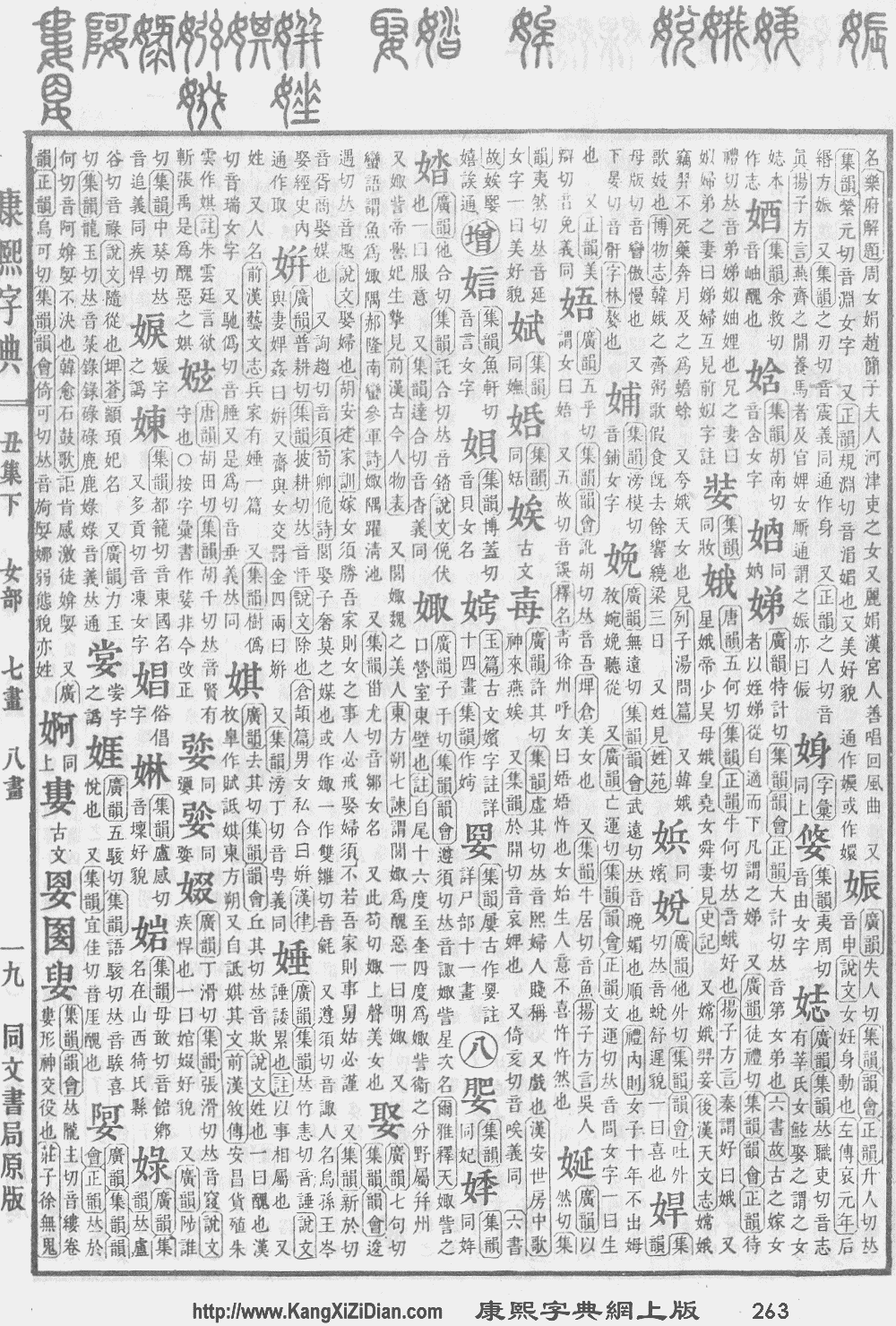
- KangXi: page 263, character 20
- Dai Kanwa Jiten: character 6341
- Dae Jaweon: page 530, character 6
- Hanyu Da Zidian (first edition): volume 2, page 1054, character 14
- Unihan data for U+5A2D
Chinese
Glyph origin
Pronunciation
Definitions
娭
- This term needs a translation to English. Please help out and add a translation, then remove the text
{{rfdef}}.
Compounds
|
Pronunciation
Definitions
娭
- A dialectal term used to address one's paternal grandmother.
- A term of respect for an elderly woman.
References
- “娭”, in 漢語多功能字庫 (Multi-function Chinese Character Database), 香港中文大學 (the Chinese University of Hong Kong), 2014–
Japanese
Kanji
娭
- This term needs a translation to English. Please help out and add a translation, then remove the text
{{rfdef}}.
Korean
Hanja
娭 • (ae) (hangeul 애, revised ae, McCune–Reischauer ae)
- This term needs a translation to English. Please help out and add a translation, then remove the text
{{rfdef}}.
This article is issued from Wiktionary. The text is licensed under Creative Commons - Attribution - Sharealike. Additional terms may apply for the media files.