暗
| ||||||||
Translingual
| Stroke order | |||
|---|---|---|---|
 | |||
Han character
暗 (Kangxi radical 72, 日+9, 13 strokes, cangjie input 日卜廿日 (AYTA), four-corner 60061, composition ⿰日音)
References
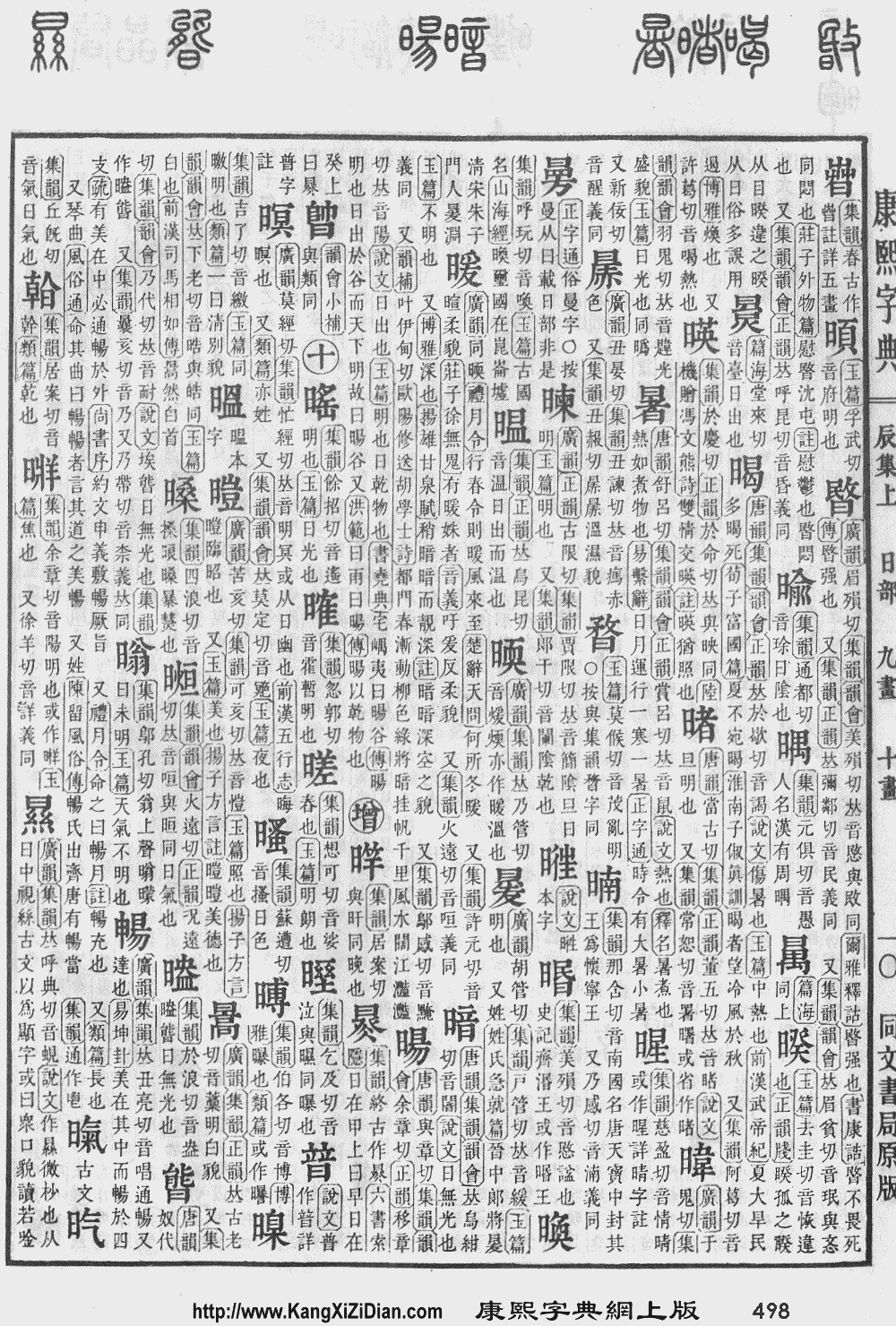
- KangXi: page 498, character 27
- Dai Kanwa Jiten: character 14065
- Dae Jaweon: page 866, character 20
- Hanyu Da Zidian (first edition): volume 2, page 1526, character 6
- Unihan data for U+6697
Chinese
| simp. and trad. |
暗 | |
|---|---|---|
| alternative forms | 闇/暗 晻/暗 隌 𣈇 𣆛 | |
Glyph origin
| Historical forms of the character 暗 |
|---|
| Shuowen Jiezi (compiled in Han) |
| Small seal script |
 |
Characters in the same phonetic series (音) (Zhengzhang, 2003)
Phono-semantic compound (形聲, OC *qɯːms) : semantic 日 (“sun”) + phonetic 音 (OC *qrɯm).
Pronunciation
Definitions
暗
Synonyms
Dialectal synonyms of 晚 (“late (in time)”) [map]
Compounds
Derived terms from 暗
|
|
|
References
- “暗”, in 漢語多功能字庫 (Multi-function Chinese Character Database), 香港中文大學 (the Chinese University of Hong Kong), 2014–
- Dictionary of Chinese Character Variants (教育部異體字字典), A01812
Japanese
| Shinjitai | 暗 | |
| Kyūjitai [1][2] |
暗󠄁 暗+ 󠄁?(Adobe-Japan1) |
 |
| 暗󠄃 暗+ 󠄃?(Hanyo-Denshi) (Moji_Joho) | ||
| The displayed kanji may be different from the image due to your environment. See here for details. | ||
Readings
- Go-on: おん (on)←おむ (omu, historical)
- Kan-on: あん (an, Jōyō)←あむ (amu, historical)
- Kun: くらい (kurai, 暗い, Jōyō)←くらし (kurasi, 暗し, historical); くらむ (kuramu, 暗む); そらんずる (soranzuru, 暗ずる)←そらんず (soranzu, 暗ず, historical); ひそかに (hisokani, 暗かに); やみ (yami, 暗)
Etymology
| Kanji in this term |
|---|
| 暗 |
| あん Grade: 3 |
| on’yomi |
From Middle Chinese 暗 (MC ʔʌmH).
The kan'on reading, so likely a later borrowing.
Derived terms
References
- 1914, 漢和大辭書 (Kanwa Dai Jisho, “The Great Kanji-Japanese Dictionary”) (in Japanese), page 1071 (paper), page 586 (digital), Tōkyō: 興文社 (Kōbunsha)
- 1927, 新漢和辭典 (Shin Kanwa Jiten, “The New Kanji-Japanese Dictionary”) (in Japanese), page 647 (paper), page 336 (digital), Ōsaka: 松雲堂 (Shōundō)
- 2006, 大辞林 (Daijirin), Third Edition (in Japanese), Tōkyō: Sanseidō, →ISBN
Korean
Vietnamese
This article is issued from Wiktionary. The text is licensed under Creative Commons - Attribution - Sharealike. Additional terms may apply for the media files.