札
See also: 箚
| ||||||||
Translingual
| Stroke order | |||
|---|---|---|---|
 | |||
Han character
札 (Kangxi radical 75, 木+1, 5 strokes, cangjie input 木山 (DU), four-corner 42910, composition ⿰木乚)
References
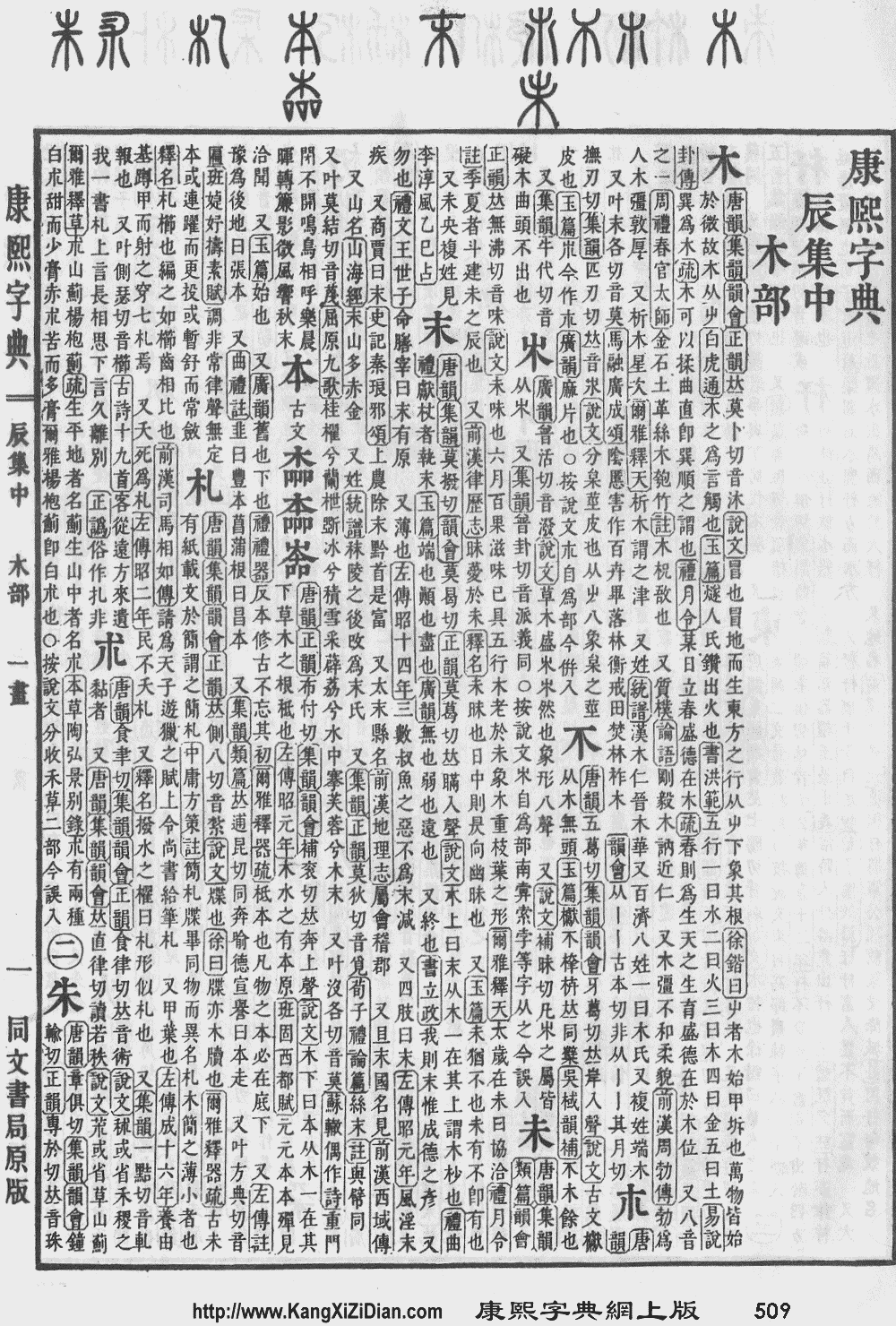
- KangXi: page 509, character 11
- Dai Kanwa Jiten: character 14422
- Dae Jaweon: page 893, character 1
- Hanyu Da Zidian (first edition): volume 2, page 1153, character 1
- Unihan data for U+672D
Chinese
| simp. and trad. |
札 | |
|---|---|---|
Glyph origin
| Historical forms of the character 札 | |||
|---|---|---|---|
| Warring States | Shuowen Jiezi (compiled in Han) | Jizhuan Guwen Yunhai (compiled in Song) | Liushutong (compiled in Ming) |
| Qin slip script | Small seal script | Transcribed ancient scripts | Transcribed ancient scripts |
 |
 |
 |
 |
Etymology
- “to die prematurely; pestilence; to die from pestilence”
- The commentary to the Rites of Zhou by Zheng Xuan says that it is the word for “to die” in the ancient Yue (越) language, so it is possibly from Austroasiatic; compare Proto-Mon-Khmer *kc(ə)t (“to die”) (whence Proto-Vietic *k-ceːt > Vietnamese chết) (Norman and Mei, 1976; Schuessler, 2007).
- Sagart (2008) doubts this etymology, pointing out that this word has been attested in classical texts that are not necessarily connected to Yue or the South. He instead proposes that this word may be a Chinese loan in Yue or the regular word for “to die” in the variety of Chinese spoken in the Yue region.
Pronunciation
Definitions
札
- letter; note
- correspondence
- † to die prematurely
- † pestilence
- † to die from pestilence
- † small wooden strip for writing
Japanese
Readings
Etymology 1
| Kanji in this term |
|---|
| 札 |
| さつ Grade: 4 |
| on’yomi |
/satu/ → /sat͡su/
From Middle Chinese 札 (MC t͡ʃˠat̚).
Synonyms
- 紙幣 (shihei)
Etymology 2
| Kanji in this term |
|---|
| 札 |
| ふだ Grade: 4 |
| kun’yomi |
/pumi ita/ → /ɸumita/ → /ɸunda/ → /ɸuda/
Originally a compound of 文 (fumi, “writing”) + 板 (ita, “board, plank”).[1][2]
Alternative forms
Noun
札 • (fuda)
(alternative reading hiragana ふみた, rōmaji fumita)
(alternative reading hiragana ふんだ, rōmaji funda)
- a card, a plate, a tag
- playing card
- 一組の札
- hitokumi no fuda
- a deck of cards
- 一組の札
References
- 2006, 大辞林 (Daijirin), Third Edition (in Japanese), Tōkyō: Sanseidō, →ISBN
- 1988, 国語大辞典(新装版) (Kokugo Dai Jiten, Revised Edition) (in Japanese), Tōkyō: Shogakukan
Korean
Vietnamese
This article is issued from Wiktionary. The text is licensed under Creative Commons - Attribution - Sharealike. Additional terms may apply for the media files.