朽

朽 U+673D, 朽
CJK UNIFIED IDEOGRAPH-673D
← 朼
[U+673C]
CJK Unified Ideographs 朾 →
[U+673E]

Translingual

Han character

朽 (Kangxi radical 75, 木+2, 6 strokes, cangjie input 木一女尸 (DMVS), four-corner 41927, composition ⿰木丂)

Derived characters

  • 𪳋

References

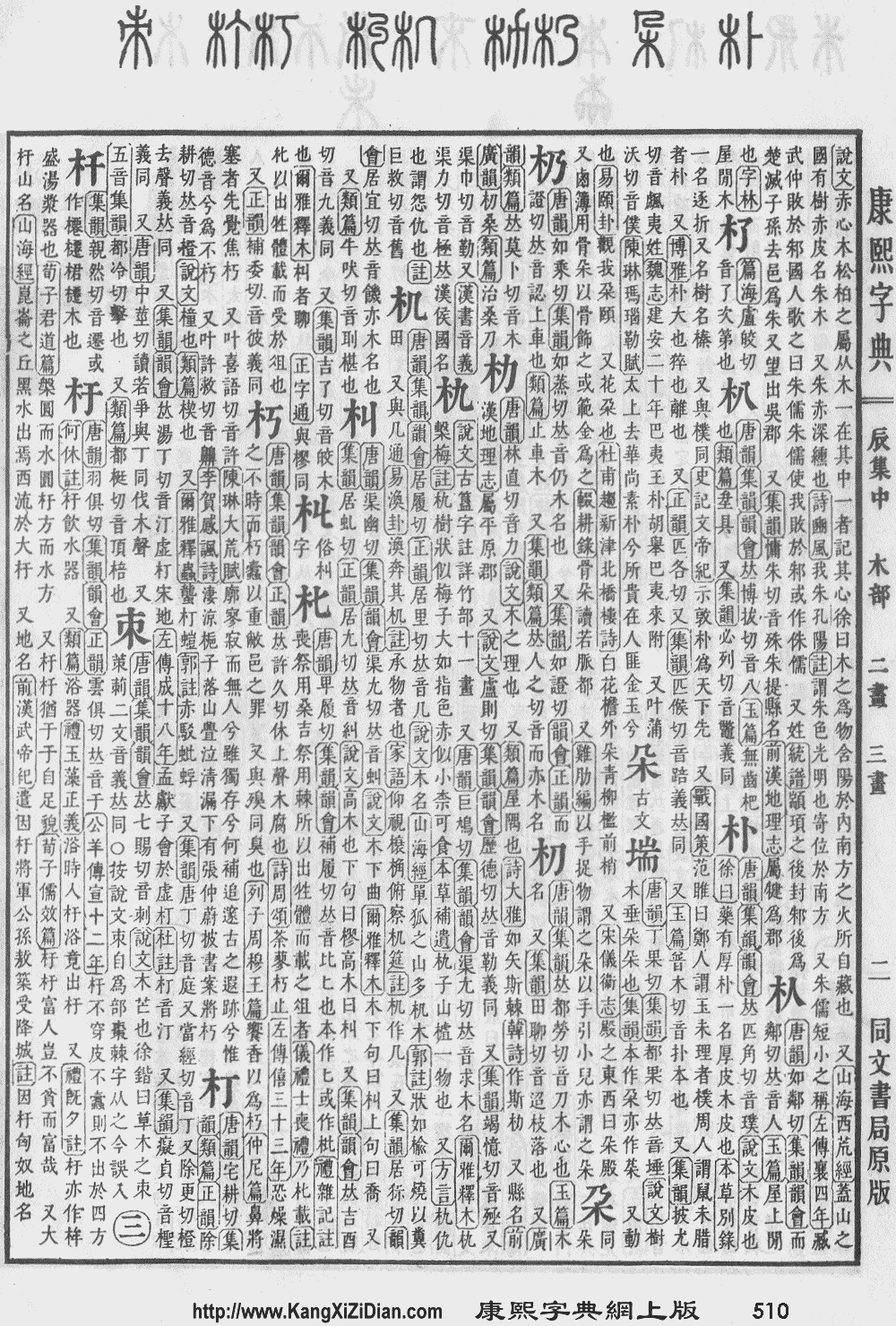
  • KangXi: page 510, character 16
  • Dai Kanwa Jiten: character 14439
  • Dae Jaweon: page 894, character 14
  • Hanyu Da Zidian (first edition): volume 2, page 1153, character 4
  • Unihan data for U+673D

Chinese

simp. and trad.
朽

Glyph origin

Phono-semantic compound (形聲, OC *qʰluʔ) : semantic 木 + phonetic 丂 (OC *kʰluːʔ).

Pronunciation


Note: nau2 - common variant.

Rime
Character 朽
Reading # 1/1
Initial (聲) 曉 (32)
Final (韻) 尤 (136)
Tone (調) Rising (X)
Openness (開合) Open
Division (等) III
Fanqie 許久切
Baxter xjuwX
Reconstructions
Zhengzhang
Shangfang
/hɨuX/
Pan
Wuyun
/hiuX/
Shao
Rongfen
/xiəuX/
Edwin
Pulleyblank
/huwX/
Li
Rong
/xiuX/
Wang
Li
/xĭəuX/
Bernard
Karlgren
/xi̯ə̯uX/
Expected
Mandarin
Reflex
xiǔ
Expected
Cantonese
Reflex
hau2
Baxter–Sagart system 1.1 (2014)
Character 朽
Reading # 1/1
Modern
Beijing
(Pinyin)
xiǔ
Middle
Chinese
‹ xjuwX ›
Old
Chinese
/*qʰ(r)uʔ/
English rot, decay

Notes for Old Chinese notations in the Baxter–Sagart system:

* Parentheses "()" indicate uncertain presence;
* Square brackets "[]" indicate uncertain identity, e.g. *[t] as coda may in fact be *-t or *-p;
* Angle brackets "<>" indicate infix;
* Hyphen "-" indicates morpheme boundary;

* Period "." indicates syllable boundary.
Zhengzhang system (2003)
Character 朽
Reading # 1/1
No. 7412
Phonetic
component
丂
Rime
group
幽
Rime
subdivision
1
Corresponding
MC rime
朽
Old
Chinese
/*qʰluʔ/

Definitions

朽

  1. decayed; rotten; decrepit
  2. to rot; to decay

Compounds

  • 三不朽
  • 不朽 (bùxiǔ)
  • 名垂不朽
  • 年朽
  • 拉朽
  • 拉朽摧枯
  • 摧枯拉朽 (cuīkū lāxiǔ)
  • 木朽不雕
  • 朽壤
  • 朽木 (xiǔmù)
  • 朽木不雕
  • 朽木之才
  • 朽木死灰
  • 朽株枯木
  • 朽蠹
  • 枯木朽株
  • 枯朽 (kūxiǔ)
  • 根朽枝枯
  • 樗朽之材
  • 死且不朽
  • 死而不朽
  • 永垂不朽 (yǒngchuíbùxiǔ)
  • 永存不朽
  • 生枯起朽
  • 老朽 (lǎoxiǔ)
  • 腐朽 (fǔxiǔ)
  • 薄田朽屋
  • 衰朽 (shuāixiǔ)
  • 並垂不朽/并垂不朽
  • 九朽一罷/九朽一罢
  • 名傳不朽/名传不朽
  • 奔車朽索/奔车朽索
  • 戶樞不朽/户枢不朽
  • 朽壞/朽坏 (xiǔhuài)
  • 朽敗/朽败 (xiǔbài)
  • 朽木糞土/朽木粪土
  • 朽木糞牆/朽木粪墙 (xiǔmùfènqiáng)
  • 朽木蟲/朽木虫
  • 朽棘不彫/朽棘不雕
  • 朽爛/朽烂 (xiǔlàn)
  • 朽邁/朽迈
  • 枯莖朽骨/枯茎朽骨 (kūjīngxiǔgǔ)
  • 歿而不朽/殁而不朽
  • 歿而無朽/殁而无朽
  • 永傳不朽/永传不朽
  • 沒而不朽/没而不朽
  • 粟紅貫朽/粟红贯朽
  • 粟陳貫朽/粟陈贯朽
  • 紅腐貫朽/红腐贯朽
  • 老朽無用/老朽无用
  • 貫朽/贯朽
  • 貫朽粟紅/贯朽粟红
  • 貫朽粟腐/贯朽粟腐
  • 貫朽粟陳/贯朽粟陈
  • 鏤冰雕朽/镂冰雕朽

Japanese

Kanji

朽

(common “Jōyō” kanji)

  1. decay

Readings

Korean

Hanja

朽 (eum 후 (hu))

  1. This term needs a translation to English. Please help out and add a translation, then remove the text {{rfdef}}.

Vietnamese

Han character

朽: Hán Nôm readings: hủ

  1. This term needs a translation to English. Please help out and add a translation, then remove the text {{rfdef}}.
This article is issued from Wiktionary. The text is licensed under Creative Commons - Attribution - Sharealike. Additional terms may apply for the media files.