考
See also: 攷
| ||||||||
Translingual
| Stroke order | |||
|---|---|---|---|
 | |||
| Stroke order | |||
|---|---|---|---|
 | |||
Han character
考 (Kangxi radical 125, 老+0, 6 strokes, cangjie input 十大卜尸 (JKYS), four-corner 44207, composition ⿱耂丂(GTV) or ⿱耂⿺㇉一(H) or ⿱耂⿺㇉丿(JK))
References
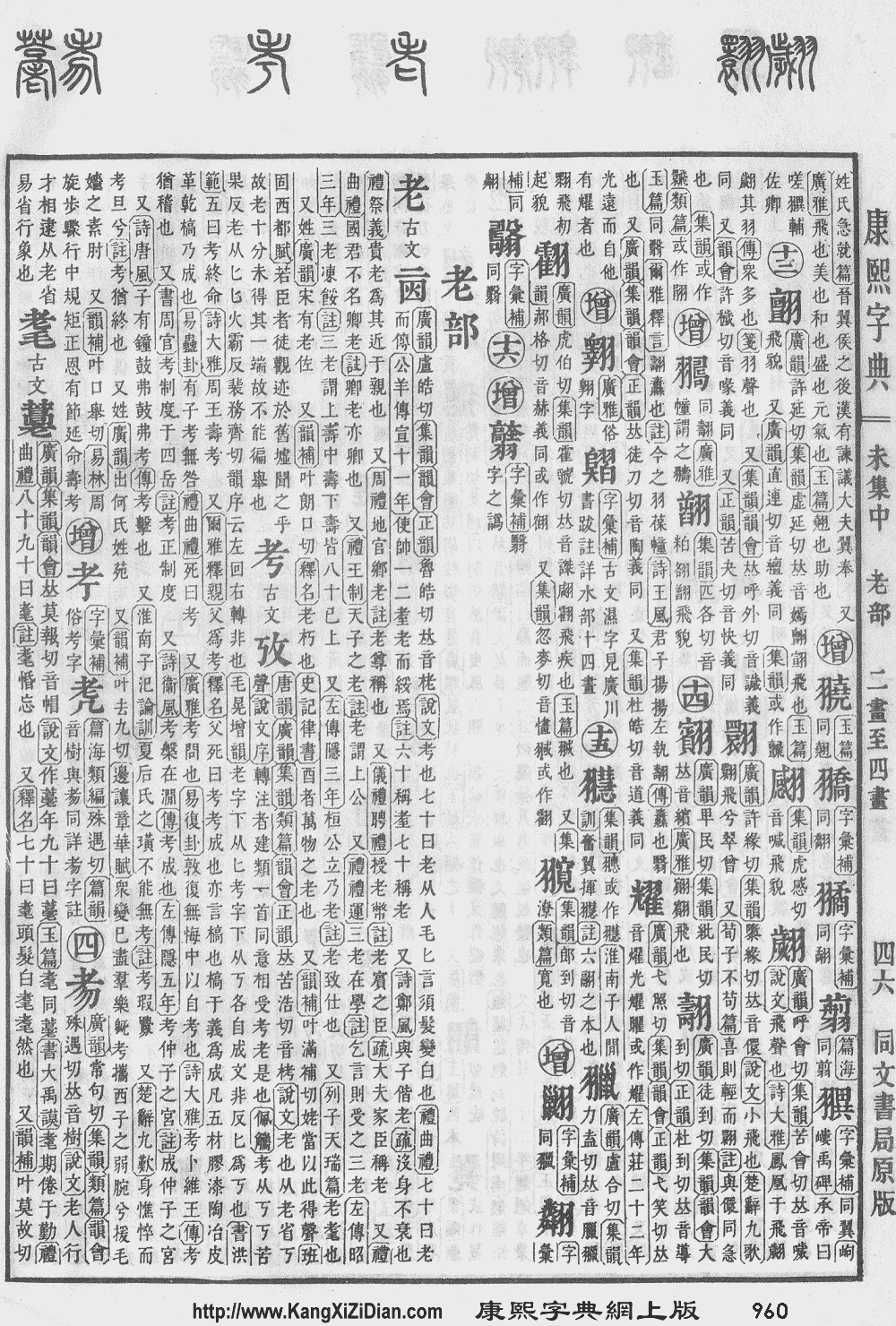
- KangXi: page 960, character 27
- Dai Kanwa Jiten: character 28843
- Dae Jaweon: page 1408, character 1
- Hanyu Da Zidian (first edition): volume 4, page 2779, character 2
- Unihan data for U+8003
Chinese
| simp. and trad. |
考 | |
|---|---|---|
| alternative forms | 丂 ancient 攷 𦒱 | |
Glyph origin
| Historical forms of the character 考 | |||
|---|---|---|---|
| Shang | Western Zhou | Shuowen Jiezi (compiled in Han) | Liushutong (compiled in Ming) |
| Oracle bone script | Bronze inscriptions | Small seal script | Transcribed ancient scripts |
 |
 |
 |
 |
Characters in the same phonetic series (丂) (Zhengzhang, 2003)
Variant of 老 (OC *ruːʔ) – Ideogrammic compound (會意) : 耂 (“an old man with long hair, bent over”) + 匕 (“a cane”) – an old man, leaning on a cane. Compare top component to 孝 (OC *qʰruːs).
Structurally related to 老 (OC *ruːʔ); the most commonly cited example of 轉注 (“reciprocal meaning”).
Pronunciation
Definitions
考
- to examine; to check
- 考察 ― kǎochá ― to examine
- to study; to investigate
- to test; to assess
- to have a test; to have an exam
- Short for 考試/考试 (kǎoshì, “exam; test”).
- 高考 ― gāokǎo ― gaokao
- (literary) long-lived; elderly
- (literary) deceased father; posthumous name for male relations
- 先考 ― xiānkǎo ― deceased father
- 祭王父曰皇祖考,王母曰皇祖妣。父曰皇考,母曰皇妣。夫曰皇辟。生曰父、曰母、曰妻,死曰考、曰妣、曰嬪。 [Classical Chinese, trad.]
- From: The Book of Rites, c. 4th – 2nd century BCE
- Jì wángfù yuē huángzǔkǎo, wángmǔ yuē huángzǔbǐ. Fù yuē huángkǎo, mǔ yuē huángbǐ. Fū yuē huángpì. Shēng yuē fù, yuē mǔ, yuē qī, sǐ yuē kǎo, yuē bǐ, yuē pín. [Pinyin]
- In sacrificing to them, a grandfather is called 'the sovereign grandfather'; a grandmother, 'the sovereign grandmother'; a father, 'the sovereign father'; a mother, 'the sovereign mother; a husband, 'the sovereign pattern.' While alive, the names of 'father', 'mother', and 'wife' are used; when they are dead, those of 'the completed one', 'the corresponding one', and 'the honored one'.
祭王父曰皇祖考,王母曰皇祖妣。父曰皇考,母曰皇妣。夫曰皇辟。生曰父、曰母、曰妻,死曰考、曰妣、曰嫔。 [Classical Chinese, simp.]
Compounds
Derived terms from 考
|
|
|
Descendants
- → Guiqiong: kʰɐu (“to sit exams”)
References
- “考”, in 漢語多功能字庫 (Multi-function Chinese Character Database), 香港中文大學 (the Chinese University of Hong Kong), 2014–
- Dictionary of Chinese Character Variants (教育部異體字字典), A03252
Japanese
Korean
Etymology
From Middle Chinese 考 (MC kʰɑuX).
| Historical readings |
|---|
|
Pronunciation
- (to think):
- (SK Standard/Seoul) IPA(key): [ko̞]
- Phonetic hangul: [고]
- (to study; to test):
- (SK Standard/Seoul) IPA(key): [ko̞(ː)]
- Phonetic hangul: [고(ː)]
- Though still prescribed in Standard Korean, most speakers in both Koreas no longer distinguish vowel length.
Compounds
Vietnamese
This article is issued from Wiktionary. The text is licensed under Creative Commons - Attribution - Sharealike. Additional terms may apply for the media files.