棗
See also: 枣
| ||||||||
Translingual
Han character
棗 (Kangxi radical 75, 木+8, 12 strokes, cangjie input 木月木月 (DBDB) or X木月木月 (XDBDB), four-corner 50902, composition ⿱朿朿)
Derived characters
- 𪦡, 𭫼, 𫓇, 𤒗, 𫼄, 𮐿
Descendants
References
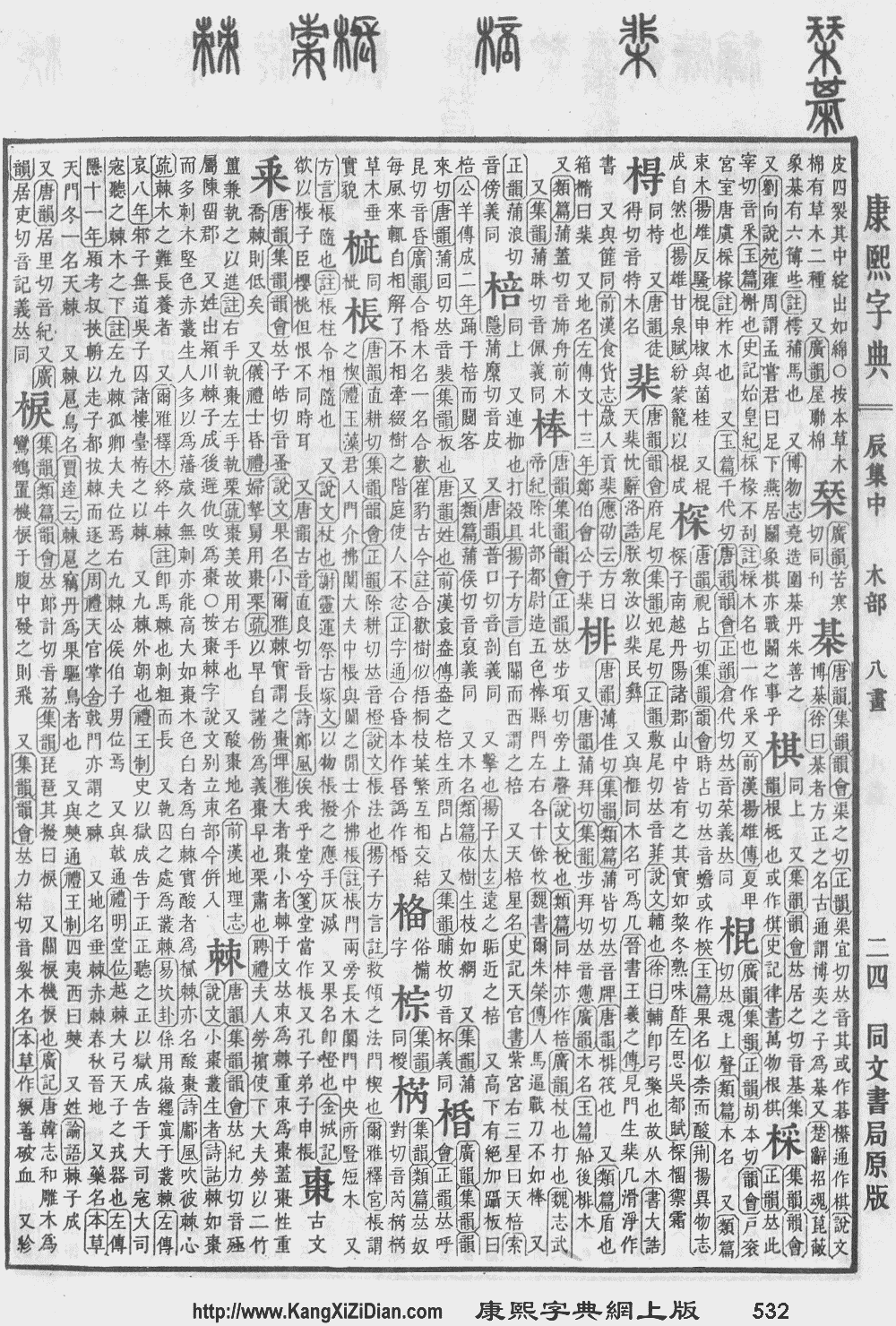
- KangXi: page 532, character 18
- Dai Kanwa Jiten: character 14937
- Dae Jaweon: page 920, character 24
- Hanyu Da Zidian (first edition): volume 2, page 1228, character 1
- Unihan data for U+68D7
Chinese
| trad. | 棗 | |
|---|---|---|
| simp. | 枣 | |
| alternative forms | 栆 𠂲 ancient 𠄬 枣 𣝯 | |

棗
Glyph origin
Ideogrammic compound (會意) : Duplication of 朿 (“thorn”).
Etymology
(This etymology is missing or incomplete. Please add to it, or discuss it at the Etymology scriptorium.)
Pronunciation
Synonyms
- (jujube):
Dialectal synonyms of 棗 (“jujube; Chinese date”) [map]
Compounds
Derived terms from 棗
|
|
|
Descendants
Japanese
Readings
- Go-on: そう (sō)←さう (sau, historical)
- Kan-on: そう (sō)←さう (sau, historical)
- Kun: なつめ (natsume, 棗)
Etymology
| Kanji in this term |
|---|
| 棗 |
| なつめ Hyōgaiji |
| kun’yomi |
Originally a compound of 夏 (natsu, “summer”) + 芽 (me, “bud, sprout”).[1]
Noun
棗 • (natsume)
- the jujube or Chinese date, Ziziphus jujuba
- Hypernym: 黒梅擬 (kuroumemodoki)
- a dye made from dried jujube fruits
- a small tea caddy used in the tea ceremony
Derived terms
Derived terms
- 棗貝 (natsumegai)
- 棗形手水鉢 (natsume-gata chōzubachi)
- 棗玉 (Natsumedama)
- 棗椰子 (natsume yashi, “date palm”, Phoenix dactylifera)
- 唐棗 (kara-natsume)
- 小棗 (konatsume)
- 核太棗, 酸棗 (sanebuto natsume)
- 浜棗 (hama natsume)
- 平棗 (hira natsume)
See also
Korean
Hanja
棗 • (jo) (hangeul 조, revised jo, McCune–Reischauer cho, Yale co)
- This term needs a translation to English. Please help out and add a translation, then remove the text
{{rfdef}}.
Vietnamese
This article is issued from Wiktionary. The text is licensed under Creative Commons - Attribution - Sharealike. Additional terms may apply for the media files.