毻

毻 U+6BFB, 毻
CJK UNIFIED IDEOGRAPH-6BFB
← 毺
[U+6BFA]
CJK Unified Ideographs 毼 →
[U+6BFC]

Translingual

Han character

毻 (Kangxi radical 82, 毛+9, 13 strokes, cangjie input 大月竹手山 (KBHQU), four-corner 42214, composition ⿰⿱左月毛)

  1. to moult
  2. to change the coat of animals
  3. (Cantonese) muddled, confused

References

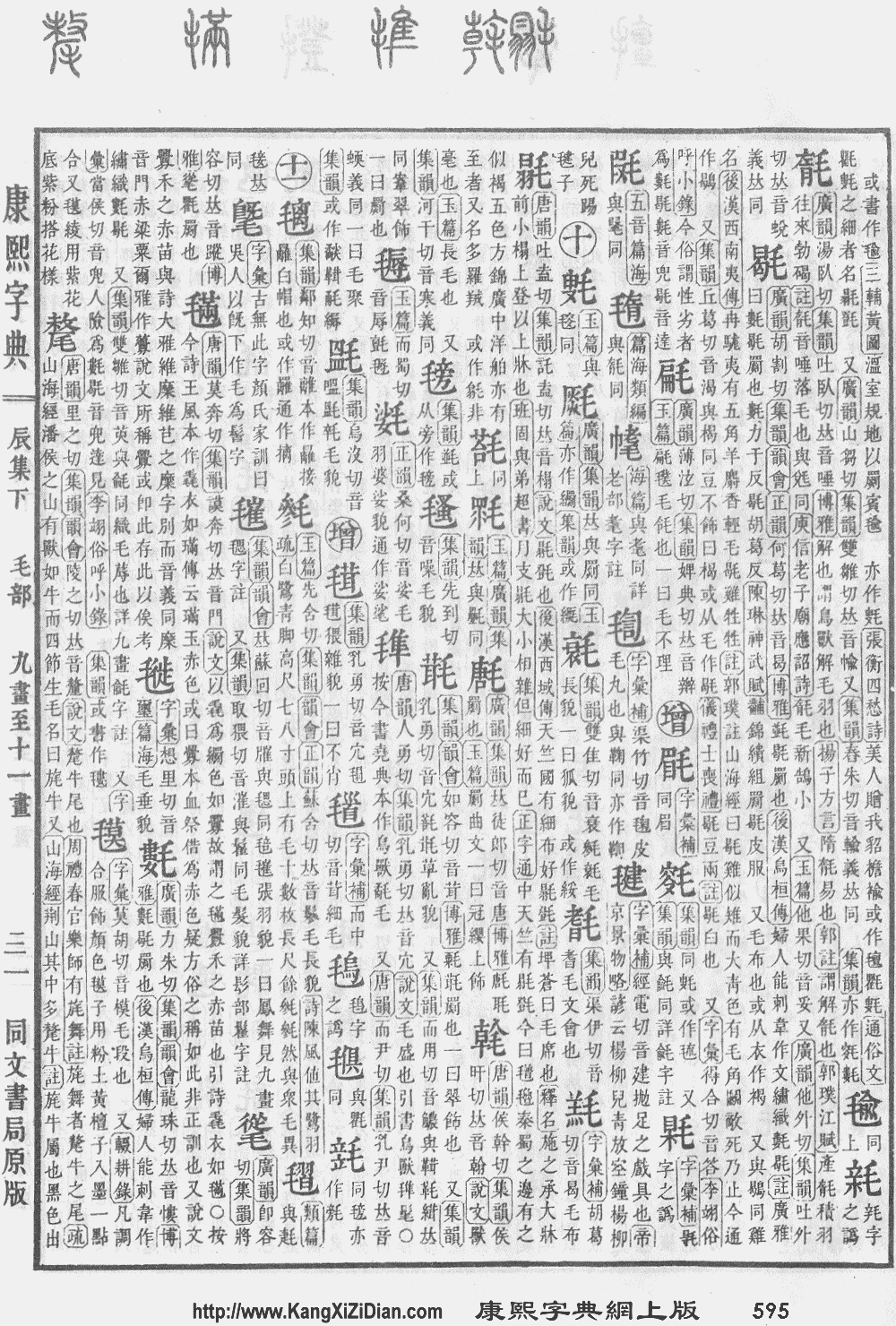
  • KangXi: page 595, character 3
  • Dai Kanwa Jiten: character 16899
  • Dae Jaweon: page 986, character 33
  • Hanyu Da Zidian (first edition): volume 3, page 2001, character 14
  • Unihan data for U+6BFB

Chinese

trad. 毻
simp. # 毻
alternative forms 毤
𣮲

Glyph origin

Pronunciation


Rime
Character 毻 毻
Reading # 1/2 2/2
Initial (聲) 透 (6) 透 (6)
Final (韻) 泰 (26) 戈 (95)
Tone (調) Departing (H) Departing (H)
Openness (開合) Closed Closed
Division (等) I I
Fanqie 他外切 湯卧切
Reconstructions
Zhengzhang
Shangfang
/tʰuɑiH/ /tʰuɑH/
Pan
Wuyun
/tʰʷɑiH/ /tʰuɑH/
Shao
Rongfen
/tʰuɑiH/ /tʰuɑH/
Edwin
Pulleyblank
/tʰwajH/ /tʰwaH/
Li
Rong
/tʰuɑiH/ /tʰuɑH/
Wang
Li
/tʰuɑiH/ /tʰuɑH/
Bernard
Karlgren
/tʰuɑiH/ /tʰuɑH/
Expected
Mandarin
Reflex
tuì tuò
Expected
Cantonese
Reflex
teoi3 to3
Zhengzhang system (2003)
Character 毻 毻
Reading # 1/2 2/2
No. 5421 5432
Phonetic
component
隓 隓
Rime
group
歌 祭
Rime
subdivision
3 3
Corresponding
MC rime
娧
Old
Chinese
/*l̥ʰoːls/ /*l̥ʰoːds/

Definitions

毻

  1. (literary) to moult; to shed
  2. (Northern Wu) to lose hair or fur
    我常常毻頭髮。 [Shanghainese, trad.]
    我常常毻头发。 [Shanghainese, simp.]
    [ŋv̩ʷ²³ z̥ã²² z̥ã⁴⁴ tʰv̩ʷ⁴⁴  d̥ɜ²² fa̱ʔ⁴⁴] [IPA]
    I always lose hair.
This article is issued from Wiktionary. The text is licensed under Creative Commons - Attribution - Sharealike. Additional terms may apply for the media files.