浩

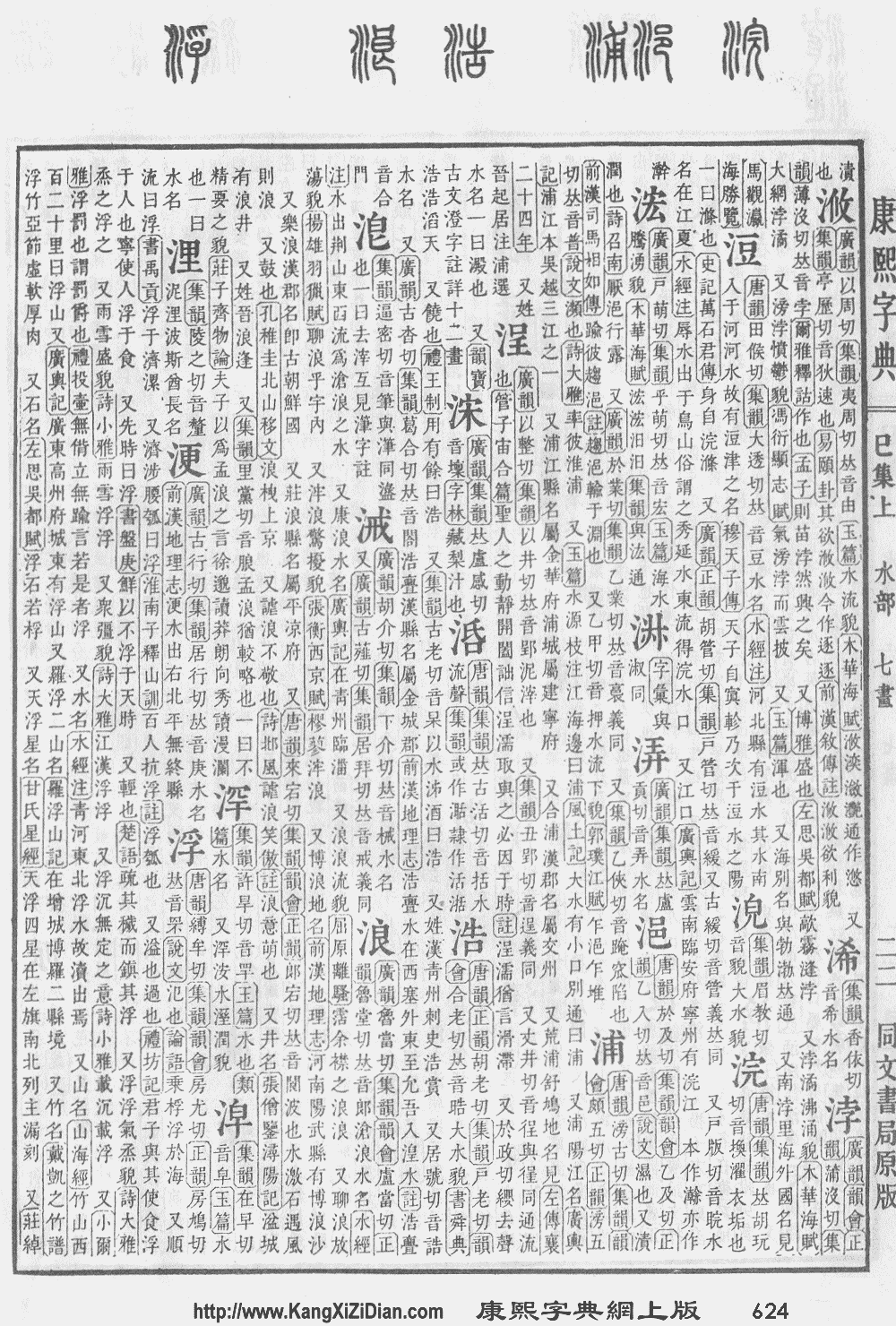
See also: 澔, 活, 话, and 㓉
浩 U+6D69, 浩
CJK UNIFIED IDEOGRAPH-6D69
← 浨
[U+6D68]
CJK Unified Ideographs 浪 →
[U+6D6A]

浩 U+2F903, 浩
CJK COMPATIBILITY IDEOGRAPH-2F903
← 流
[U+2F902]
CJK Compatibility Ideographs Supplement 浸 →
[U+2F904]

Translingual

Han character

浩 (Kangxi radical 85, 水+7, 10 strokes, cangjie input 水竹土口 (EHGR), four-corner 34161, composition ⿰氵告)

References

Chinese

simp. and trad.
浩

Glyph origin

Phono-semantic compound (形聲, OC *ɡuːʔ, *kuːb) : semantic 水 (“water”) + phonetic 告 (OC *kuːɡs, *kuːɡ)

Pronunciation 1


Note:
  • hōⁿ/hō - literary;
  • hāu - vernacular.

Rime
Character 浩
Reading # 1/2
Initial (聲) 匣 (33)
Final (韻) 豪 (89)
Tone (調) Rising (X)
Openness (開合) Open
Division (等) I
Fanqie 胡老切
Reconstructions
Zhengzhang
Shangfang
/ɦɑuX/
Pan
Wuyun
/ɦɑuX/
Shao
Rongfen
/ɣɑuX/
Edwin
Pulleyblank
/ɦawX/
Li
Rong
/ɣɑuX/
Wang
Li
/ɣɑuX/
Bernard
Karlgren
/ɣɑuX/
Expected
Mandarin
Reflex
hào
Expected
Cantonese
Reflex
hou6
Baxter–Sagart system 1.1 (2014)
Character 浩
Reading # 1/1
Modern
Beijing
(Pinyin)
hào
Middle
Chinese
‹ hawX ›
Old
Chinese
/*[ɡ]ˁuʔ/
English vast

Notes for Old Chinese notations in the Baxter–Sagart system:

* Parentheses "()" indicate uncertain presence;
* Square brackets "[]" indicate uncertain identity, e.g. *[t] as coda may in fact be *-t or *-p;
* Angle brackets "<>" indicate infix;
* Hyphen "-" indicates morpheme boundary;

* Period "." indicates syllable boundary.
Zhengzhang system (2003)
Character 浩
Reading # 1/2
No. 3810
Phonetic
component
告
Rime
group
幽
Rime
subdivision
1
Corresponding
MC rime
晧
Old
Chinese
/*ɡuːʔ/

Definitions

浩

  1. (of water) vast; torrential
  2. grand; vast; great
    浩劫  ―  hàojié  ―  catastrophe
    浩氣/浩气  ―  hàoqì  ―  noble spirit
  3. numerous; abundant
  4. (obsolete, Sichuanese) small port or harbor

Compounds

  • 包浩斯
  • 卷帙浩繁
  • 工程浩大
  • 徐浩
  • 汪洋浩博
  • 浩劫 (hàojié)
  • 浩博 (hàobó)
  • 浩壤
  • 浩大 (hàodà)
  • 浩歌
  • 浩汗
  • 浩浩 (hàohào)
  • 浩渺 (hàomiǎo)

Pronunciation 2


Rime
Character 浩
Reading # 2/2
Initial (聲) 見 (28)
Final (韻) 覃 (160)
Tone (調) Checked (Ø)
Openness (開合) Open
Division (等) I
Fanqie 古沓切
Reconstructions
Zhengzhang
Shangfang
/kʌp̚/
Pan
Wuyun
/kəp̚/
Shao
Rongfen
/kɒp̚/
Edwin
Pulleyblank
/kəp̚/
Li
Rong
/kᴀp̚/
Wang
Li
/kɒp̚/
Bernard
Karlgren
/kăp̚/
Expected
Mandarin
Reflex
ge
Expected
Cantonese
Reflex
gap3
Zhengzhang system (2003)
Character 浩
Reading # 2/2
No. 3815
Phonetic
component
告
Rime
group
緝
Rime
subdivision
3
Corresponding
MC rime
閤
Old
Chinese
/*kuːb/

Definitions

浩

  1. Only used in 浩亹.

References

  • 藍勇. 第十三章:歷史時期西南綜合文化區的劃分. 《西南歷史文化地理》. 西南師範大學出版社. 1997. →ISBN.

Japanese

Shinjitai 浩
Kyūjitai
[1]

浩
&#x2F903;
or
浩+&#xFE00;?
浩󠄁
浩+&#xE0101;?
(Adobe-Japan1)
浩󠄃
浩+&#xE0103;?
(Hanyo-Denshi)
(Moji_Joho)
The displayed kanji may be different from the image due to your environment.
See here for details.

Kanji

浩

(“Jinmeiyō” kanji used for names, shinjitai kanji, kyūjitai form 浩)

  1. prosperous

Readings

Compounds

Proper noun

浩(ひろし) • (Hiroshi) 

  1. a male given name

References

  1. 1914, 漢和大辭書 (Kanwa Dai Jisho, “The Great Kanji-Japanese Dictionary”) (in Japanese), page 1277 (paper), page 689 (digital), Tōkyō: 興文社 (Kōbunsha)

Korean

Hanja

浩 (eum 호 (ho))

  1. great, numerous, vast, abundant

Vietnamese

Han character

浩: Hán Nôm readings: hạo

  1. This term needs a translation to English. Please help out and add a translation, then remove the text {{rfdef}}.

References

This article is issued from Wiktionary. The text is licensed under Creative Commons - Attribution - Sharealike. Additional terms may apply for the media files.