眈
| ||||||||
Translingual
Han character
眈 (Kangxi radical 109, 目+4, 9 strokes, cangjie input 月山中月山 (BULBU), four-corner 64012, composition ⿰目冘)
References
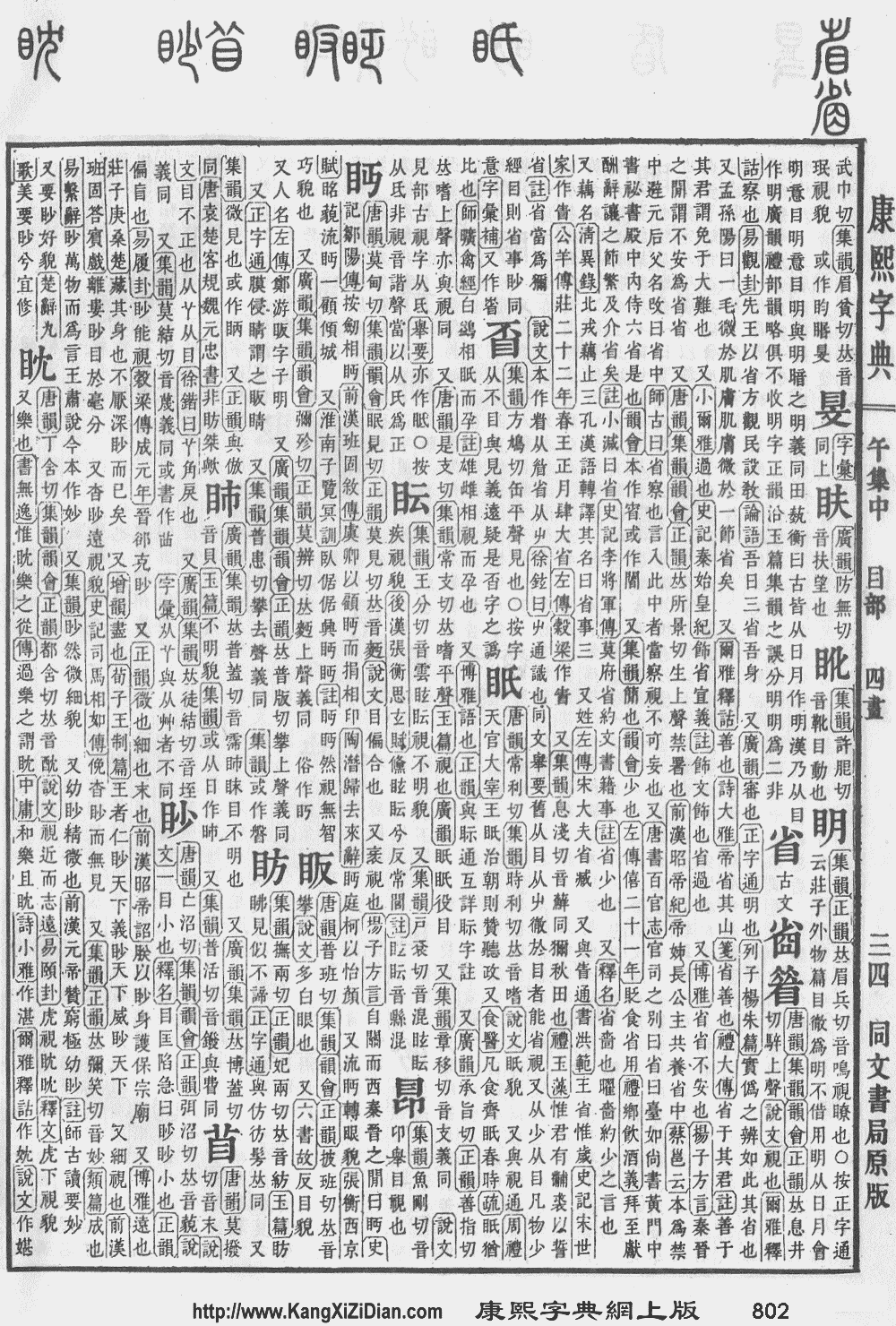
- KangXi: page 802, character 18
- Dai Kanwa Jiten: character 23189
- Dae Jaweon: page 1218, character 19
- Hanyu Da Zidian (first edition): volume 4, page 2477, character 13
- Unihan data for U+7708
Chinese
| simp. and trad. |
眈 | |
|---|---|---|
Glyph origin
| Historical forms of the character 眈 |
|---|
| Shuowen Jiezi (compiled in Han) |
| Small seal script |
 |
Characters in the same phonetic series (冘) (Zhengzhang, 2003)
| Old Chinese | |
|---|---|
| 冘 | *lu, *lum |
| 抌 | *lu, *ʔl'uːmʔ, *loʔ |
| 狖 | *lus |
| 貁 | *lus |
| 耽 | *ʔl'uːm |
| 眈 | *ʔl'uːm, *ʔl'uːmʔ, *l'uːm |
| 酖 | *ʔl'uːm |
| 妉 | *ʔl'uːm |
| 黕 | *ʔl'uːmʔ |
| 衴 | *ʔl'uːmʔ |
| 瓭 | *ʔl'uːmʔ |
| 馾 | *ʔl'uːms |
| 髧 | *l'uːmʔ |
| 紞 | *ʔl'oːmʔ |
| 鈂 | *zlum, *l'um |
| 沈 | *l'um, *l'ums, *hljumʔ |
| 沉 | *l'um |
| 枕 | *l'um, *ʔljumʔ, *ʔljums |
| 莐 | *l'um |
| 霃 | *l'um |
| 鴆 | *l'ums |
| 訦 | *ɦljum, *ɦljumʔ |
| 忱 | *ɦljum |
| 邥 | *hljumʔ |
| 魫 | *hljumʔ |
Phono-semantic compound (形聲, OC *ʔl'uːm, *ʔl'uːmʔ, *l'uːm) : semantic 目 (“eye”) + phonetic 冘 (OC *lu, *lum).
Pronunciation
Japanese
Kanji
眈
- This term needs a translation to English. Please help out and add a translation, then remove the text
{{rfdef}}.
Readings
- Go-on: とん (ton)←とむ (tomu, historical)
- Kan-on: たん (tan)←たむ (tamu, historical)
- Kun: にらむ (niramu, 眈む)
Korean
Compounds
- 호시탐탐 (虎視眈眈, hositamtam)
This article is issued from Wiktionary. The text is licensed under Creative Commons - Attribution - Sharealike. Additional terms may apply for the media files.