築
See also: 筑
| ||||||||
| ||||||||
Translingual
Han character
築 (Kangxi radical 118, 竹+10, 16 strokes, cangjie input 竹一弓木 (HMND), four-corner 88904, composition ⿱筑木)
Derived characters
- 𭣊, 𭬬
References
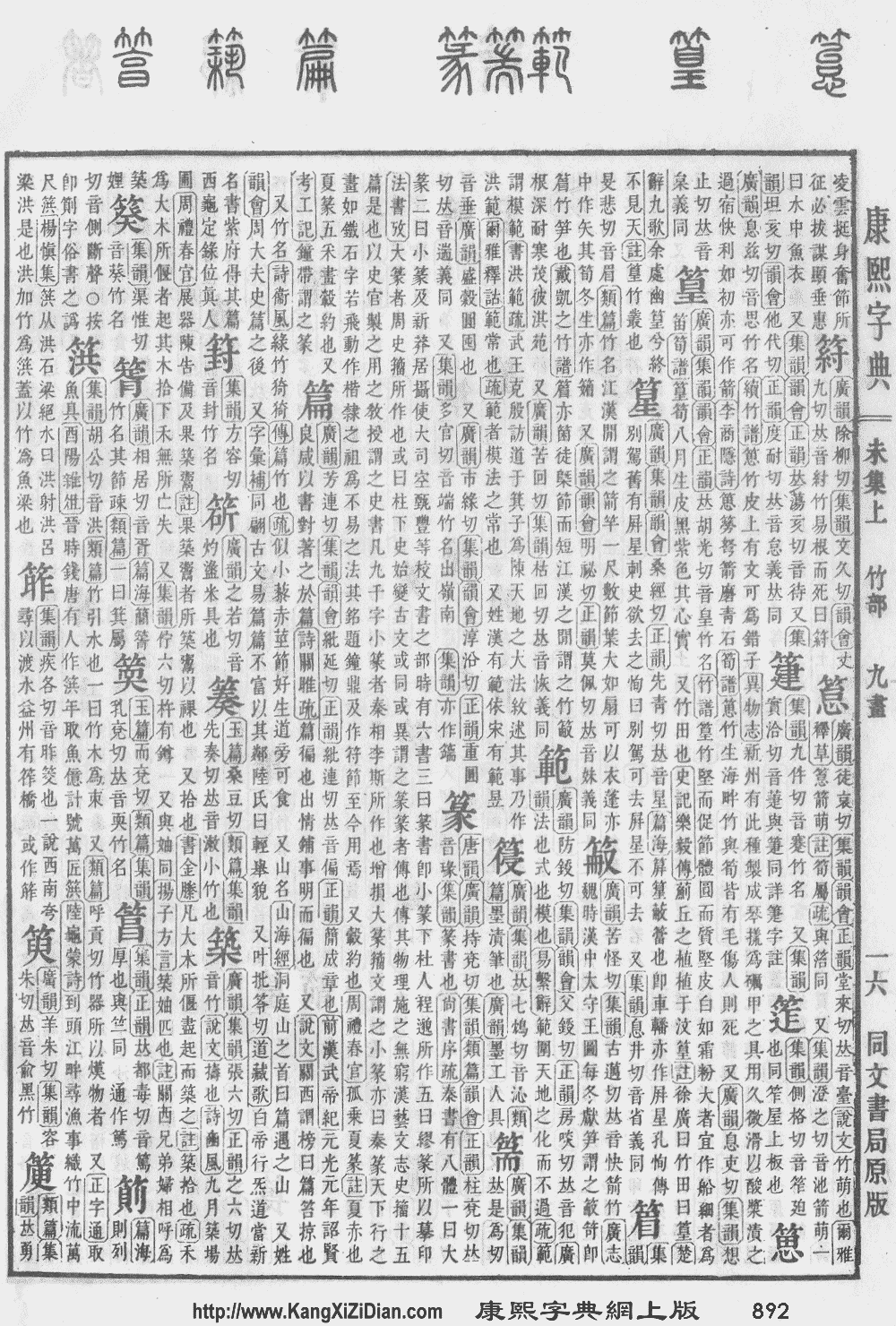
- KangXi: page 892, character 18
- Dai Kanwa Jiten: character 26298
- Dae Jaweon: page 1320, character 28
- Hanyu Da Zidian (first edition): volume 5, page 2998, character 4
- Unihan data for U+7BC9
- Unihan data for U+2F963
Chinese
| trad. | 築 | |
|---|---|---|
| simp. | 筑* | |
Glyph origin
Characters in the same phonetic series (竹) (Zhengzhang, 2003)
Phono-semantic compound (形聲, OC *tuɡ) : phonetic 筑 (OC *tuɡ, *duɡ) + semantic 木 (“wood”).
Etymology
According to STEDT, from Proto-Sino-Tibetan *tsuk ~ tsik (“to build”); cognate with Tibetan རྩིག་པ (rtsig pa, “to build”), Proto-Lolo-Burmese *ʔtsukᴴ (“to build”) (whence Burmese ဆောက် (hcauk, “to build”)).
On the other hand, Schuessler (2007) reconstructs Proto-Sino-Tibetan *truk and derives 築 (OC *tuɡ), Tibetan རྡུག་པ (rdug pa, “to conquer; to vanquish”) and Burmese တိုက် (tuik, “building, chamber; to dash against; to bump against”) from it. STEDT derives Tibetan རྡུག་པ (rdug pa) from Proto-Tibeto-Burman *m/r-tuk (“cut; knock; pound”).
Pronunciation
Definitions
築
Synonyms
- (to build):
Synonyms of 築
Compounds
References
- “築”, in 漢語多功能字庫 (Multi-function Chinese Character Database), 香港中文大學 (the Chinese University of Hong Kong), 2014–
Japanese
Korean
Vietnamese
This article is issued from Wiktionary. The text is licensed under Creative Commons - Attribution - Sharealike. Additional terms may apply for the media files.