加
| ||||||||
Translingual
| Stroke order | |||
|---|---|---|---|
 | |||
Han character
加 (Kangxi radical 19, 力+3, 5 strokes, cangjie input 大尸口 (KSR), four-corner 46000, composition ⿰力口)
Derived characters
References
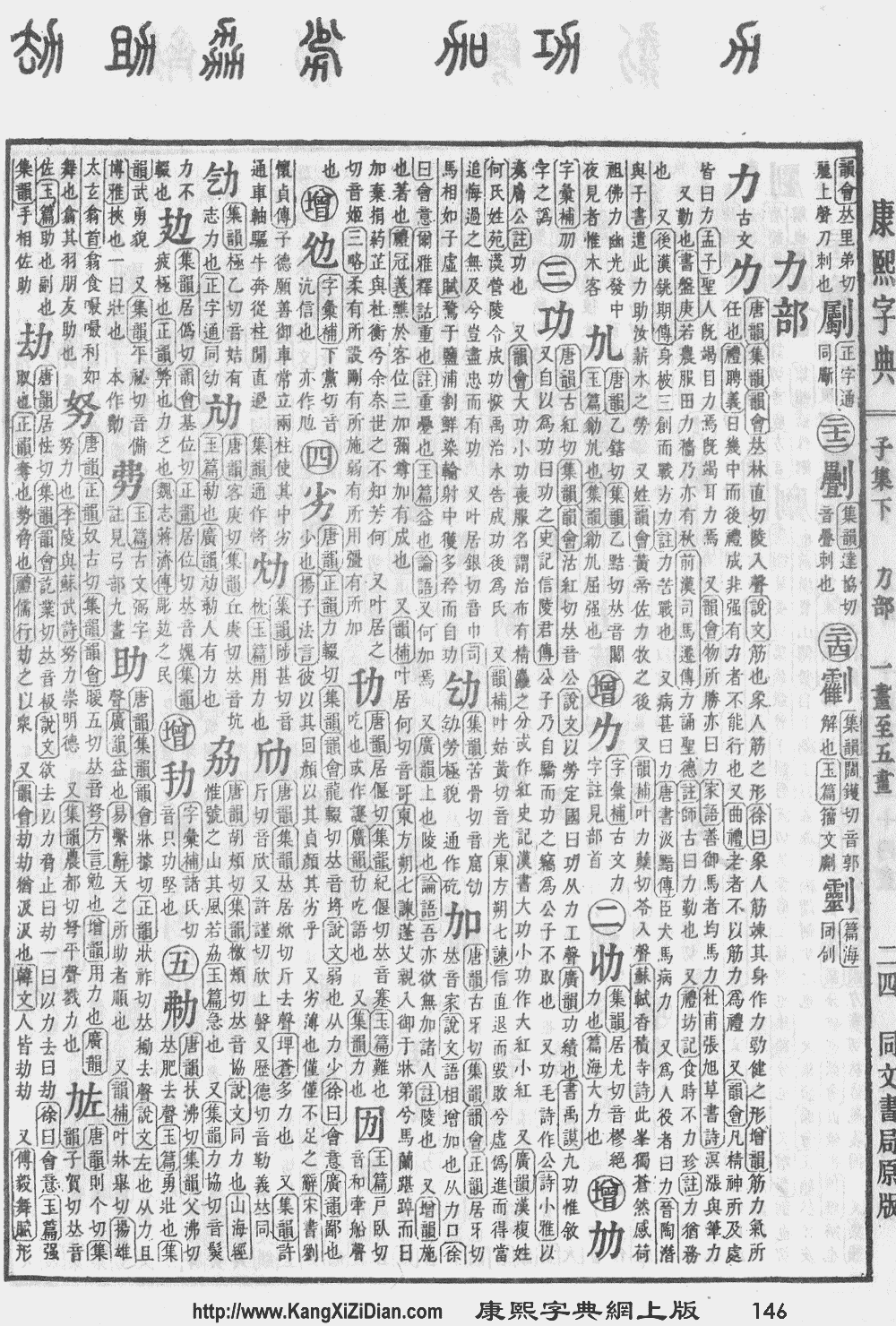
- KangXi: page 146, character 13
- Dai Kanwa Jiten: character 2297
- Dae Jaweon: page 329, character 2
- Hanyu Da Zidian (first edition): volume 1, page 366, character 1
- Unihan data for U+52A0
Chinese
| simp. and trad. |
加 | |
|---|---|---|
Glyph origin
| Historical forms of the character 加 | |||
|---|---|---|---|
| Western Zhou | Warring States | Shuowen Jiezi (compiled in Han) | Liushutong (compiled in Ming) |
| Bronze inscriptions | Chu slip and silk script | Small seal script | Transcribed ancient scripts |
 |
 |
 |
 |
Characters in the same phonetic series (加) (Zhengzhang, 2003)
According to Shuowen, Ideogrammic compound (會意) : 力 (“plow”) + 口 (“mouth”) - a mouth ordering a cow over a plow.
Etymology
駕 (OC *kraːls, “to yoke”) is the exopassive of 加 (OC *kraːl, “to add; to attach”) (Schuessler, 2007). Cognate with Tibetan ཁྲལ (khral, “to impose a tax”).
Pronunciation
Definitions
加
Synonyms
Compounds
Derived terms from 加
|
|
|
References
- “加”, in 漢語多功能字庫 (Multi-function Chinese Character Database), 香港中文大學 (the Chinese University of Hong Kong), 2014–
Japanese
Readings
Compounds
Compounds
- 加虐 (kagyaku)
- 加減 (kagen)
- 加減乗除 (kagenjōjo)
- 加護 (kago)
- 加工 (kakō)
- 加算 (kasan)
- 加餐 (kasan)
- 加持 (kaji)
- 加日 (kanichi)
- 加水 (kasui, “addition of water”)
- 加水分解 (kasuibunkai, “hydrolysis”)
- 加勢 (kasei)
- 加増 (kazō)
- 加担 (katan)
- 加点 (katen)
- 加奈陀 (Kanada, “Canada”)
- 加熱 (kanetsu)
- 加年 (kanen, “addition of years”)
- 加筆 (kahitsu)
- 加法 (kahō)
- 加味 (kami)
- 加盟 (kamei)
- 加養 (kayō)
- 参加 (sanka)
- 添加 (tenka)
Etymology
| Kanji in this term |
|---|
| 加 |
| か Grade: 4 |
| kan’on |
Affix
加 • (ka)
- addition
- Short for カナダ (“Canada (a country)”).
- (US) Short for 加州 (“California (a state of the United States)”).
Korean
Vietnamese
References
- Trần (1999).
- Trần (2004).
This article is issued from Wiktionary. The text is licensed under Creative Commons - Attribution - Sharealike. Additional terms may apply for the media files.