雅
| ||||||||
Translingual
Han character
雅 (Kangxi radical 172, 隹+4 in Chinese, 隹+5 in Japanese, 12 strokes in Chinese, 13 strokes in Japanese, cangjie input 一竹人土 (MHOG), four-corner 70214, composition ⿰牙隹)
Derived characters
- 𠾒, 𡡳, 𪷐, 蕥
References
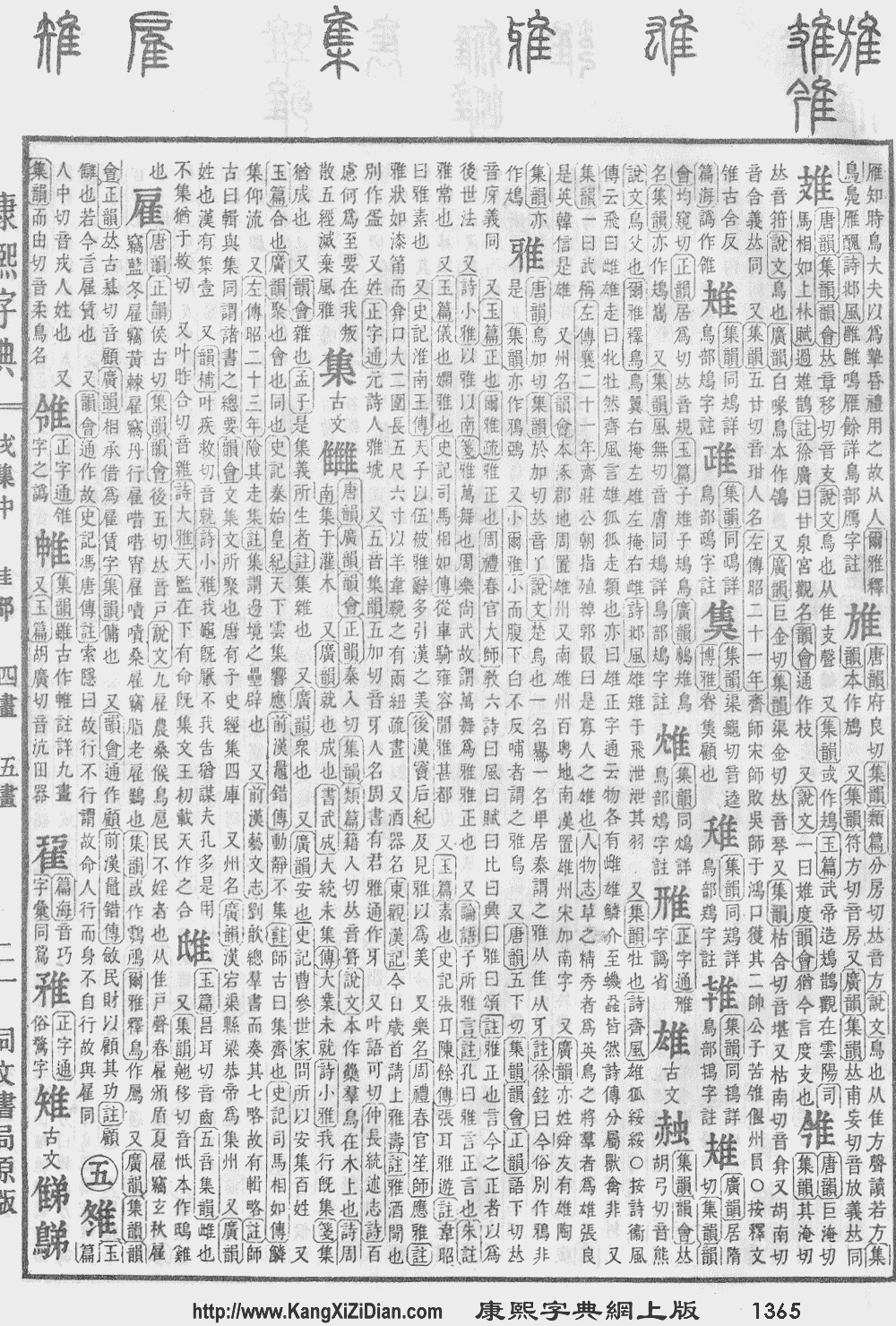
- KangXi: page 1365, character 14
- Dai Kanwa Jiten: character 41973
- Dae Jaweon: page 1869, character 2
- Hanyu Da Zidian (first edition): volume 6, page 4094, character 2
- Unihan data for U+96C5
Chinese
| trad. | 雅 | |
|---|---|---|
| simp. # | 雅 | |
Glyph origin
Etymology 1
| For pronunciation and definitions of 雅 – see 鴉 (“crow; raven”). (This character, 雅, is a variant form of 鴉.) |
Etymology 2
Schuessler (2007) leaves its etymology as unknown, yet mentions that it has been suggested to be related to 夏 (OC *ɡraːʔ) (e.g. by Wang Yinzhi apud Zhi, 2004), etc.), a proposal also supported by Baxter & Sagart (2014).
Pronunciation
Definitions
雅
- (literary) standard; proper; correct
- elegant; graceful; refined
- (polite) your; your esteemed; your gracious
- (literary) friendship; companionship
- (literary) usually; often
- (literary) very much; extremely
- a section in the Classic of Poetry consisting of dynastic hymns
- † standard language (usually used in titles of ancient Chinese dictionaries such as the Erya)
- (Teochew) pretty; beautiful
- a surname
Synonyms
- (pretty):
Synonyms of 雅
Dialectal synonyms of 漂亮 (“good-looking; beautiful; pretty”) [map]
Descendants
Compounds
Derived terms from 雅
|
|
|
References
- Duffus, William (1883), “beautiful”, in English-Chinese Vocabulary of the Vernacular or Spoken Language of Swatow, Swatow: English Presbyterian Mission Press, page 19
- Zhi, C. (2004). "From Exclusive Xia to Inclusive Zhu-Xia: The Conceptualisation of Chinese Identity" in Early China. Journal of the Royal Asiatic Society, 14(3), 185–205. http://www.jstor.org/stable/25188470
Japanese
| Shinjitai | 雅 | |
| Kyūjitai [1] |
雅󠄂 雅+ 󠄂?(Adobe-Japan1) |
 |
| 雅󠄄 雅+ 󠄄?(Hanyo-Denshi) (Moji_Joho) | ||
| The displayed kanji may be different from the image due to your environment. See here for details. | ||
Readings
Compounds
- 雅歌 (gaka, “elegant song”), 雅歌 (Gaka, “Song of Songs”)
Inflection
Inflection of 雅
| Stem forms | |||
|---|---|---|---|
| Imperfective (未然形) | 雅だろ | がだろ | ga daro |
| Continuative (連用形) | 雅で | がで | ga de |
| Terminal (終止形) | 雅だ | がだ | ga da |
| Attributive (連体形) | 雅な | がな | ga na |
| Hypothetical (仮定形) | 雅なら | がなら | ga nara |
| Imperative (命令形) | 雅であれ | がであれ | ga de are |
| Key constructions | |||
| Informal negative | 雅ではない 雅じゃない |
がではない がじゃない |
ga de wa nai ga ja nai |
| Informal past | 雅だった | がだった | ga datta |
| Informal negative past | 雅ではなかった 雅じゃなかった |
がではなかった がじゃなかった |
ga de wa nakatta ga ja nakatta |
| Formal | 雅です | がです | ga desu |
| Formal negative | 雅ではありません 雅じゃありません |
がではありません がじゃありません |
ga de wa arimasen ga ja arimasen |
| Formal past | 雅でした | がでした | ga deshita |
| Formal negative past | 雅ではありませんでした 雅じゃありませんでした |
がではありませんでした がじゃありませんでした |
ga de wa arimasen deshita ga ja arimasen deshita |
| Conjunctive | 雅で | がで | ga de |
| Conditional | 雅なら(ば) | がなら(ば) | ga nara (ba) |
| Provisional | 雅だったら | がだったら | ga dattara |
| Volitional | 雅だろう | がだろう | ga darō |
| Adverbial | 雅に | がに | ga ni |
| Degree | 雅さ | がさ | gasa |
Antonyms
- 俗 (zoku)
Etymology 2
| Kanji in this term |
|---|
| 雅 |
| みやび Grade: S |
| kun’yomi |
| For pronunciation and definitions of 雅 – see the following entry. | ||
| ||
| (This term, 雅, is an alternative spelling of the above term.) |
References
- “雅”, in 漢字ぺディア (Kanjipedia) (in Japanese), 日本漢字能力検定協会, 2015—2023
- 2006, 大辞林 (Daijirin), Third Edition (in Japanese), Tōkyō: Sanseidō, →ISBN
Korean
Vietnamese
This article is issued from Wiktionary. The text is licensed under Creative Commons - Attribution - Sharealike. Additional terms may apply for the media files.