蔽

See also: 芘
蔽 U+853D, 蔽
CJK UNIFIED IDEOGRAPH-853D
← 蔼
[U+853C]
CJK Unified Ideographs 蔾 →
[U+853E]

Translingual

Han character

蔽 (Kangxi radical 140, 艸+12, 16 strokes in traditional Chinese and Korean, 15 strokes in mainland China and Japanese, cangjie input 廿火月大 (TFBK), four-corner 44248, composition ⿱艹敝(GHTJK))

Derived characters

References

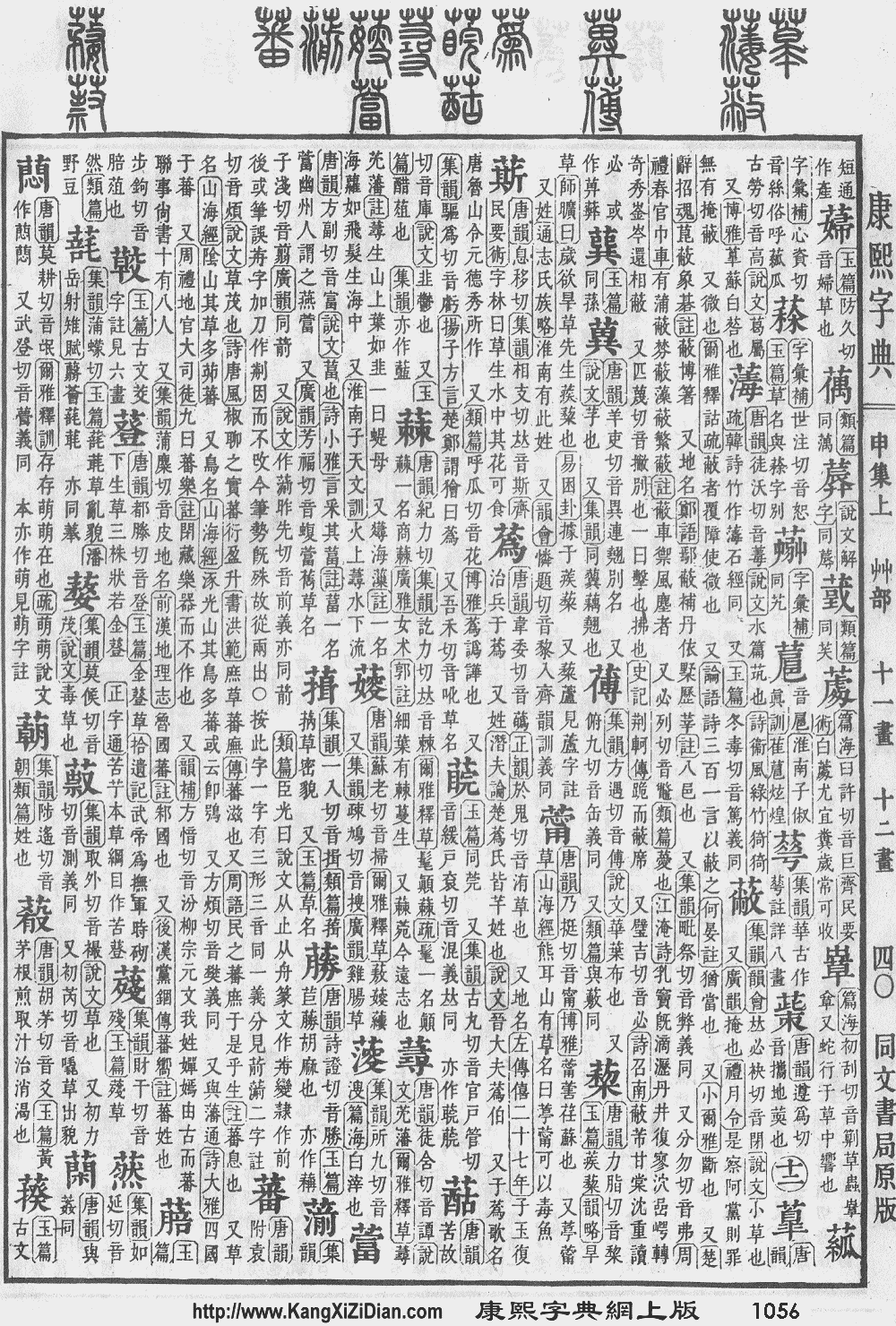
  • KangXi: page 1056, character 15
  • Dai Kanwa Jiten: character 31888
  • Dae Jaweon: page 1519, character 12
  • Hanyu Da Zidian (first edition): volume 5, page 3277, character 19
  • Unihan data for U+853D

Chinese

trad. 蔽
simp. # 蔽
2nd round simp. 芘

Glyph origin

Phono-semantic compound (形聲, OC *peds) : semantic 艸 (“grass”) + phonetic 敝 (OC *beds, *bed).

Pronunciation


Rime
Character 蔽
Reading # 1/1
Initial (聲) 幫 (1)
Final (韻) 祭 (35)
Tone (調) Departing (H)
Openness (開合) Open
Division (等) III
Fanqie 必袂切
Reconstructions
Zhengzhang
Shangfang
/piᴇiH/
Pan
Wuyun
/piɛiH/
Shao
Rongfen
/pjæiH/
Edwin
Pulleyblank
/piajH/
Li
Rong
/piɛiH/
Wang
Li
/pĭɛiH/
Bernard
Karlgren
/pi̯ɛiH/
Expected
Mandarin
Reflex
bì
Expected
Cantonese
Reflex
bai3
Baxter–Sagart system 1.1 (2014)
Character 蔽
Reading # 1/1
Modern
Beijing
(Pinyin)
bì
Middle
Chinese
‹ pjiejH ›
Old
Chinese
/*pe[t]-s/
English cover (v.)

Notes for Old Chinese notations in the Baxter–Sagart system:

* Parentheses "()" indicate uncertain presence;
* Square brackets "[]" indicate uncertain identity, e.g. *[t] as coda may in fact be *-t or *-p;
* Angle brackets "<>" indicate infix;
* Hyphen "-" indicates morpheme boundary;

* Period "." indicates syllable boundary.
Zhengzhang system (2003)
Character 蔽
Reading # 1/1
No. 627
Phonetic
component
敝
Rime
group
祭
Rime
subdivision
2
Corresponding
MC rime
蔽
Old
Chinese
/*peds/

Definitions

蔽

  1. to cover; to hide; to conceal
  2. to summarize; to sum up

Compounds

  • 才蔽識淺/才蔽识浅
  • 林蔭蔽天/林荫蔽天
  • 浮雲蔽日/浮云蔽日
  • 濃蔭蔽空/浓荫蔽空
  • 烏雲蔽日/乌云蔽日
  • 蔭蔽/荫蔽 (yīnbì)
  • 蔽形術/蔽形术
  • 蔽獄/蔽狱
  • 蔽聰塞明/蔽聪塞明
  • 蔽賢/蔽贤 (bìxián)
  • 蔽賢寵頑/蔽贤宠顽
  • 蔽身處/蔽身处
  • 蔽體/蔽体
  • 衣不蔽體/衣不蔽体
  • 錮蔽/锢蔽
  • 隱天蔽日/隐天蔽日
  • 隱蔽/隐蔽 (yǐnbì)
  • 隱蔽性/隐蔽性

Japanese

Kanji

蔽

(common “Jōyō” kanji)

  1. cover, hide, conceal

Readings

Compounds

Korean

Hanja

蔽 • (pye, byeol, bul) (hangeul 폐, 별, 불, revised pye, byeol, bul, McCune–Reischauer p'ye, pyŏl, pul, Yale phyey, pyel, pul)

  1. This term needs a translation to English. Please help out and add a translation, then remove the text {{rfdef}}.

Vietnamese

Han character

蔽: Hán Việt readings: tế[1][2][3][4], phất[3][4]
蔽: Nôm readings: tế[1]

  1. chữ Hán form of tế (“protect, hide”).

References

  1. Trần (2004).
  2. Trần (1999).
  3. Nguyễn (1974).
  4. Thiều Chửu (1942).
This article is issued from Wiktionary. The text is licensed under Creative Commons - Attribution - Sharealike. Additional terms may apply for the media files.