謀

See also: 谋
謀 U+8B00, 謀
CJK UNIFIED IDEOGRAPH-8B00
← 諿
[U+8AFF]
CJK Unified Ideographs 謁 →
[U+8B01]

Translingual

Han character

謀 (Kangxi radical 149, 言+9, 16 strokes, cangjie input 卜口廿一木 (YRTMD), four-corner 04694, composition ⿰訁某)

References

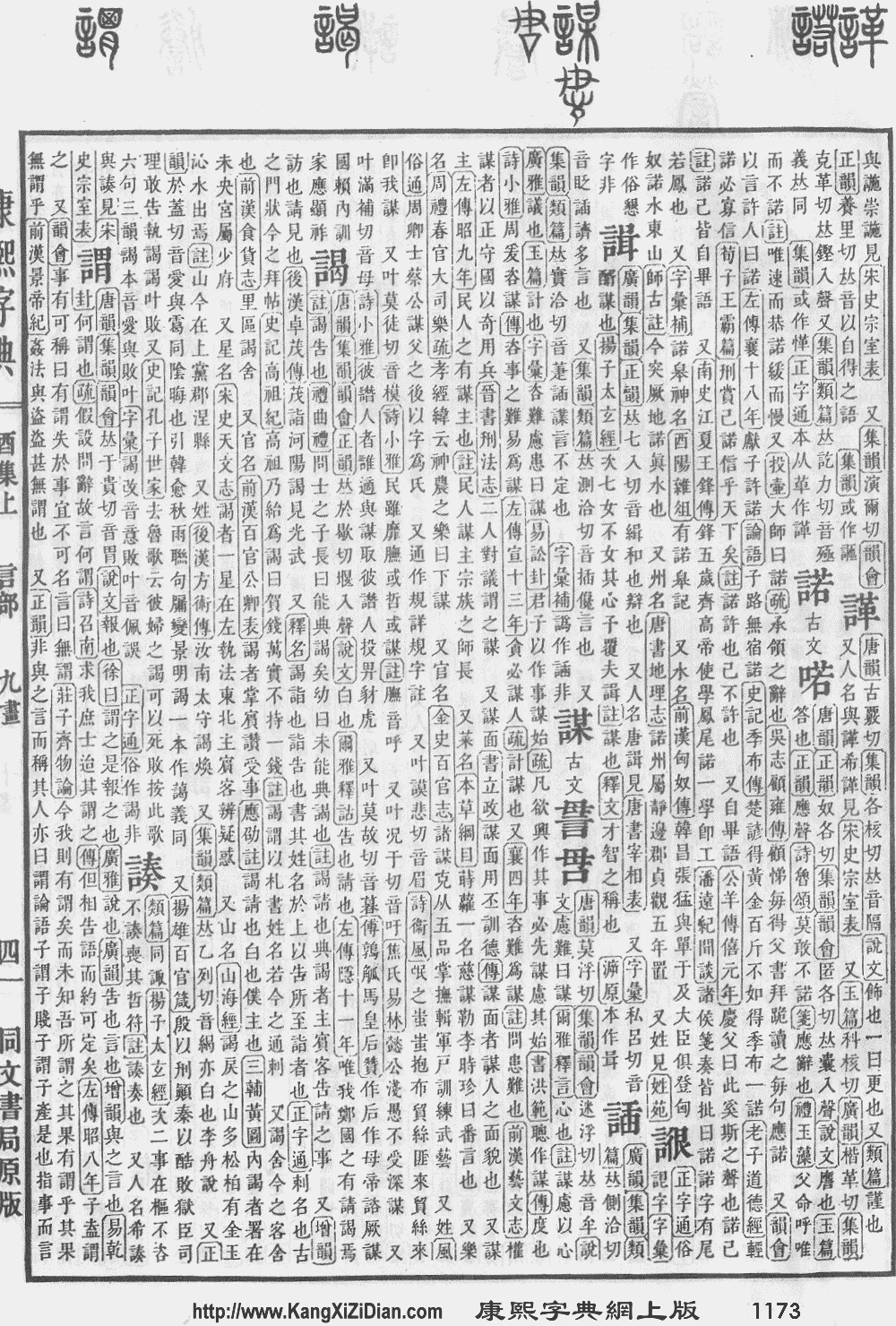
  • KangXi: page 1173, character 7
  • Dai Kanwa Jiten: character 35756
  • Dae Jaweon: page 1638, character 4
  • Hanyu Da Zidian (first edition): volume 6, page 3993, character 19
  • Unihan data for U+8B00

Chinese

trad. 謀
simp. 谋

Glyph origin

Historical forms of the character 謀
Shuowen Jiezi (compiled in Han)
Small seal script

Phono-semantic compound (形聲, OC *mɯ) : semantic 言 + phonetic 某 (OC *mɯʔ).

Pronunciation


  • Dialectal data
Variety Location 謀
Mandarin Beijing /mou³⁵/
Harbin /mɤ²⁴/
Tianjin /mou⁴⁵/
Jinan /mu⁴²/
Qingdao /mu⁴²/
Zhengzhou /mu⁴²/
Xi'an /mu²⁴/
Xining /mv̩²⁴/
Yinchuan /mu⁵³/
Lanzhou /mu⁵³/
Ürümqi /mu⁵¹/
Wuhan /məu²¹³/
Chengdu /moŋ³¹/
/məu³¹/
Guiyang /moŋ²¹/
Kunming /məu³¹/
Nanjing /məɯ²⁴/
Hefei /mʊ⁵⁵/
Jin Taiyuan /mu¹¹/
Pingyao /mu⁵³/
/mu¹³/
Hohhot /mu³¹/
Wu Shanghai /mɤ²³/
Suzhou /mɤ¹³/
Hangzhou /mei²¹³/
Wenzhou /mɜ³¹/
Hui Shexian /mɔ⁴⁴/
Tunxi /mo⁴⁴/
Xiang Changsha /məu¹³/
Xiangtan /məɯ¹²/
Gan Nanchang /mɛu⁴⁵/
Hakka Meixian /meu¹¹/
Taoyuan /meu¹¹/
Cantonese Guangzhou /mɐu²¹/
Nanning /mɐu²¹/
Hong Kong /mɐu²¹/
Min Xiamen (Min Nan) /bɔ³⁵/
Fuzhou (Min Dong) /mɛu⁵³/
Jian'ou (Min Bei) /me²¹/
Shantou (Min Nan) /mõu⁵⁵/
Haikou (Min Nan) /mɔu³¹/

Rime
Character 謀
Reading # 1/1
Initial (聲) 明 (4)
Final (韻) 尤 (136)
Tone (調) Level (Ø)
Openness (開合) Open
Division (等) III
Fanqie 莫浮切
Reconstructions
Zhengzhang
Shangfang
/mɨu/
Pan
Wuyun
/miu/
Shao
Rongfen
/miəu/
Edwin
Pulleyblank
/muw/
Li
Rong
/miu/
Wang
Li
/mĭəu/
Bernard
Karlgren
/mi̯ə̯u/
Expected
Mandarin
Reflex
móu
Expected
Cantonese
Reflex
mau4
Baxter–Sagart system 1.1 (2014)
Character 謀
Reading # 1/1
Modern
Beijing
(Pinyin)
móu
Middle
Chinese
‹ mjuw ›
Old
Chinese
/*mə/
English plan (v.)

Notes for Old Chinese notations in the Baxter–Sagart system:

* Parentheses "()" indicate uncertain presence;
* Square brackets "[]" indicate uncertain identity, e.g. *[t] as coda may in fact be *-t or *-p;
* Angle brackets "<>" indicate infix;
* Hyphen "-" indicates morpheme boundary;

* Period "." indicates syllable boundary.
Zhengzhang system (2003)
Character 謀
Reading # 1/1
No. 9276
Phonetic
component
某
Rime
group
之
Rime
subdivision
0
Corresponding
MC rime
謀
Old
Chinese
/*mɯ/

Definitions

謀

  1. stratagem; device; plan; scheme
  2. to plan; to plot; to devise
    謀反/谋反  ―  móufǎn  ―  to plot a rebellion
  3. to seek; to work for
    謀取/谋取  ―  móuqǔ  ―  to seek
    謀生/谋生  ―  móushēng  ―  to make a living
  4. to consult

Compounds

Japanese

Kanji

謀

(common “Jōyō” kanji)

  1. conspire
  2. cheat
  3. impose on
  4. plan
  5. devise
  6. scheme
  7. have in mind
  8. deceive

Readings

Korean

Hanja

謀 (eumhun 꾀할 모 (kkoehal mo))

  1. Hanja form? of 모 (“plan, scheme”).
  2. Hanja form? of 모 (“stratagem”).

Vietnamese

Han character

謀: Hán Nôm readings: mưu

  1. This term needs a translation to English. Please help out and add a translation, then remove the text {{rfdef}}.
This article is issued from Wiktionary. The text is licensed under Creative Commons - Attribution - Sharealike. Additional terms may apply for the media files.