是
| ||||||||
Translingual
| Stroke order | |||
|---|---|---|---|
 | |||
| Stroke order | |||
|---|---|---|---|
 | |||
Han character
是 (Kangxi radical 72, 日+5, 9 strokes, cangjie input 日一卜人 (AMYO), four-corner 60801, composition ⿱日𤴓 or ⿱旦龰)
- Shuowen Jiezi radical №32
Derived characters
References
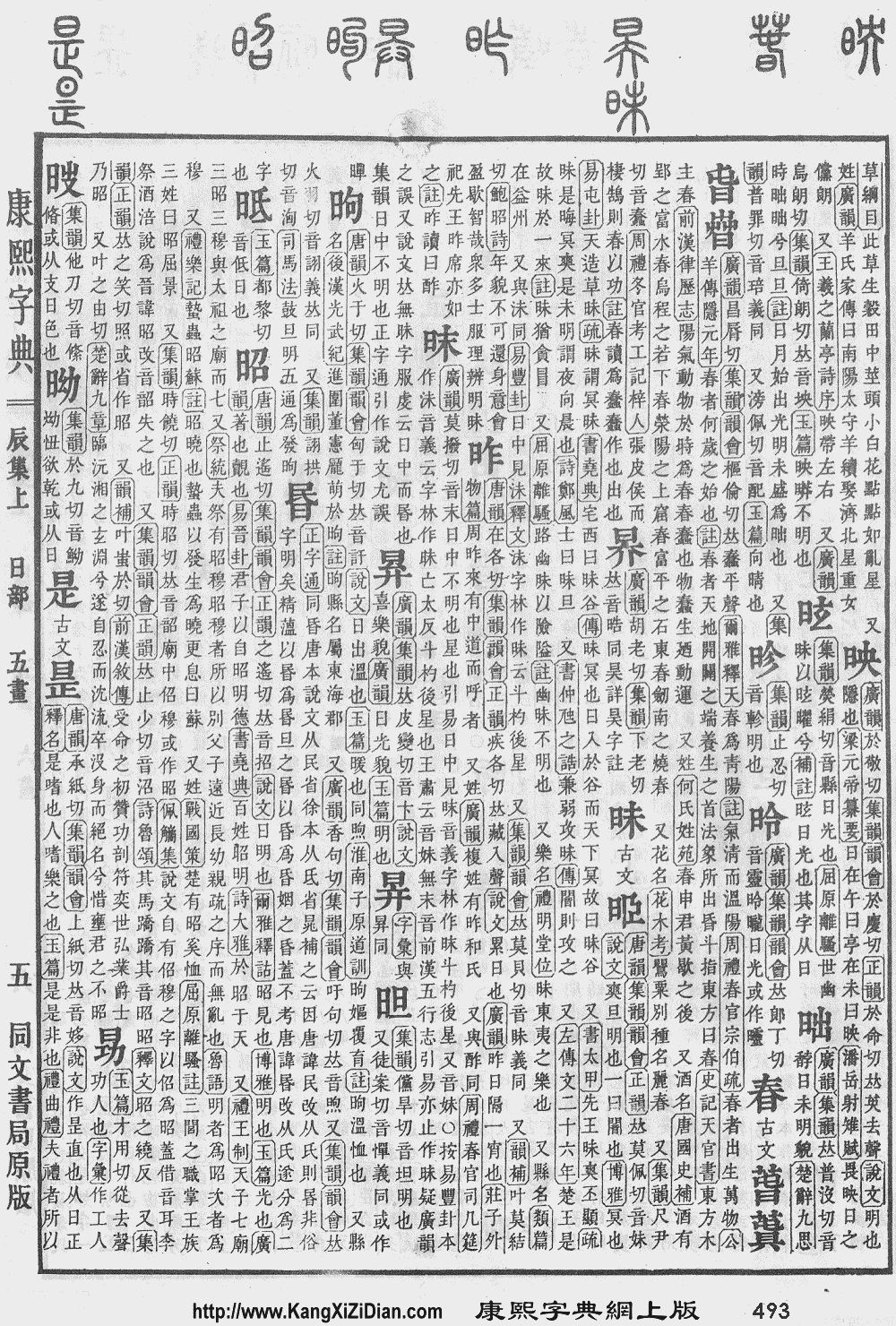
- KangXi: page 493, character 26
- Dai Kanwa Jiten: character 13859
- Dae Jaweon: page 858, character 6
- Hanyu Da Zidian (first edition): volume 2, page 1497, character 5
- Unihan data for U+662F
Chinese
| simp. and trad. |
是 | |
|---|---|---|
| alternative forms | 昰 𣆞 | |
Glyph origin
| Historical forms of the character 是 | |||||||
|---|---|---|---|---|---|---|---|
| Western Zhou | Spring and Autumn | Warring States | Shuowen Jiezi (compiled in Han) | Liushutong (compiled in Ming) | |||
| Bronze inscriptions | Bronze inscriptions | Bronze inscriptions | Chu slip and silk script | Qin slip script | Shizhoupian script | Small seal script | Transcribed ancient scripts |
 |
 |
 |
 |
 |
 |
 |
 |
| Old Chinese | |
|---|---|
| 鞮 | *teː |
| 隄 | *teː, *deː |
| 堤 | *teː, *teːʔ, *dje |
| 鍉 | *teː |
| 蝭 | *teːs, *deː |
| 醍 | *tʰeːʔ, *deː |
| 緹 | *tʰeːʔ, *deː |
| 提 | *deː, *dje |
| 瑅 | *deː |
| 題 | *deː, *deːs |
| 媞 | *deː, *deːʔ, *djeʔ |
| 褆 | *deː, *deʔ, *djeʔ |
| 禔 | *deː, *tje, *dje |
| 騠 | *deː |
| 趧 | *deː |
| 鯷 | *deː, *deːs, *djes |
| 踶 | *deːs, *deʔ |
| 徥 | *deʔ, *djeʔ |
| 匙 | *dje |
| 是 | *djeʔ |
| 諟 | *djeʔ |
| 翨 | *hljes, *kles |
| 睼 | *tʰeːns |
| 寔 | *djɯɡ |
| 湜 | *dɯɡ |
| 遈 | *djɯɡ |
Originally a phono-semantic compound (形聲, OC *djeʔ) : semantic 早 + phonetic 止 (OC *kjɯʔ), but the original meaning is unclear. It has been suggested that 早 looks like a spoon, so 是 may have been the original character for 匙 (OC *dje, “spoon”). As early as in late bronze inscriptions, the lower part of 早 split off and combined with 止 to give 昰, which carried over to the small seal script, and Shuowen considers this a compound of 日 (“sun”) + 正 (“upright; right”) (i.e. as the upright sun).
Etymology
“This [an independent pronoun] > be right, correct, to be, so”. From Proto-Sino-Tibetan *m-daj ~ m-di (“that; this”). In Chinese, cognate with 寔 (OC *djɯɡ, “this”), 實 (OC *ɦliɡ, “this”), 之 (OC *tjɯ, “this; he; she; it”), 諟 (OC *djeʔ, “to examine, to consider”). In Tibeto-Burman, cognate with Tibetan དེ (de, “that”), Jingpho dai, ndai (“this”).
Pronunciation
Definitions
是
- (literary) this; this thing
- 是日 ― shìrì ― this day
- (copulative) to be
- indicating that the subject and object are the same.
- indicating that the subject has the qualities described by a noun or noun phrase.
- indicating a place being occupied by the object, where the place forms the subject.
- a particle emphasizing the word following it.
- a particle showing agreement. In this meaning, 是 is stressed. truly; indeed.
- (in affirmative answers) yes; right
- true; correct
- 不是 ― búshì ― fault; mistake; wrongdoing
- 你說得是/你说得是 ― nǐ shuō de shì ― What you said is right
- 各行其是 ― gè xíng qí shì ― to have each going his own way, i.e., doing what he considers right
- 共商國是/共商国是 ― gòng shāng guóshì ― to discuss national affairs (This is a fossil word from Ancient Chinese where 是 (OC *djeʔ) originally means "what is right (for the country)", i.e., "laws and policies")
- 彼人是哉!子曰何其? [Pre-Classical Chinese, trad. and simp.]
- From: The Classic of Poetry, c. 11th – 7th centuries BCE, translated based on James Legge's version
- Bǐrén shì zāi! Zǐ yuē hé qí? [Pinyin]
- Those men are / That man is right! What do you mean by your words?
- a surname
Usage notes
When translated as "to be", 是 is used only to link two nouns or nominal expressions.
是 is not used to link a noun and an adjective. The following sentence would be incorrect:
The correct sentence is
Here, 很 (hěn) is used as a filler to link a noun and an adjective and is not interpreted as "very".
A way to use 是 with an adjective is to use 的 (de) after the adjective to turn it into a noun.
Synonyms
Descendants
- Wutunhua: hai
Compounds
|
|
|
References
- “是”, in 漢語多功能字庫 (Multi-function Chinese Character Database), 香港中文大學 (the Chinese University of Hong Kong), 2014–
- “Entry #5013”, in 臺灣閩南語常用詞辭典 [Dictionary of Frequently-Used Taiwan Minnan] (in Chinese and Min Nan), Ministry of Education, R.O.C., 2011.
Japanese
Readings
Etymology 1
| Kanji in this term |
|---|
| 是 |
| ぜ Grade: S |
| goon |
Pronunciation
- IPA(key): [d͡ze̞]
Etymology 2
| Kanji in this term |
|---|
| 是 |
| これ Grade: S |
| kun’yomi |
| For pronunciation and definitions of 是 – see the following entry. | ||
| ||
| (This term, 是, is an alternative spelling of the above term.) |
Korean
Old Korean
Etymology 1
A semantically adopted phonogram (hun'gaja). 是 means "this" in Chinese, and the native Korean word for "this" is 이 (i).
Etymology 2
A phonetically adopted phonogram (eum'gaja), from the Middle Chinese reading 是 (MC d͡ʑiᴇX).