蹻
See also: 蹺
| ||||||||
Translingual
Han character
蹻 (Kangxi radical 157, 足+12, 19 strokes, cangjie input 口一竹大月 (RMHKB), four-corner 62127, composition ⿰𧾷喬)
References
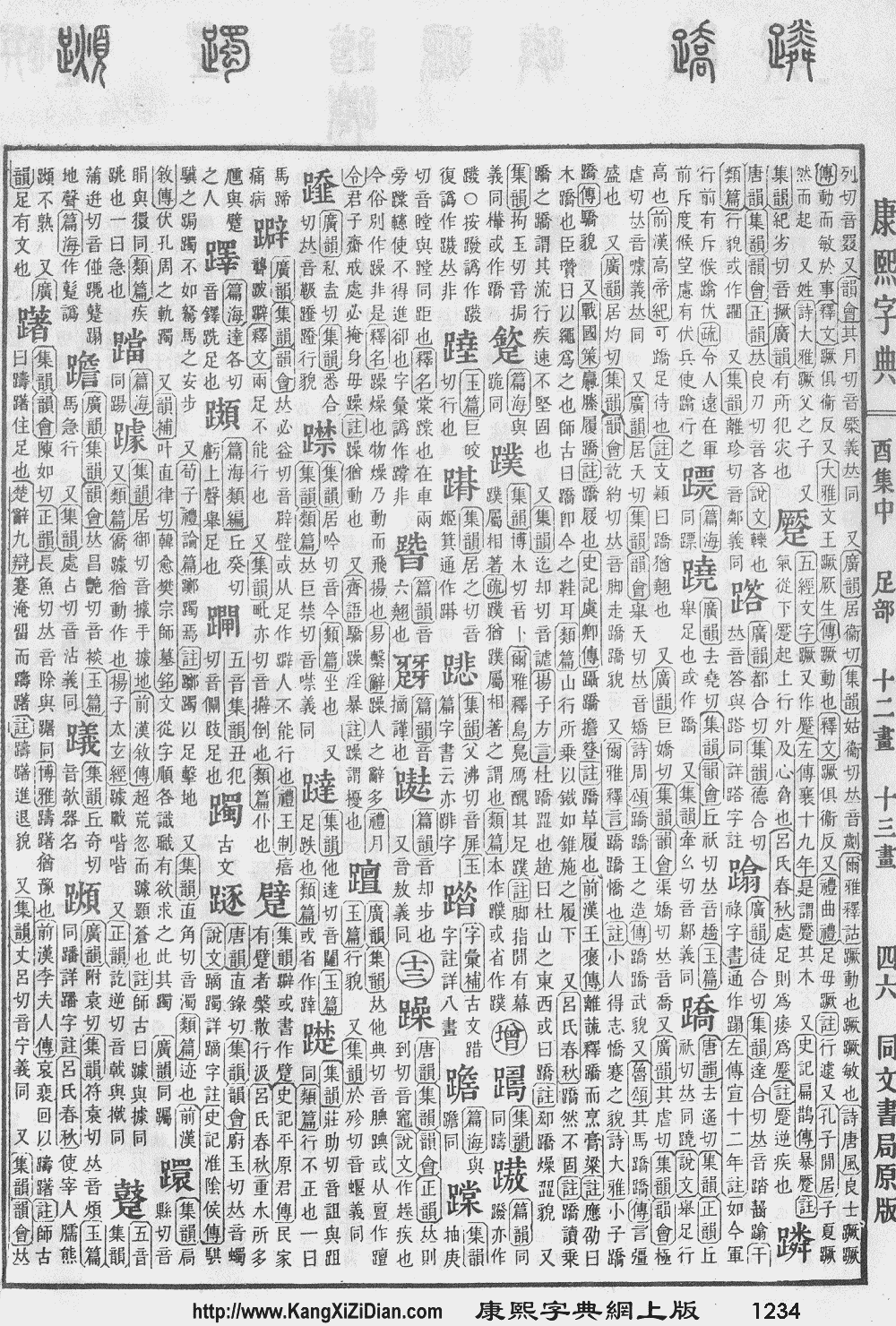
- KangXi: page 1234, character 7
- Dai Kanwa Jiten: character 37887
- Dae Jaweon: page 1706, character 15
- Hanyu Da Zidian (first edition): volume 6, page 3739, character 19
- Unihan data for U+8E7B
Chinese
Glyph origin
| Historical forms of the character 蹻 | |
|---|---|
| Shuowen Jiezi (compiled in Han) | Liushutong (compiled in Ming) |
| Small seal script | Transcribed ancient scripts |
 |
 |
Characters in the same phonetic series (喬) (Zhengzhang, 2003)
| Old Chinese | |
|---|---|
| 驕 | *krew |
| 嬌 | *krew, *krewʔ, *ɡrew |
| 憍 | *krew, *kʰrew |
| 穚 | *krew |
| 鷮 | *krew, *ɡrew |
| 蕎 | *krew, *ɡrew |
| 喬 | *krew, *ɡrew |
| 簥 | *krew |
| 撟 | *krew, *krewʔ |
| 矯 | *krewʔ |
| 鱎 | *krewʔ |
| 敽 | *krewʔ |
| 蟜 | *krewʔ, *ɡrew |
| 譑 | *krewʔ, *kʰews |
| 蹻 | *krewʔ, *kʰew, *ɡrew, *kewɢ, *ɡewɢ |
| 繑 | *kʰew |
| 鞽 | *kʰrew |
| 趫 | *kʰrew, *ɡrew |
| 嘺 | *ɡew |
| 橋 | *ɡrew |
| 僑 | *ɡrew |
| 鐈 | *ɡrew |
| 毊 | *ɡrew, *qʰrew |
| 轎 | *ɡrew, *ɡrews |
| 嶠 | *ɡrews |
| 獢 | *qʰrew |
| 屩 | *kewɢ |
Etymology 1
| For pronunciation and definitions of 蹻 – see 蹺 (“to raise one's foot”). (This character, 蹻, is a variant form of 蹺.) |
Pronunciation
Definitions
蹻
- straw sandals
Pronunciation
Definitions
蹻
- see 蹻蹻 and 蹻勇
Compounds
|
|
|
References
- “蹻”, in 漢語多功能字庫 (Multi-function Chinese Character Database), 香港中文大學 (the Chinese University of Hong Kong), 2014–
Japanese
Korean
This article is issued from Wiktionary. The text is licensed under Creative Commons - Attribution - Sharealike. Additional terms may apply for the media files.