飽
See also: 饱
| ||||||||
Translingual
Han character
飽 (Kangxi radical 184, 食+5, 13 strokes, cangjie input 人戈心口山 (OIPRU), four-corner 87712, composition ⿰飠包)
References
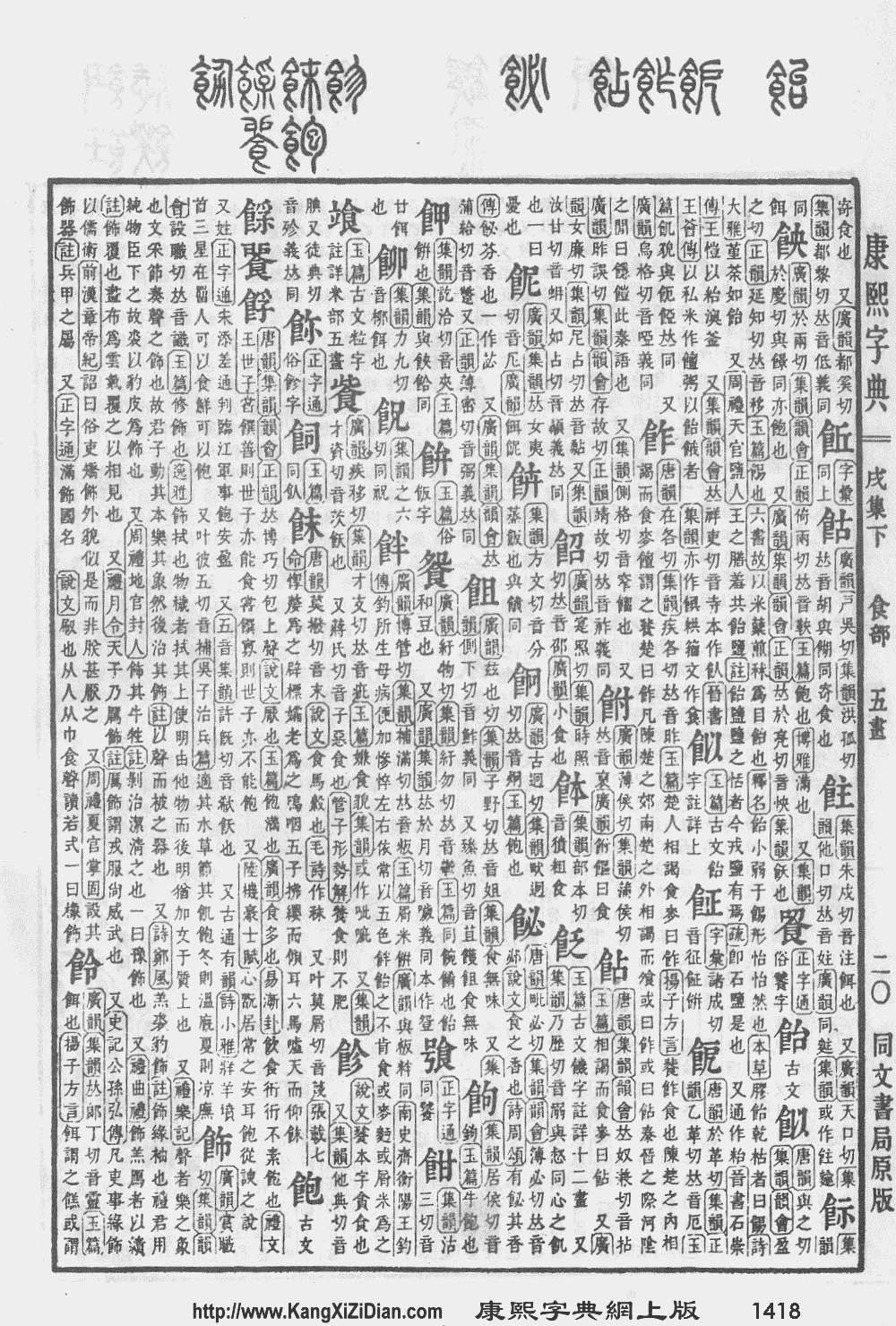
- KangXi: page 1418, character 38
- Dai Kanwa Jiten: character 44109
- Dae Jaweon: page 1942, character 42
- Hanyu Da Zidian (first edition): volume 7, page 4448, character 12
- Unihan data for U+98FD
Chinese
Glyph origin
| Historical forms of the character 飽 |
|---|
| Shuowen Jiezi (compiled in Han) |
| Small seal script |
 |
Characters in the same phonetic series (勹) (Zhengzhang, 2003)
| Old Chinese | |
|---|---|
| 袍 | *buː |
| 袌 | *buː, *buːs |
| 軳 | *buː |
| 抱 | *buːʔ |
| 勽 | *buːs, *mɯnʔ |
| 菢 | *buːs |
| 勹 | *pruː |
| 包 | *pruː |
| 胞 | *pruː, *pʰruː |
| 苞 | *pruː |
| 枹 | *pruː, *bu, *bu |
| 飽 | *pruːʔ |
| 泡 | *pʰruː, *m̥ʰruːs, *bruː |
| 炮 | *pʰruːs, *bruː |
| 皰 | *pʰruːs, *bruːs |
| 疱 | *pʰruːs, *bruːs |
| 跑 | *bruː, *bruːɡ |
| 咆 | *bruː |
| 庖 | *bruː |
| 匏 | *bruː |
| 刨 | *bruː |
| 狍 | *bruː |
| 炰 | *bruː |
| 鉋 | *bruː, *bruːs |
| 瓟 | *bruː, *bruːɡ |
| 颮 | *bruː, *pʰruːɡ |
| 鞄 | *bruː, *bruːʔ, *bruːs, *pʰruːɡ |
| 鮑 | *bruːʔ |
| 骲 | *bruːʔ, *bruːs, *bruːɡ, *pʰoːɡ |
| 玸 | *bu |
| 雹 | *bruːɡ |
| 窇 | *bruːɡ |
Phono-semantic compound (形聲, OC *pruːʔ) : semantic 食 (“food”) + phonetic 包 (OC *pruː).
For etymology 2, the 食 radical specifies its dietary use (instead of just being a generic wrap).
Pronunciation
Compounds
Derived terms from 飽
|
|
|
Pronunciation
Definitions
飽
- Alternative form of 包 (bāo, “bun; bread”).
- 1982, c:File:New York-Chinatown-08-Mott-Str.-Laeden-1982-gje.jpg
- c. 2020, 香港中文大學自學中心 [The Independent Learning Centre, CUHK], 粵語拼音速遞, 聲母: 玩一玩
- 2023,

References
- (Min Nan) “Entry #10320”, in 臺灣閩南語常用詞辭典 [Dictionary of Frequently-Used Taiwan Minnan] (in Chinese and Min Nan), Ministry of Education, R.O.C., 2011.
Japanese
| Shinjitai | 飽 | |
| Kyūjitai [1] |
飽󠄁 飽+ 󠄁?(Adobe-Japan1) |
 |
| 飽󠄄 飽+ 󠄄?(Hanyo-Denshi) (Moji_Joho) | ||
| The displayed kanji may be different from the image due to your environment. See here for details. | ||
Kanji
飽
- This term needs a translation to English. Please help out and add a translation, then remove the text
{{rfdef}}.
Readings
References
- “飽”, in 漢字ぺディア (Kanjipedia) (in Japanese), 日本漢字能力検定協会, 2015—2023
Korean
Etymology
From Middle Chinese 飽 (MC pˠauX). Recorded as Middle Korean 포〯 (phwǒ) (Yale: pwo) in Hunmong Jahoe (訓蒙字會 / 훈몽자회), 1527.
Compounds
Vietnamese
This article is issued from Wiktionary. The text is licensed under Creative Commons - Attribution - Sharealike. Additional terms may apply for the media files.