鬲

鬲 U+9B32, 鬲
CJK UNIFIED IDEOGRAPH-9B32
← 鬱
[U+9B31]
CJK Unified Ideographs 鬳 →
[U+9B33]
⿀ U+2FC0, ⿀
KANGXI RADICAL CAULDRON
← ⾿
[U+2FBF]
Kangxi Radicals ⿁ →
[U+2FC1]

Translingual

Stroke order

Han character

鬲 (Kangxi radical 193, 鬲+0, 10 strokes, cangjie input 一口月中 (MRBL), four-corner 10227, composition ⿱𠮛⿵冂⿱䒑丨(GHT) or ⿱𠮛⿵𦉪丅(JK))

  1. Kangxi radical #193, ⿀.

Derived characters

  • 徹 (earlier forms also had a pot, later replaced with 育)

References

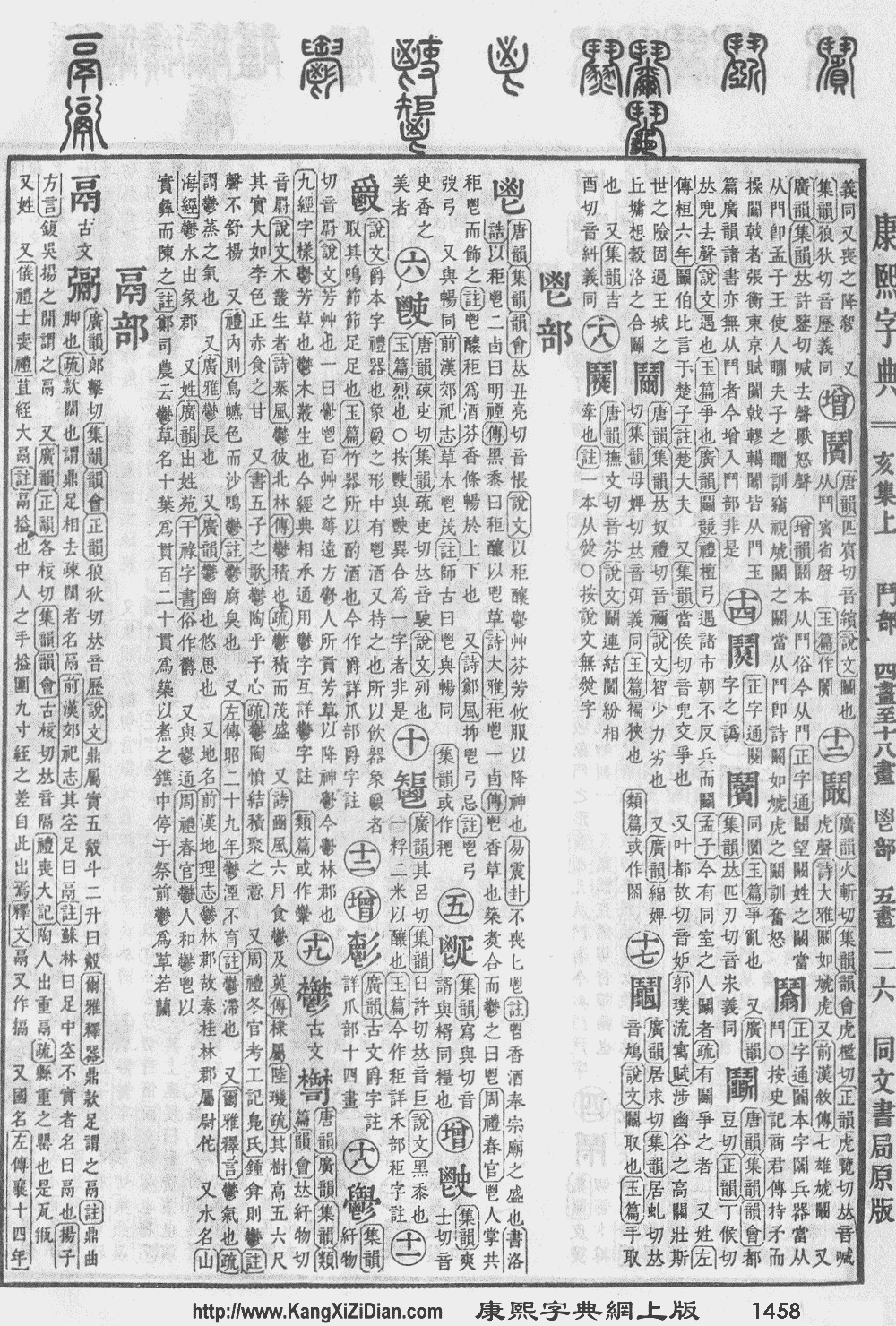
  • KangXi: page 1458, character 20
  • Dai Kanwa Jiten: character 45672
  • Dae Jaweon: page 1991, character 2
  • Hanyu Da Zidian (first edition): volume 7, page 4587, character 1
  • Unihan data for U+9B32

Chinese

simp. and trad.
鬲
alternative forms 䰛
㽁

Glyph origin

Historical forms of the character 鬲
Shang Western Zhou Shuowen Jiezi (compiled in Han) Liushutong (compiled in Ming)
Oracle bone script Bronze inscriptions Small seal script Transcribed ancient scripts

Pictogram (象形) of some pottery.

Pronunciation 1


Rime
Character 鬲
Reading # 2/2
Initial (聲) 來 (37)
Final (韻) 青 (127)
Tone (調) Checked (Ø)
Openness (開合) Open
Division (等) IV
Fanqie 郎擊切
Reconstructions
Zhengzhang
Shangfang
/lek̚/
Pan
Wuyun
/lek̚/
Shao
Rongfen
/lɛk̚/
Edwin
Pulleyblank
/lɛjk̚/
Li
Rong
/lek̚/
Wang
Li
/liek̚/
Bernard
Karlgren
/liek̚/
Expected
Mandarin
Reflex
lì
Expected
Cantonese
Reflex
lik6
Baxter–Sagart system 1.1 (2014)
Character 鬲
Reading # 2/2
Modern
Beijing
(Pinyin)
lì
Middle
Chinese
‹ lek ›
Old
Chinese
/*k.rˁek/
English tripod with hollow legs

Notes for Old Chinese notations in the Baxter–Sagart system:

* Parentheses "()" indicate uncertain presence;
* Square brackets "[]" indicate uncertain identity, e.g. *[t] as coda may in fact be *-t or *-p;
* Angle brackets "<>" indicate infix;
* Hyphen "-" indicates morpheme boundary;

* Period "." indicates syllable boundary.
Zhengzhang system (2003)
Character 鬲
Reading # 2/2
No. 3851
Phonetic
component
鬲
Rime
group
錫
Rime
subdivision
0
Corresponding
MC rime
靂
Old
Chinese
/*ɡ·reːɡ/

Definitions

鬲

  1. (historical) li; a type of cauldron with three hollow legs and used for cooking
    See also: 甗
  2. (historical) a type of earthenware used in funerals

Pronunciation 2


Rime
Character 鬲
Reading # 1/2
Initial (聲) 見 (28)
Final (韻) 耕 (119)
Tone (調) Checked (Ø)
Openness (開合) Open
Division (等) II
Fanqie 古核切
Reconstructions
Zhengzhang
Shangfang
/kˠɛk̚/
Pan
Wuyun
/kᵚæk̚/
Shao
Rongfen
/kɐk̚/
Edwin
Pulleyblank
/kəɨjk̚/
Li
Rong
/kɛk̚/
Wang
Li
/kæk̚/
Bernard
Karlgren
/kæk̚/
Expected
Mandarin
Reflex
ge
Expected
Cantonese
Reflex
gak1
Baxter–Sagart system 1.1 (2014)
Character 鬲
Reading # 1/2
Modern
Beijing
(Pinyin)
gé
Middle
Chinese
‹ kɛk ›
Old
Chinese
/*C.qˁ<r>ik/
English yoke

Notes for Old Chinese notations in the Baxter–Sagart system:

* Parentheses "()" indicate uncertain presence;
* Square brackets "[]" indicate uncertain identity, e.g. *[t] as coda may in fact be *-t or *-p;
* Angle brackets "<>" indicate infix;
* Hyphen "-" indicates morpheme boundary;

* Period "." indicates syllable boundary.
Zhengzhang system (2003)
Character 鬲
Reading # 1/2
No. 3843
Phonetic
component
鬲
Rime
group
錫
Rime
subdivision
0
Corresponding
MC rime
隔
Old
Chinese
/*kreːɡ/

Definitions

鬲

  1. Alternative form of 隔 (gé).
  2. Alternative form of 膈 (gé).
  3. Alternative form of 槅 (gé).
  4. (~縣) Ge County (a county in modern Shandong)
  5. a surname

Compounds

  • 肝鬲
  • 鬲俞
  • 鬲津河

Pronunciation 3


Definitions

鬲

  1. Alternative form of 軛/轭 (è).
  2. Alternative form of 搹.
  3. Alternative form of 厄 (è).

Japanese

Kanji

鬲

(uncommon “Hyōgai” kanji)

Readings

Kanji in this term
鬲
れき
Hyōgaiji
on’yomi

Etymology

Middle Chinese 鬲

Pronunciation

Noun

鬲(れき) • (reki) 

  1. a cauldron with three hollow legs used in ancient China

References

  1. 2006, 大辞林 (Daijirin), Third Edition (in Japanese), Tōkyō: Sanseidō, →ISBN

Korean

Hanja

鬲 • (gyeok) (hangeul 격, revised gyeok, McCune–Reischauer kyŏk, Yale kyek) 鬲 • (ryeok) (hangeul 력)

  1. This term needs a translation to English. Please help out and add a translation, then remove the text {{rfdef}}.

Vietnamese

Han character

鬲: Hán Nôm readings: cách

  1. This term needs a translation to English. Please help out and add a translation, then remove the text {{rfdef}}.
This article is issued from Wiktionary. The text is licensed under Creative Commons - Attribution - Sharealike. Additional terms may apply for the media files.