魅

魅 U+9B45, 魅
CJK UNIFIED IDEOGRAPH-9B45
← 魄
[U+9B44]
CJK Unified Ideographs 魆 →
[U+9B46]

Translingual

Han character

魅 (Kangxi radical 194, 鬼+5, 15 strokes, cangjie input 竹戈十木 (HIJD), four-corner 25219, composition ⿺鬼未)

References

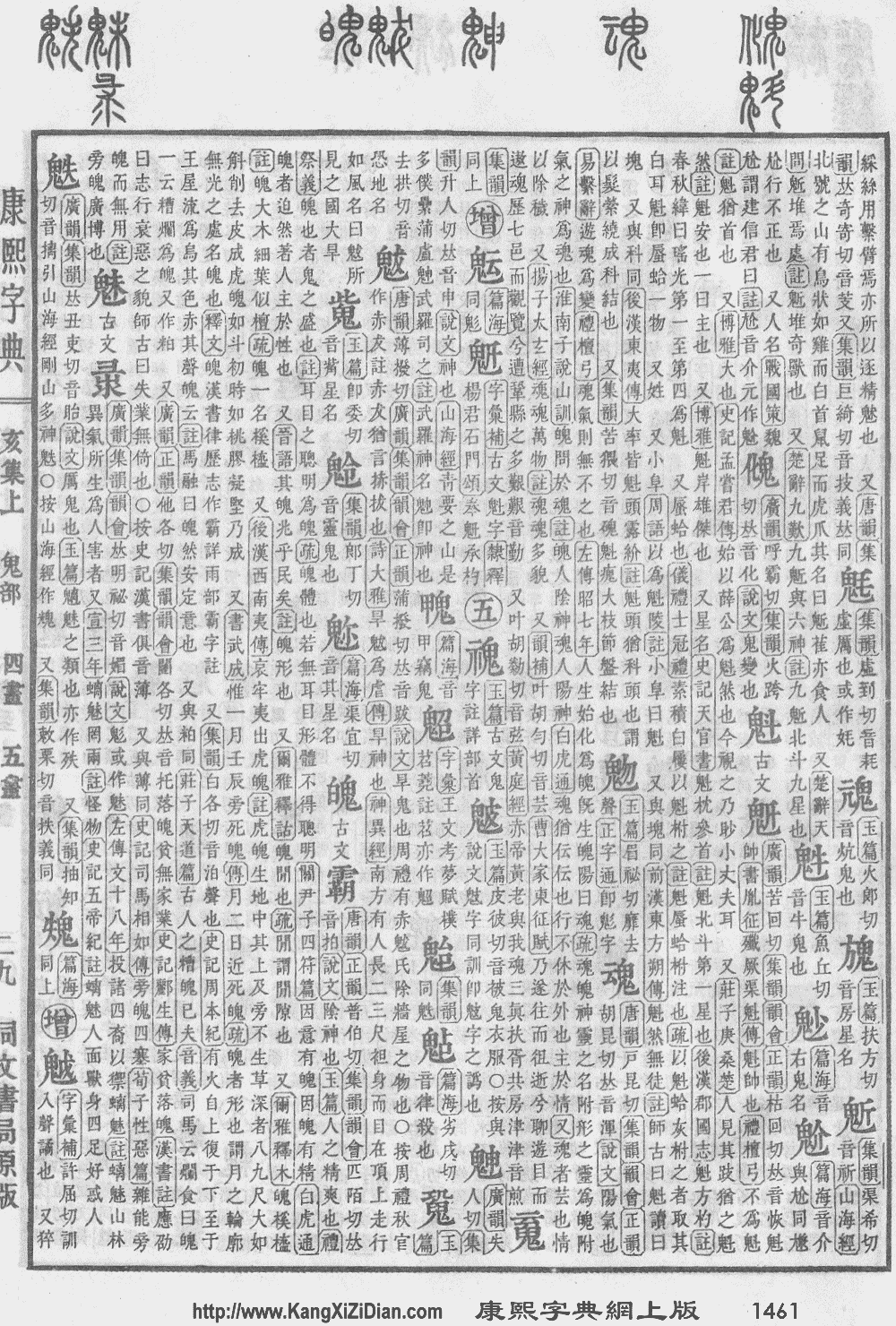
  • KangXi: page 1461, character 30
  • Dai Kanwa Jiten: character 45811
  • Dae Jaweon: page 1995, character 23
  • Hanyu Da Zidian (first edition): volume 7, page 4430, character 1
  • Unihan data for U+9B45

Chinese

trad. 魅
simp. # 魅
alternative forms 鬽
䰨
𢑘
𧱋
䰪

Glyph origin

Phono-semantic compound (形聲, OC *mrɯds) : phonetic 未 (OC *mɯds) + semantic 鬼 (“spirit”).

Pronunciation


Rime
Character 魅
Reading # 1/1
Initial (聲) 明 (4)
Final (韻) 脂 (17)
Tone (調) Departing (H)
Openness (開合) Open
Division (等) III
Fanqie 明祕切
Reconstructions
Zhengzhang
Shangfang
/mˠiɪH/
Pan
Wuyun
/mᵚiH/
Shao
Rongfen
/miɪH/
Edwin
Pulleyblank
/mjiH/
Li
Rong
/mjiH/
Wang
Li
/miH/
Bernard
Karlgren
/miH/
Expected
Mandarin
Reflex
mì
Expected
Cantonese
Reflex
mei6
Baxter–Sagart system 1.1 (2014)
Character 魅
Reading # 1/1
Modern
Beijing
(Pinyin)
mèi
Middle
Chinese
‹ mijH ›
Old
Chinese
/*mr[ə][t]-s/
English 魑魅 trhje.mijH a kind of demon

Notes for Old Chinese notations in the Baxter–Sagart system:

* Parentheses "()" indicate uncertain presence;
* Square brackets "[]" indicate uncertain identity, e.g. *[t] as coda may in fact be *-t or *-p;
* Angle brackets "<>" indicate infix;
* Hyphen "-" indicates morpheme boundary;

* Period "." indicates syllable boundary.
Zhengzhang system (2003)
Character 魅
Reading # 1/1
No. 12911
Phonetic
component
未
Rime
group
隊
Rime
subdivision
1
Corresponding
MC rime
郿
Old
Chinese
/*mrɯds/
Notes 說文同鬽

Definitions

魅

  1. (mythology) a kind of legendary evil spirit
    魑魅  ―  chīmèi  ―  evil spirits from mountain forests
    鬼魅  ―  guǐmèi  ―  all kinds of ghosts and monsters
  2. to captivate; to charm; to seduce
    魅力  ―  mèilì  ―  charm

Compounds

  • 為鬼為魅/为鬼为魅
  • 鬼魅伎倆/鬼魅伎俩
  • 魑魅魍魎/魑魅魍魉 (chīmèi wǎngliǎng)
  • 魘魅/魇魅

Japanese

Kanji

魅

(common “Jōyō” kanji)

  1. fascination
  2. charm
  3. bewitch

Readings

Compounds

Affix

魅(み) • (mi) 

  1. charm; fascination

Korean

Etymology

From a corrupted or unorthodox reading.

Historical readings

The original reading is 미 (mi) based on Middle Chinese 魅 (MC mˠiɪH).

Historical readings

Pronunciation

Hanja

Wikisource 魅 (eumhun 도깨비 매 (dokkaebi mae))

  1. Hanja form? of 매 (“charm”).

Compounds

References

  • 국제퇴계학회 대구경북지부 (國際退溪學會 大邱慶北支部) (2007). Digital Hanja Dictionary, 전자사전/電子字典.

Vietnamese

Han character

魅: Hán Nôm readings: mị

  1. This term needs a translation to English. Please help out and add a translation, then remove the text {{rfdef}}.
This article is issued from Wiktionary. The text is licensed under Creative Commons - Attribution - Sharealike. Additional terms may apply for the media files.