𧶠
| ||||||||
Translingual
Han character
𧶠 (Kangxi radical 154, 貝+8, 15 strokes, composition ⿳士四貝)
Derived characters
References
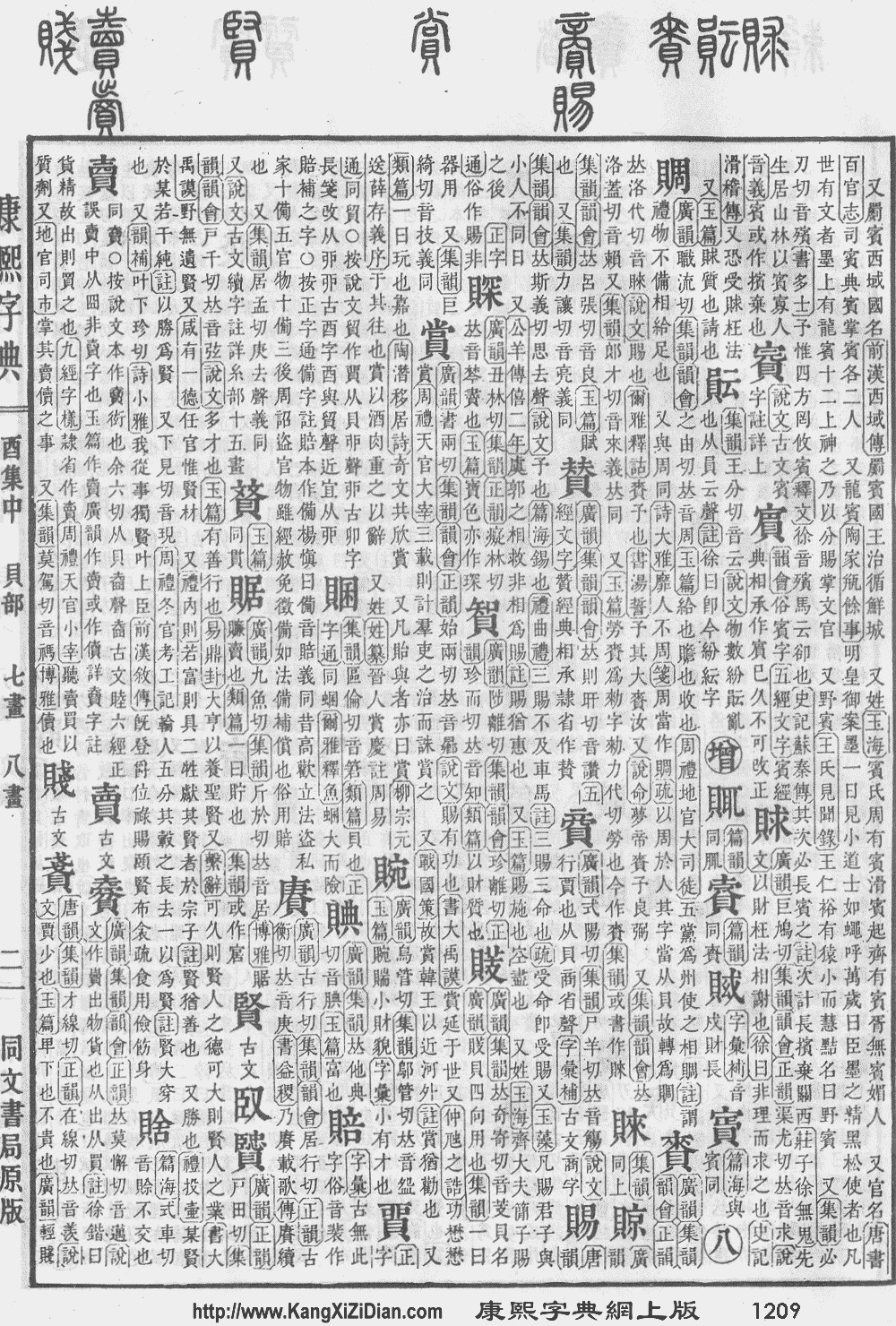
- KangXi: page 1209, character 32
- Hanyu Da Zidian (first edition): volume 6, page 3645, character 8
- Unihan data for U+27DA0
Chinese
| simp. and trad. |
𧶠 | |
|---|---|---|
| alternative forms | 𧷏 𧷗 𧸇 𧷷 | |
Glyph origin
Characters in the same phonetic series (𧶠) (Zhengzhang, 2003)
Phono-semantic compound (形聲, OC *luɡ) : phonetic 𡍬 (OC *mluɡ) + semantic 貝. 𡍬 was further reduced to 士 and 四 to give its present form, which is often confused with the graphically (and semantically) similar but etymologically unrelated 賣.
Pronunciation
Japanese
Kanji
𧶠
- This term needs a translation to English. Please help out and add a translation, then remove the text
{{rfdef}}.
This article is issued from Wiktionary. The text is licensed under Creative Commons - Attribution - Sharealike. Additional terms may apply for the media files.