竇
See also: 窦
| ||||||||
Translingual
Han character
竇 (Kangxi radical 116, 穴+15, 20 strokes, cangjie input 十金土田金 (JCGWC), four-corner 30806, composition ⿱穴賣(GTK) or ⿱穴𧶠(HJ))
References
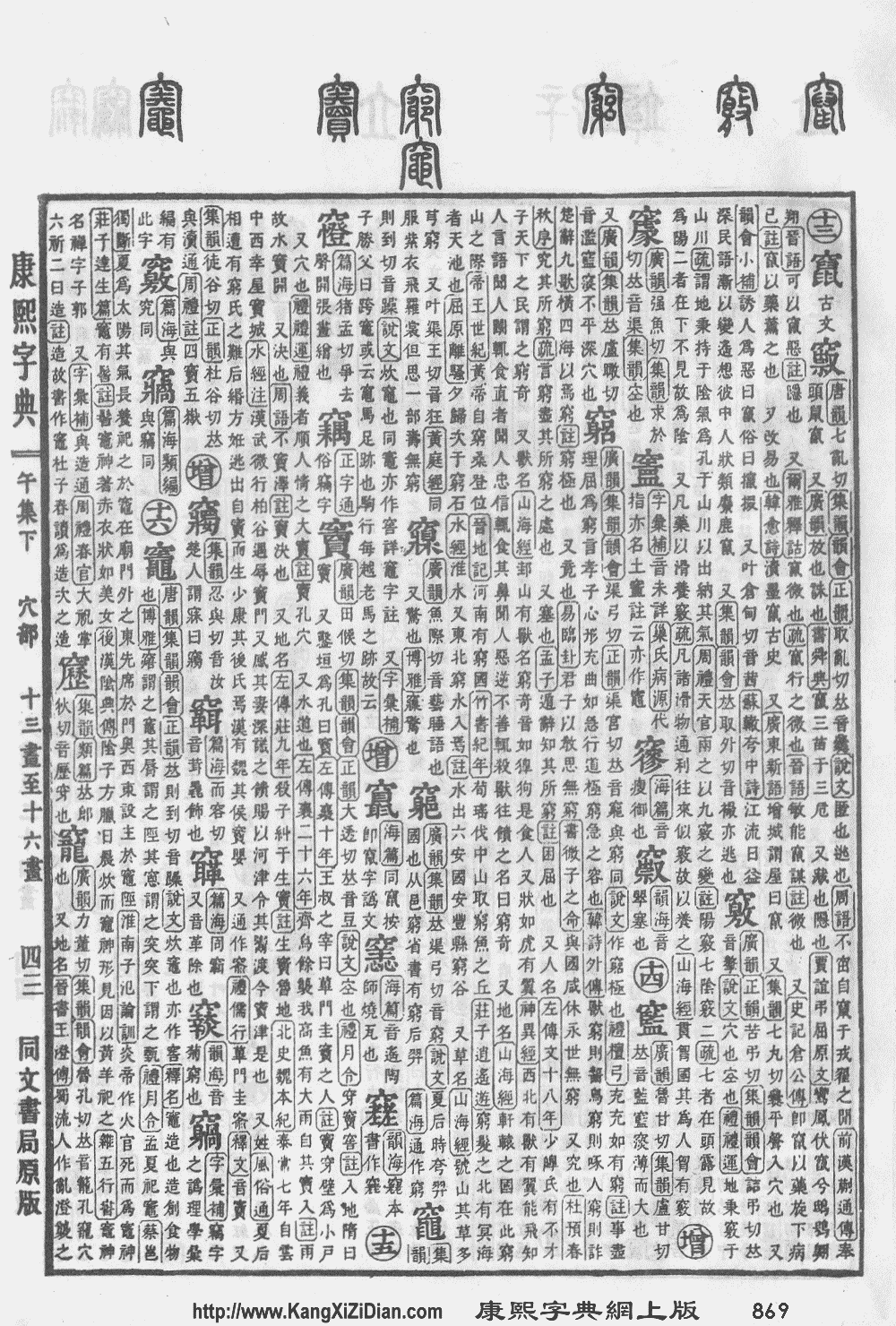
- KangXi: page 869, character 18
- Dai Kanwa Jiten: character 25695
- Dae Jaweon: page 1298, character 28
- Hanyu Da Zidian (first edition): volume 4, page 2745, character 12
- Unihan data for U+7AC7
Chinese
Glyph origin
| Historical forms of the character 竇 | |
|---|---|
| Shuowen Jiezi (compiled in Han) | Liushutong (compiled in Ming) |
| Small seal script | Transcribed ancient scripts |
 |
 |
Pronunciation
Definitions
竇
- hole; burrow
- (anatomy) cavity; sinus
- a surname
- 竇燕山,有義方;教五子,名俱揚。 [Literary Chinese, trad.]
- From: Three Character Classic, circa 13th century CE
- Dòu Yānshān, yǒu yìfāng; jiào wǔ zǐ, míng jù yáng. [Pinyin]
- Dou of the Yan Mountains had the right method. He taught five sons, each of whom raised the family reputation.
窦燕山,有义方;教五子,名俱扬。 [Literary Chinese, simp.]
Pronunciation
Definitions
竇
- (Cantonese, Hakka, Teochew) nest; den
- (Cantonese, Hakka, colloquial) home
- (Cantonese, Hakka, Teochew, colloquial) hideout
- 1883, Fielde, Adele Marion, “巢 (tàu)”, in A Pronouncing and Defining Dictionary of the Swatow Dialect, Arranged According to Syllables and Tones, Shanghai: American Presbyterian Mission Press, page 527:
-
See also
- 巢 (cháo)
Compounds
Japanese
Kanji
竇
- This term needs a translation to English. Please help out and add a translation, then remove the text
{{rfdef}}.
Korean
Hanja
竇 (eum 두 (du))
- This term needs a translation to English. Please help out and add a translation, then remove the text
{{rfdef}}.
Vietnamese
Han character
- This term needs a translation to English. Please help out and add a translation, then remove the text
{{rfdef}}.
References
This article is issued from Wiktionary. The text is licensed under Creative Commons - Attribution - Sharealike. Additional terms may apply for the media files.