㑢
See also: 𠊬
| ||||||||
Translingual
Han character
㑢 (Kangxi radical 9, 人+7, 9 strokes, cangjie input 人土戈中 (OGIL), four-corner 27220, composition ⿰亻却)
References
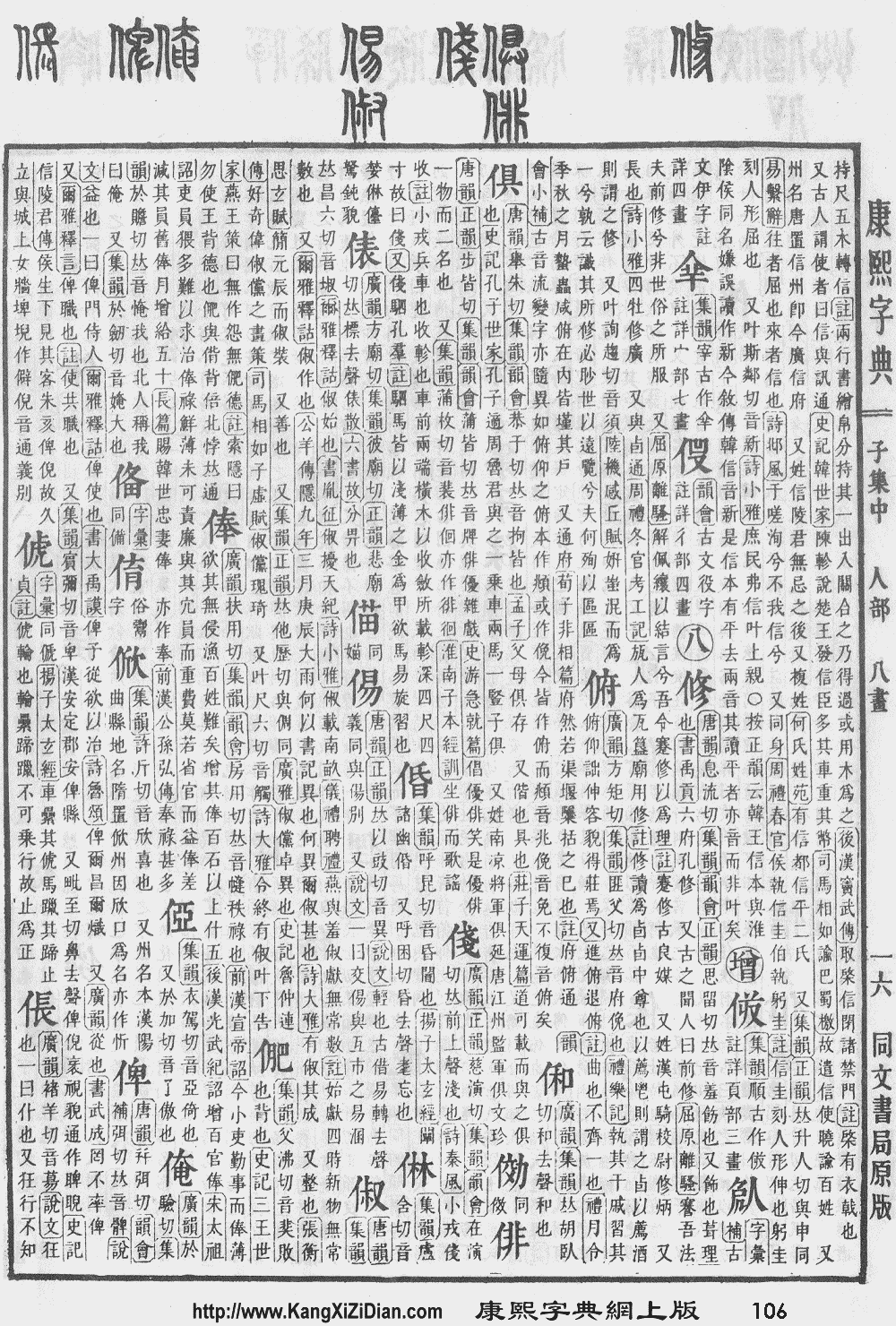
- KangXi: not present, would follow page 106, character 4
- Hanyu Da Zidian (first edition): not present, would follow volume 1, page 156, character 14
- Unihan data for U+3462
Chinese
Glyph origin
Etymology 1
| simp. and trad. |
㑢 | |
|---|---|---|
| alternative forms | 却 𠳞 屐 | |
From 佢 (“he; she; it”), with -k (plural marker) and tone change (Gan, 1997). Zhang (1997) suggests that this is a contraction of 佢個.
Pronunciation
Definitions
㑢
- (dialectal Cantonese, including Siyi, Yangjiang) they; them
- 㑢個/㑢个 [Taishanese] ― kiak4 goi1 [Wiktionary] ― their
- 㑢去誒囉。 [Taishanese, trad.]
- From: 2019, 李敏敏 (Li Minmin), 《台山方言助词研究》 [A Study on Auxiliary Word in Taishan Dialect] (thesis), Guangdong: Jinan University, page 7
- kiak4 hui1 e1 lo1. [Wiktionary]
- They have gone.
㑢去诶啰。 [Taishanese, simp.]
Synonyms
Dialectal synonyms of 他們 (“they”) [map]
Compounds
|
Etymology 2
| For pronunciation and definitions of 㑢 – see 𠊬 (“fatigued; weary; etc.”). (This character, 㑢, is a variant form of 𠊬.) |
References
- 《漢語方言大詞典》 (中華書局, 1999), Page 4243
- Dictionary of Chinese Character Variants (教育部異體字字典), C00225-005
This article is issued from Wiktionary. The text is licensed under Creative Commons - Attribution - Sharealike. Additional terms may apply for the media files.