囉
See also: 啰
| ||||||||
Translingual
Han character
囉 (Kangxi radical 30, 口+19, 22 strokes, cangjie input 口田中土 (RWLG), four-corner 66014, composition ⿰口羅)
- exclamatory final particle
- to nag
Derived characters
- 𮟩
References
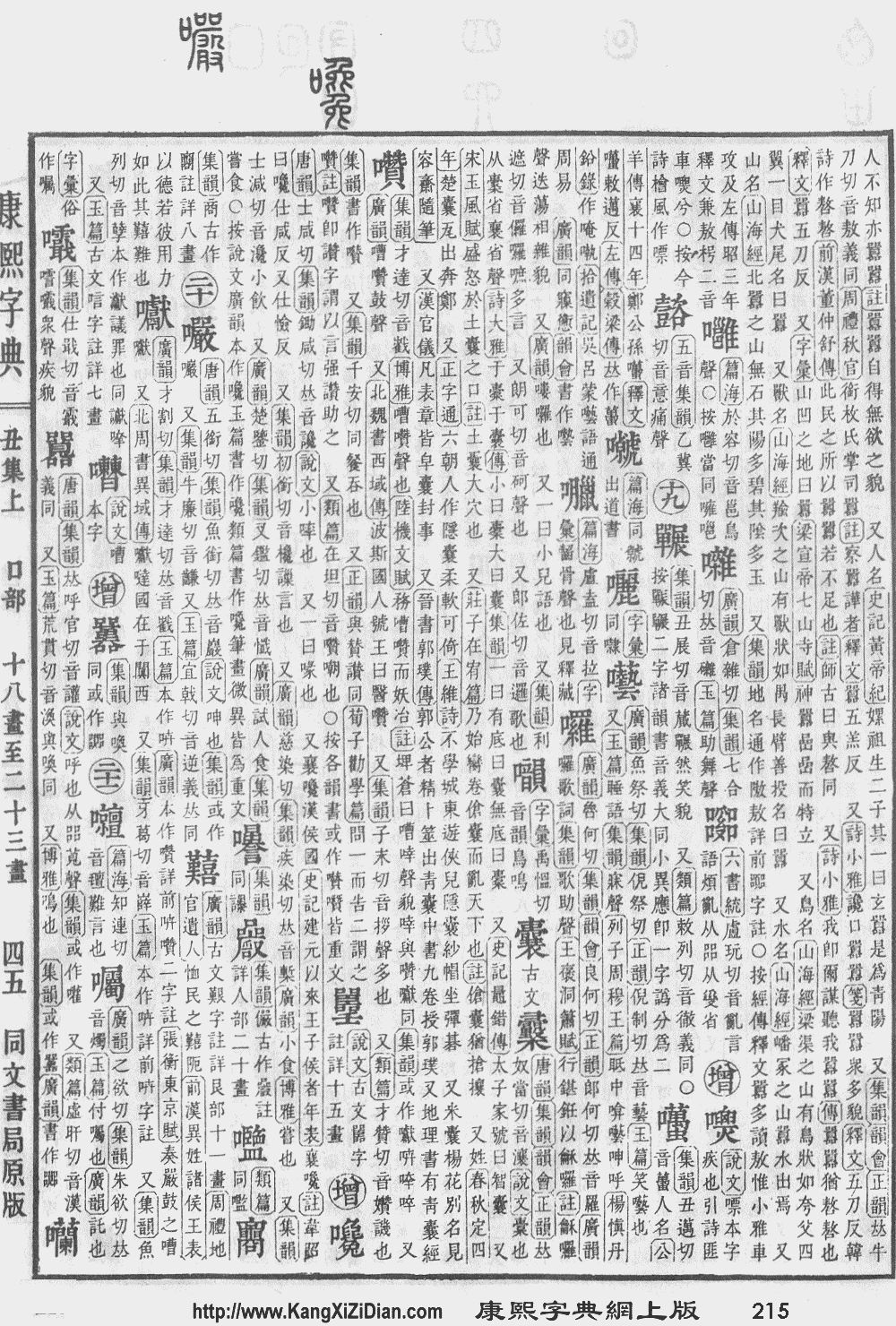
- KangXi: page 215, character 12
- Dai Kanwa Jiten: character 4631
- Dae Jaweon: page 438, character 12
- Hanyu Da Zidian (first edition): volume 1, page 708, character 4
- Unihan data for U+56C9
Chinese
Glyph origin
Characters in the same phonetic series (羅) (Zhengzhang, 2003)
Phono-semantic compound (形聲, OC *raːl) : semantic 口 (“mouth”) + phonetic 羅 (OC *raːl).
Pronunciation
Definitions
囉
Compounds
Pronunciation
Definitions
囉 (Cantonese)
- Normally used with 咪 (mai6); indicates that a suggestion or conclusion should be obvious.
- Normally used with 咪 (mai6); connects a condition to a result or suggestion.
- Statement-final particle used to express impatience or vexation.
- Statement-final particle used to invite agreement or sympathy.
Descendants
- → English: lor
Pronunciation
Synonyms
Dialectal synonyms of 屁股 (“buttocks”) [map]
Pronunciation
Definitions
囉
References
- “囉”, in 漢語多功能字庫 (Multi-function Chinese Character Database), 香港中文大學 (the Chinese University of Hong Kong), 2014–
- “Entry #13224”, in 臺灣閩南語常用詞辭典 [Dictionary of Frequently-Used Taiwan Minnan] (in Chinese and Min Nan), Ministry of Education, R.O.C., 2011.
- Kam Cheong Chiu (2017), “Exploring the Role of Utterance-Final Particle lō in Turn Allocation in Cantonese Conversation”, in NACCL, volume 1, issue 29
Japanese
Kanji
囉
- This term needs a translation to English. Please help out and add a translation, then remove the text
{{rfdef}}.
Korean
Hanja
囉 • (ra) (hangeul 라, revised ra, McCune–Reischauer ra)
- This term needs a translation to English. Please help out and add a translation, then remove the text
{{rfdef}}.
Vietnamese
This article is issued from Wiktionary. The text is licensed under Creative Commons - Attribution - Sharealike. Additional terms may apply for the media files.