亭
| ||||||||
Translingual
Han character
亭 (Kangxi radical 8, 亠+7, 9 strokes, cangjie input 卜口月弓 (YRBN), four-corner 00201, composition ⿱⿳亠口冖丁)
References
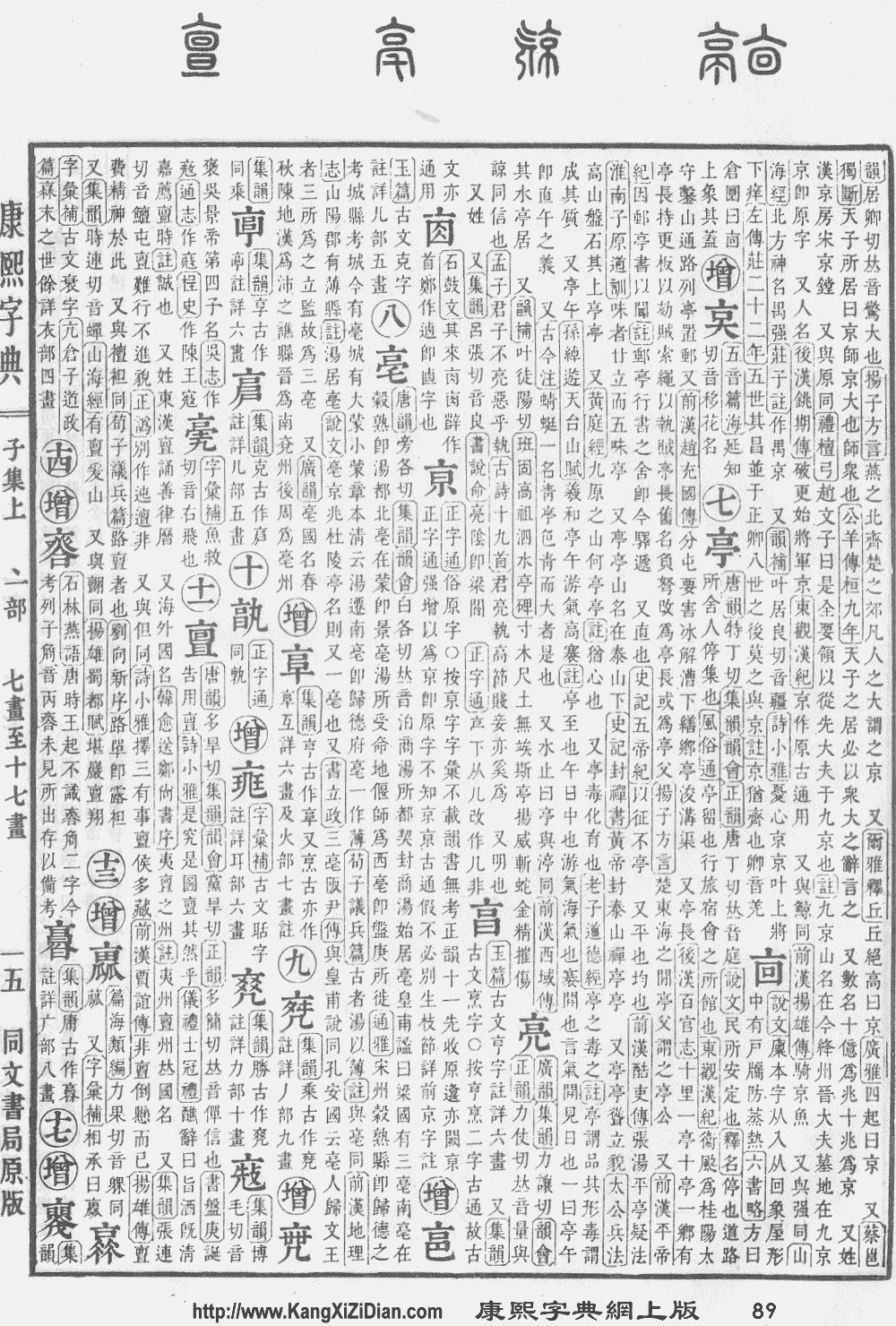
- KangXi: page 89, character 3
- Dai Kanwa Jiten: character 303
- Dae Jaweon: page 188, character 9
- Hanyu Da Zidian (first edition): volume 1, page 286, character 2
- Unihan data for U+4EAD
Chinese
| simp. and trad. |
亭 | |
|---|---|---|
| alternative forms | 𠅘 | |
Glyph origin
| Historical forms of the character 亭 | |||||||||||||||||||||||||||||||||
|---|---|---|---|---|---|---|---|---|---|---|---|---|---|---|---|---|---|---|---|---|---|---|---|---|---|---|---|---|---|---|---|---|---|
| Shuowen Jiezi (compiled in Han) | Liushutong (compiled in Ming) | ||||||||||||||||||||||||||||||||
| Small seal script | Transcribed ancient scripts | ||||||||||||||||||||||||||||||||
 |
 | ||||||||||||||||||||||||||||||||
|
|
References: Mostly from Richard Sears' Chinese Etymology site (authorisation),
| |||||||||||||||||||||||||||||||||


| Old Chinese | |
|---|---|
| 圢 | *tʰeːnʔ, *tʰeːŋʔ |
| 町 | *tʰeːnʔ, *tʰeːŋ, *tʰeːŋʔ, *deːŋʔ |
| 打 | *rteŋʔ, *teːŋʔ |
| 盯 | *rteŋʔ, *rdeŋ |
| 朾 | *rteːŋ, *rdeːŋ |
| 丁 | *rteːŋ, *teːŋ |
| 玎 | *rteːŋ, *teːŋ |
| 虰 | *rdeːŋ, *tʰeŋ, *teːŋ |
| 揨 | *rdeːŋ |
| 釘 | *teːŋ, *teːŋs |
| 靪 | *teːŋ, *teːŋʔ |
| 仃 | *teːŋ |
| 叮 | *teːŋ |
| 疔 | *teːŋ |
| 頂 | *teːŋʔ |
| 奵 | *teːŋʔ |
| 耵 | *teːŋʔ |
| 酊 | *teːŋʔ |
| 葶 | *teːŋʔ, *deːŋ |
| 矴 | *teːŋs |
| 訂 | *teːŋs, *tʰeːŋ, *deːŋʔ |
| 飣 | *teːŋs |
| 汀 | *tʰeːŋ, *tʰeːŋs |
| 艼 | *tʰeːŋ, *tʰeːŋʔ |
| 庁 | *tʰeːŋ |
| 婷 | *deːŋ |
| 停 | *deːŋ |
| 聤 | *deːŋ |
| 渟 | *deːŋ |
| 楟 | *deːŋ |
| 亭 | *deːŋ |
Etymology
From Proto-Sino-Tibetan *m/s-diŋ (“settled; fixed; established”), whence Proto-Lolo-Burmese *m-diŋ¹ ⪤ ʔ-diŋ¹ (“settled; come to rest”) and 定 (OC *deːŋs) (STEDT). Schuessle (2007) also compares 亭 (OC *deːŋ) to Mizo ding (“to stand; to stop; to halt”) and Lepcha [script needed] (diŋ, “to be erect”).
Pronunciation
Definitions
亭
- (historical) inn
- pavilion
- 峰迴路轉,有亭翼然臨於泉上者,醉翁亭也。作亭者誰?山之僧曰智仙也。 [Classical Chinese, trad.]
- From: 1046, Ouyang Xiu, 醉翁亭記
- Fēnghuílùzhuǎn, yǒu tíng yìrán lín yú quán shàng zhě, Zuìwēng Tíng yě. Zuò tíng zhě shéi? Shān zhī sēng yuē Zhì Xiān yě. [Pinyin]
- (please add an English translation of this example)
峰回路转,有亭翼然临于泉上者,醉翁亭也。作亭者谁?山之僧曰智仙也。 [Classical Chinese, simp.]
- kiosk
- (obsolete) erect
- (historical) a local administrative agency during the Qin and Han dynasties
- 大率十里一亭,亭有長。十亭一鄉,鄉有三老、有秩、嗇夫、游徼。 [Classical Chinese, trad.]
- From: The Book of Han, circa 1st century CE
- Dàshuài shí lǐ yī tíng, tíng yǒu zhǎng. Shí tíng yī xiāng, xiāng yǒu sān lǎo, yǒuzhì, sèfū, yóujiào. [Pinyin]
- (please add an English translation of this example)
大率十里一亭,亭有长。十亭一乡,乡有三老、有秩、啬夫、游徼。 [Classical Chinese, simp.]
Compounds
Japanese
Readings
See also
- 東屋 (azumaya)
Etymology 1
| Kanji in this term |
|---|
| 亭 |
| ちん Grade: S |
| tōon |
Alternative forms
- 亭 (tei)
Synonyms
- あずまや (azumaya)
Korean
Hanja
亭 • (jeong) (hangeul 정, revised jeong, McCune–Reischauer chŏng)
- This term needs a translation to English. Please help out and add a translation, then remove the text
{{rfdef}}.
Vietnamese
Han character
亭: Hán Nôm readings: đình, đứa
- This term needs a translation to English. Please help out and add a translation, then remove the text
{{rfdef}}.