公
| ||||||||
Translingual
| Stroke order | |||
|---|---|---|---|
 | |||
| Stroke order | |||
|---|---|---|---|
 | |||
Han character
公 (Kangxi radical 12, 八+2, 4 strokes, cangjie input 金戈 (CI), four-corner 80732, composition ⿱八厶)
References
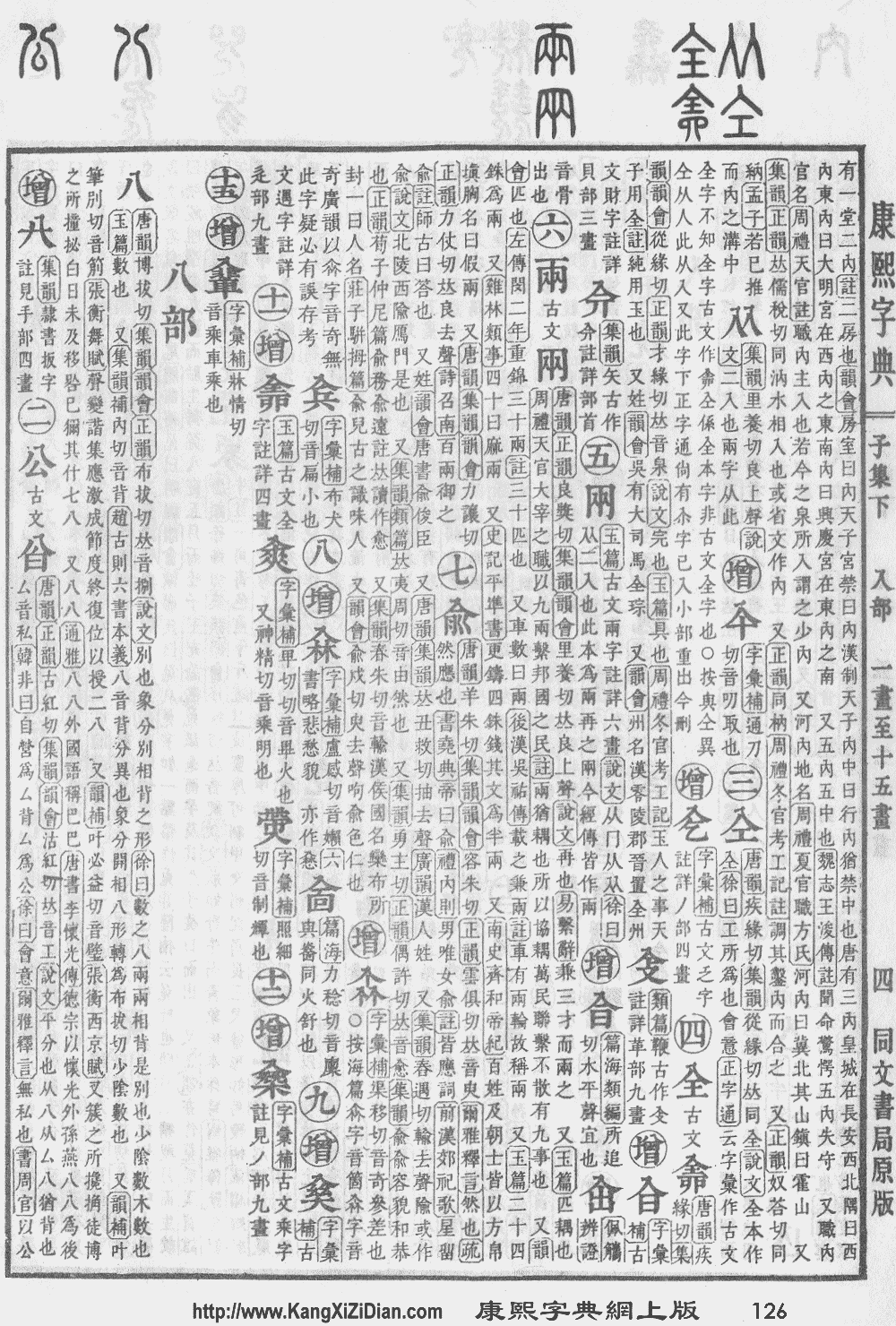
- KangXi: page 126, character 28
- Dai Kanwa Jiten: character 1452
- Dae Jaweon: page 277, character 1
- Hanyu Da Zidian (first edition): volume 1, page 242, character 1
- Unihan data for U+516C
Chinese
| trad. | 公 | |
|---|---|---|
| simp. # | 公 | |
| alternative forms | 㒶 | |
Glyph origin
| Historical forms of the character 公 | ||||||||||||||||||||||||||||||||||||||||||||||||||||||||||||||||||||||||||||||||||||||||||||||||||||||||||||||||||||||||||||||||||||||
|---|---|---|---|---|---|---|---|---|---|---|---|---|---|---|---|---|---|---|---|---|---|---|---|---|---|---|---|---|---|---|---|---|---|---|---|---|---|---|---|---|---|---|---|---|---|---|---|---|---|---|---|---|---|---|---|---|---|---|---|---|---|---|---|---|---|---|---|---|---|---|---|---|---|---|---|---|---|---|---|---|---|---|---|---|---|---|---|---|---|---|---|---|---|---|---|---|---|---|---|---|---|---|---|---|---|---|---|---|---|---|---|---|---|---|---|---|---|---|---|---|---|---|---|---|---|---|---|---|---|---|---|---|---|---|
| Shang | Western Zhou | Spring and Autumn | Warring States | Shuowen Jiezi (compiled in Han) | Liushutong (compiled in Ming) | |||||||||||||||||||||||||||||||||||||||||||||||||||||||||||||||||||||||||||||||||||||||||||||||||||||||||||||||||||||||||||||||||
| Oracle bone script | Bronze inscriptions | Bronze inscriptions | Bronze inscriptions | Chu slip and silk script | Qin slip script | Small seal script | Transcribed ancient scripts | |||||||||||||||||||||||||||||||||||||||||||||||||||||||||||||||||||||||||||||||||||||||||||||||||||||||||||||||||||||||||||||||
 |
 |
 |
 |
 |
 |
 |
 | |||||||||||||||||||||||||||||||||||||||||||||||||||||||||||||||||||||||||||||||||||||||||||||||||||||||||||||||||||||||||||||||
|||||||
|
References: Mostly from Richard Sears' Chinese Etymology site (authorisation),
| ||||||||||||||||||||||||||||||||||||||||||||||||||||||||||||||||||||||||||||||||||||||||||||||||||||||||||||||||||||||||||||||||||||||


| Old Chinese | |
|---|---|
| 慃 | *qroːŋʔ |
| 袞 | *kluːnʔ |
| 蔉 | *kluːnʔ |
| 滾 | *kluːnʔ |
| 忩 | *sʰloːŋ |
| 鬆 | *sqʰloːŋs, *sqʰluːŋ, *skʰloŋ, *sqʰloŋ |
| 凇 | *sqʰloːŋs, *sqʰloŋ, *sɢloŋ |
| 公 | *kloːŋ |
| 蚣 | *kloːŋ, *kljoŋ |
| 翁 | *qloːŋ |
| 螉 | *qloːŋ |
| 蓊 | *qloːŋ, *qloːŋʔ |
| 嗡 | *qloːŋ |
| 滃 | *qloːŋʔ |
| 暡 | *qloːŋʔ |
| 勜 | *qloːŋʔ |
| 塕 | *qloːŋʔ |
| 瓮 | *qloːŋs |
| 崧 | *sqʰluŋ |
| 菘 | *sqʰluŋ |
| 硹 | *sqʰluŋ |
| 淞 | *sqʰloŋ, *sɢloŋ |
| 蜙 | *sqʰloŋ |
| 倯 | *sqʰloŋ |
| 松 | *sɢloŋ |
| 訟 | *sɢloŋ, *sɢloŋs |
| 頌 | *sɢloŋs, *loŋ |
| 忪 | *kljoŋ |
| 彸 | *kljoŋ |
| 衳 | *kljoŋ |
| 伀 | *kljoŋ |
| 妐 | *kljoŋ |
| 炂 | *kljoŋ |
| 鈆 | *kljoŋ, *lon |

The traditional interpretation as given by Han Feizi is that 公 is a compound of 八 (= 背 (“to deviate; opposite”)) and 厶 (original form of 私 (“individual; private”)), i.e. the opposite of “private” — “public”. This theory is supported by Sun Yirang and Qiang Kaiyun, despite the somewhat different shape of the bottom component from 厶.
This is disputed in modern times by Gao Hongjin, who thinks that the 八 on top stands for 分 (“to divide; to distribute”) and the bottom round component 口 symbolises a generic object. 公 thus represents “equally dividing resources so that they are communal”.
Another theory put forth by Zhu Fangpu is that 公 is a pictogram (象形) , being the original form of 瓮 (OC *qloːŋs, “a wide-mouthed round-bottomed jar”), and later borrowed for the meanings of “public” and “male of older generation or higher rank”.
Etymology
- "fair; impartial; public"
- From Sino-Tibetan; cognate with Tibetan གུང (gung), དགུང (dgung, “middle”), considering that "middle" may be semantically associated with "balance" (Schuessler, 2007).
- "male of older generation or higher rank; duke; male (of animals)"
- This word has been connected to 翁 (OC *qloːŋ) (Wang, 1982; Unger, 1999; Baxter and Sagart, 2017). Baxter and Sagart (2017) also includes 妐 (OC *t-qoŋ, “husband's father”) in this word family.
- STEDT provisionally sets up Proto-Sino-Tibetan *kaŋ (“father; grandfather; honorific”), also comparing it to 翁; compare Drung kangkang (“grandpa”), vkang (“(my/our) grandfather”), Burmese ခင် (hkang), as in မိခင် (mi.hkang, “mother”), ဖခင် (hpa.hkang, “father”). Alternatively, STEDT also compares it with Proto-Sino-Tibetan *gaŋ (“penis; male”), whence 雄 (OC *ɡʷɯŋ, “male”), but considers it less probable.
- Schuessler (2007) suggests a Mon-Khmer origin; compare Khmer ឡូញ (louñ, “title of an unidentified rank or function”) and Old Khmer khloñ (“head, chief”) (whence ខ្លោង (khlaong)). Compare also Thai ลุง (lung), from Proto-Tai *luŋᴬ (“parent's older brother”), which may also be from Mon-Khmer. Tibetan [script needed] (khong) ~ [script needed] (gong, “final syllable in dignitaries' name”) may be borrowed from Chinese.
Pronunciation
Definitions
公
- public; communal
- Antonym: 私 (sī)
- fair; equitable
- to make public; to announce
- international; universal
- duke
- (of animals) male
- (honorific) old man or a man of high status
- 蔣公中正/蒋公中正 ― Jiǎng gōng Zhōngzhèng ― Chiang Kai-shek (honorific form)
- grandfather
- father-in-law (husband's father)
- 公婆 ― gōngpó ― parents-in-law (husband's parents)
- (Cantonese) heads (side of a coin)
- (Hakka) A noun suffix
- 鼻公 [Sixian Hakka] ― phi-kûng [Pha̍k-fa-sṳ] ― nose
- 貓公/猫公 [Meixian Hakka] ― miau4 gung1 [Hakka Transliteration Scheme] ― cat
- a surname
Compounds
|
|
|
Japanese
| 公 | |
| 公 |
Readings
Compounds
Etymology 1
| Kanji in this term |
|---|
| 公 |
| おおやけ Grade: 2 |
| kun’yomi |
| For pronunciation and definitions of 公 – see the following entry. | ||
| ||
| (This term, 公, is an alternative spelling of the above term.) |
Noun
公 • (kō)
- (honorific) a European sovereign prince
- モナコ公
- Monako Kō
- the Prince of Monaco
- ウェールズ公チャールズ
- Wēruzu Kō Chāruzu
- Charles, Prince of Wales
- モナコ公
- (honorific) a duke; in China and Vietnam, an alternative to 王 (ō, “prince”), used by certain dynasties for princes
- (familiar) used as suffix to denote familiarity with or disdain for someone or an animal
- 1997 September 1 [Oct 10 1996], Fujiko F. Fujio, “どこかでだれかが の巻 [Anyone, Anywhere]”, in エスパー魔美 [Esper Mami], volume 1 (fiction), 4th edition, Tokyo: Shogakukan, →ISBN, page 245:
- マミ公‼どこへいったんだ。しようがないなあ‼モデルという重要なしごとを、こづかいかせぎぐらいにしか、かんがえていないんだから。
- Mami-kō‼ Doko e itta n da. Shiyō ga nai nā‼ Moderu to iu jūyō na shigoto o, kozukai kasegigurai ni shika, kangaete inai n da kara.
- Mami!! Where the hell’d she go? This is unacceptable!! She treats serious modeling as nothing but a way to get pocket money.
- マミ公‼どこへいったんだ。しようがないなあ‼モデルという重要なしごとを、こづかいかせぎぐらいにしか、かんがえていないんだから。
-
Etymology 3
| Kanji in this term |
|---|
| 公 |
| きみ Grade: 2 |
| kun’yomi |
Korean
Etymology
From Middle Chinese 公 (MC kuŋ). Recorded as Middle Korean 고ᇰ (kwong) (Yale: kwong) in Hunmong Jahoe (訓蒙字會 / 훈몽자회), 1527.