持
| ||||||||
Translingual
| Stroke order | |||
|---|---|---|---|
 | |||
Han character
持 (Kangxi radical 64, 手+6, 9 strokes, cangjie input 手土木戈 (QGDI), four-corner 54041, composition ⿰扌寺)
Derived characters
- 𣖖 𥻣 𨃌 𨨲 𩹭
References
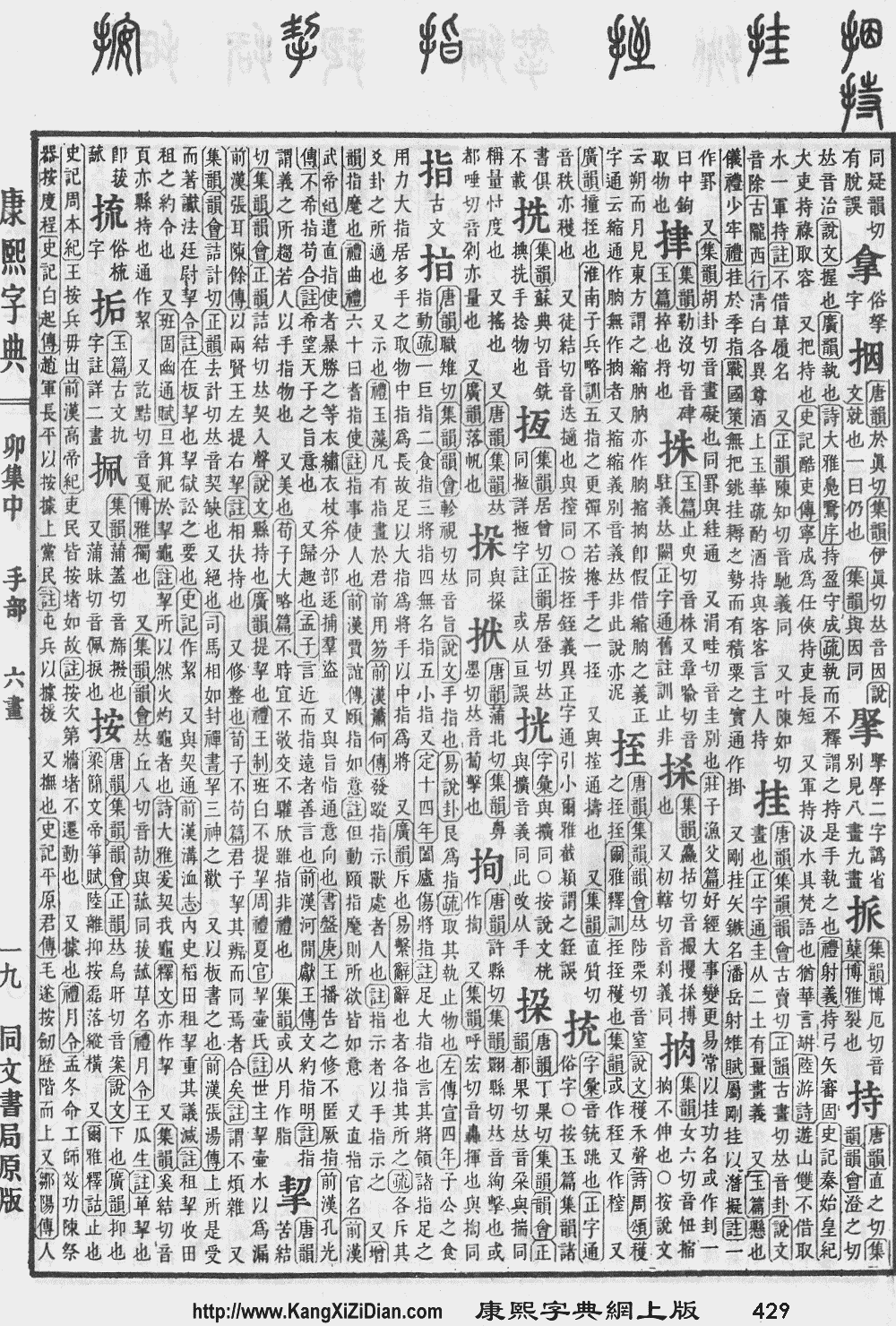
- KangXi: page 429, character 5
- Dai Kanwa Jiten: character 12019
- Dae Jaweon: page 778, character 2
- Hanyu Da Zidian (first edition): volume 3, page 1866, character 2
- Unihan data for U+6301
Chinese
| trad. | 持 | |
|---|---|---|
| simp. # | 持 | |
| alternative forms | 寺 | |
Glyph origin
Characters in the same phonetic series (寺) (Zhengzhang, 2003)
Phono-semantic compound (形聲, OC *l'ɯ) : semantic 手 + phonetic 寺 (OC *ljɯs).
Pronunciation
Definitions
持
- to hold; to grasp
- 婦人當頂為高髻,以金銀真珠為飾,著青婆羅裙,又披羅緞,行必持扇。 [Classical Chinese, trad.]
- From: Tang Dynasty, Fan Chuo, Manshu, chapter 10, part 2
- Fùrén dàng dǐng wéi gāojì, yǐ jīn yín zhēnzhū wéi shì, zhuó qīng póluó qún, yòu pī luóduàn, xíng bì chí shàn. [Pinyin]
- Married women wear high topknot decorated with jewellery of gold, silver and pearl, blue-green skirts of polo satin, as well as grosgrain drapes. They always hold fans when walking.
妇人当顶为高髻,以金银真珠为饰,着青婆罗裙,又披罗缎,行必持扇。 [Classical Chinese, simp.]
- to hold (views, opinions, etc.)
- to manage; to run
- 持家 ― chíjiā ― to run one's home; to housekeep
- to sustain; to support
- to oppose (each other)
- to control; to hold under duress
- 劫持 ― jiéchí ― to hold under duress
Compounds
Derived terms from 持
|
|
|
Japanese
Korean
Hanja
持 • (ji) (hangeul 지)
- This term needs a translation to English. Please help out and add a translation, then remove the text
{{rfdef}}.
Vietnamese
This article is issued from Wiktionary. The text is licensed under Creative Commons - Attribution - Sharealike. Additional terms may apply for the media files.