挩
See also: 捝
| ||||||||
Translingual
Han character
挩 (Kangxi radical 64, 手+7, 10 strokes, cangjie input 手金口山 (QCRU), four-corner 58016, composition ⿰扌兌)
References
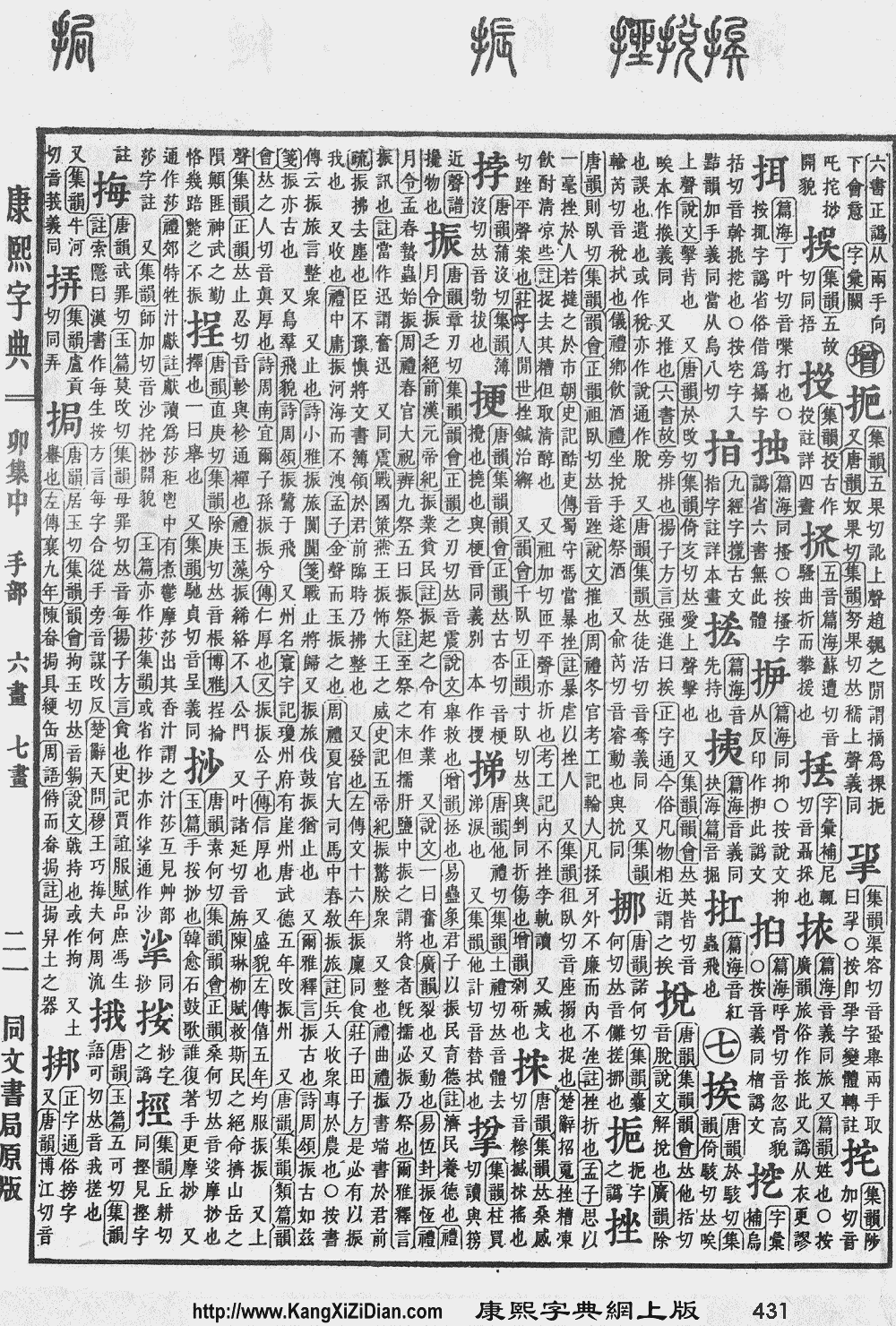
- KangXi: page 431, character 19
- Dai Kanwa Jiten: character 12083
- Dae Jaweon: page 780, character 26
- Hanyu Da Zidian (first edition): volume 3, page 1887, character 7
- Unihan data for U+6329
Chinese
| trad. | 挩 | |
|---|---|---|
| simp. | 捝 | |
Glyph origin
Characters in the same phonetic series (兌) (Zhengzhang, 2003)
| Old Chinese | |
|---|---|
| 毤 | *l̥ʰoːds |
| 蛻 | *l'oːds, *l̥ʰoːds, *hljods, *lod, *lod |
| 娧 | *l̥ʰoːds, *lod |
| 駾 | *l̥ʰoːds |
| 裞 | *l̥ʰoːds, *hljods |
| 兌 | *l'oːds |
| 綐 | *l'oːds |
| 銳 | *l'oːds, *lods |
| 帨 | *stʰods, *hljods |
| 稅 | *hljods |
| 說 | *hljods, *hljod, *lod |
| 涚 | *hljods |
| 䫄 | *rtʰoːd |
| 脫 | *l̥ʰoːd, *l'oːd |
| 侻 | *l̥ʰoːd |
| 挩 | *l̥ʰoːd, *l'oːd |
| 莌 | *l̥ʰoːd, *l'oːd |
| 梲 | *l̥ʰoːd, *ʔljod, *l̥ʰuːd |
| 鮵 | *l'oːd |
| 敓 | *l'oːd |
| 痥 | *l'oːd |
| 悅 | *lod, *lod |
| 閱 | *lod |
Pronunciation 1
Pronunciation 2
References
- “挩”, in 漢語多功能字庫 (Multi-function Chinese Character Database), 香港中文大學 (the Chinese University of Hong Kong), 2014–
Japanese
Kanji
挩
- This term needs a translation to English. Please help out and add a translation, then remove the text
{{rfdef}}.
This article is issued from Wiktionary. The text is licensed under Creative Commons - Attribution - Sharealike. Additional terms may apply for the media files.