脫
| ||||||||
Translingual
Han character
脫 (Kangxi radical 130, 肉+7, 11 strokes, cangjie input 月金口山 (BCRU) or X月金口山 (XBCRU), four-corner 78216, composition ⿰⺼兌(HT) or ⿰月兌(GK))
Derived characters
- 𢴎, 𦢴, 𦸍, 𪷄, 𫌎, 𭊕
References
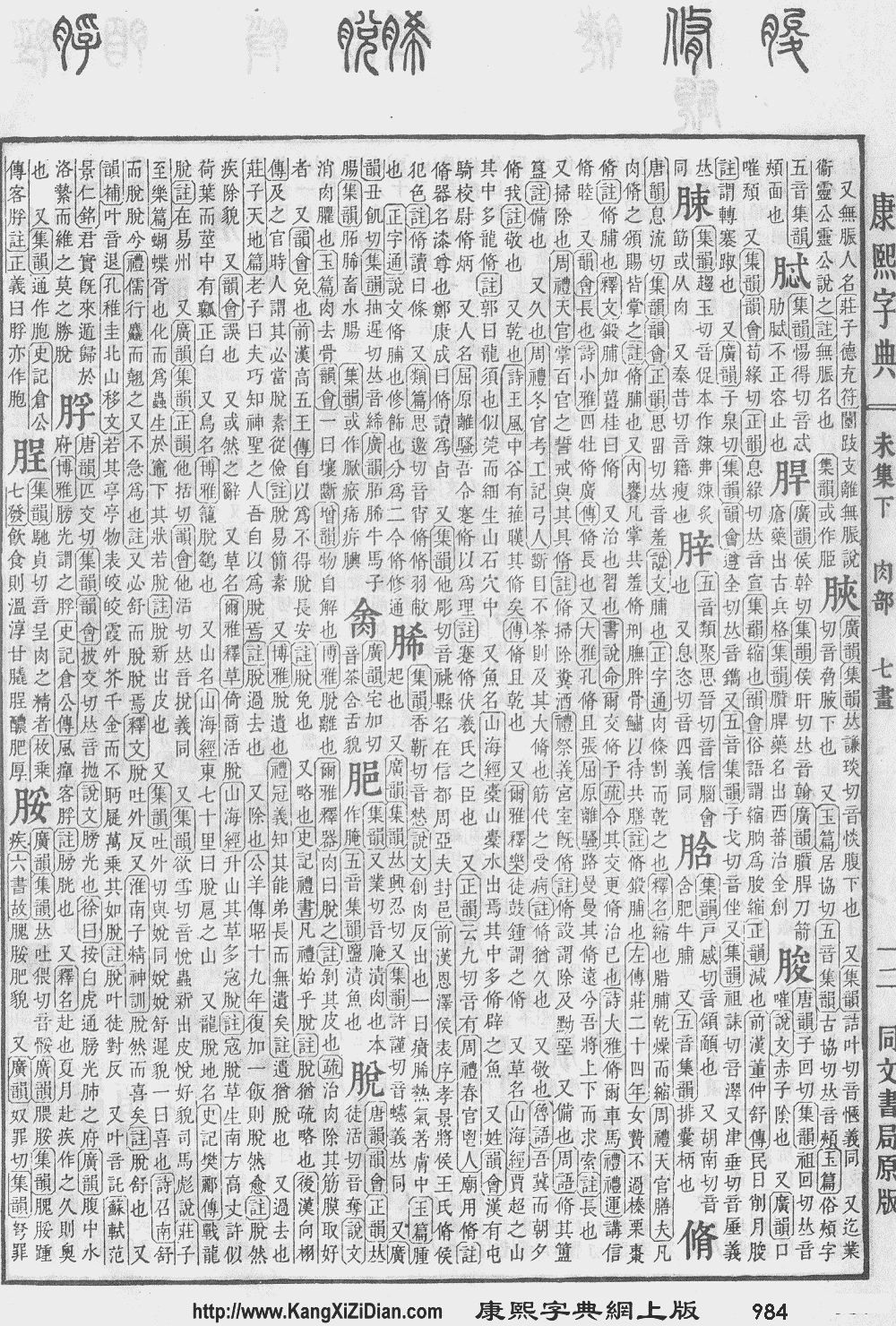
- KangXi: page 984, character 12
- Dai Kanwa Jiten: character 29539
- Dae Jaweon: page 1436, character 24
- Hanyu Da Zidian (first edition): volume 3, page 2081, character 1
- Unihan data for U+812B
Chinese
| trad. | 脫/脱 | |
|---|---|---|
| simp. | 脱 | |
| alternative forms | 挩/捝 說/说 | |
Glyph origin
Characters in the same phonetic series (兌) (Zhengzhang, 2003)
| Old Chinese | |
|---|---|
| 毤 | *l̥ʰoːds |
| 蛻 | *l'oːds, *l̥ʰoːds, *hljods, *lod, *lod |
| 娧 | *l̥ʰoːds, *lod |
| 駾 | *l̥ʰoːds |
| 裞 | *l̥ʰoːds, *hljods |
| 兌 | *l'oːds |
| 綐 | *l'oːds |
| 銳 | *l'oːds, *lods |
| 帨 | *stʰods, *hljods |
| 稅 | *hljods |
| 說 | *hljods, *hljod, *lod |
| 涚 | *hljods |
| 䫄 | *rtʰoːd |
| 脫 | *l̥ʰoːd, *l'oːd |
| 侻 | *l̥ʰoːd |
| 挩 | *l̥ʰoːd, *l'oːd |
| 莌 | *l̥ʰoːd, *l'oːd |
| 梲 | *l̥ʰoːd, *ʔljod, *l̥ʰuːd |
| 鮵 | *l'oːd |
| 敓 | *l'oːd |
| 痥 | *l'oːd |
| 悅 | *lod, *lod |
| 閱 | *lod |
Phono-semantic compound (形聲, OC *l̥ʰoːd, *l'oːd) : semantic ⺼ + phonetic 兌 (OC *l'oːds).
Etymology
From Proto-Sino-Tibetan *g/s-lwat (“free; release; slip; dislocate”) (STEDT; Schuessler, 2007).
- Within Chinese, cognate with 蛻 (OC *l̥ʰoːds, “exuviae (skin cast off during molting)”), 愉 (OC *lo, “relax > happy, pleased”), 悅 (OC lod, “contented”), 說 (OC *hljod, “to speak, to explain”), 說 (OC *hljods, “to persuade”), 偷 (OC *l̥ʰoː, “to steal”), 奪 (OC *Cə.lˁot, “to rob, to snatch”);
- Outside Chinese, cognate with Tibetan གློད་པ (glod pa, “loosen, relax, slacken”), Tibetan [script needed] (hlod pa, “loose, relaxed”), Lepcha [script needed] (flját, fljót), Burmese လွှတ် (hlwat), Burmese ချွတ် (hkywat).
In its use in Northern Wu languages, such as Shanghainese, Suzhounese, and Ningbonese, it is likely from a grammaticalisation of the verb. Cognate with 落 (Wuxi, Changzhou) and 掉 (Haining, Danyang)
Pronunciation 1
Definitions
脫
Synonyms
Dialectal synonyms of 脫 (“to take off (clothes)”) [map]
Dialectal synonyms of 和 (“and”) [map]
Usage notes
- (Northern Wu): see 脫了#Usage notes
Compounds
Derived terms from 脫
|
|
|
Descendants
- → Thai: ถอด (tɔ̀ɔt)
Pronunciation 2
Definitions
脫
References
- “脫”, in 漢語多功能字庫 (Multi-function Chinese Character Database), 香港中文大學 (the Chinese University of Hong Kong), 2014–
Japanese
| 脱 | |
| 脫 |
Readings
Usage notes
This form is extremely rare in Japanese. The current form of 脱 has seen some use before 1946.
Further reading
- Image at Waseda University of the foreword from 代微積拾級訳解 (Dai Biseki Jikkyū Yakkai), an 1872 Japanese translation of the 1851 book Elements of Analytical Geometry and of the Differential and Integral Calculus by Elias Loomis; this rare character form is seen in roughly the center of the leftmost column of text on that page.

Korean
Vietnamese
This article is issued from Wiktionary. The text is licensed under Creative Commons - Attribution - Sharealike. Additional terms may apply for the media files.