悅
| ||||||||
Translingual
Han character
悅 (Kangxi radical 61, 心+7, 10 strokes, cangjie input 心金口山 (PCRU), four-corner 98016, composition ⿰忄兌)
References
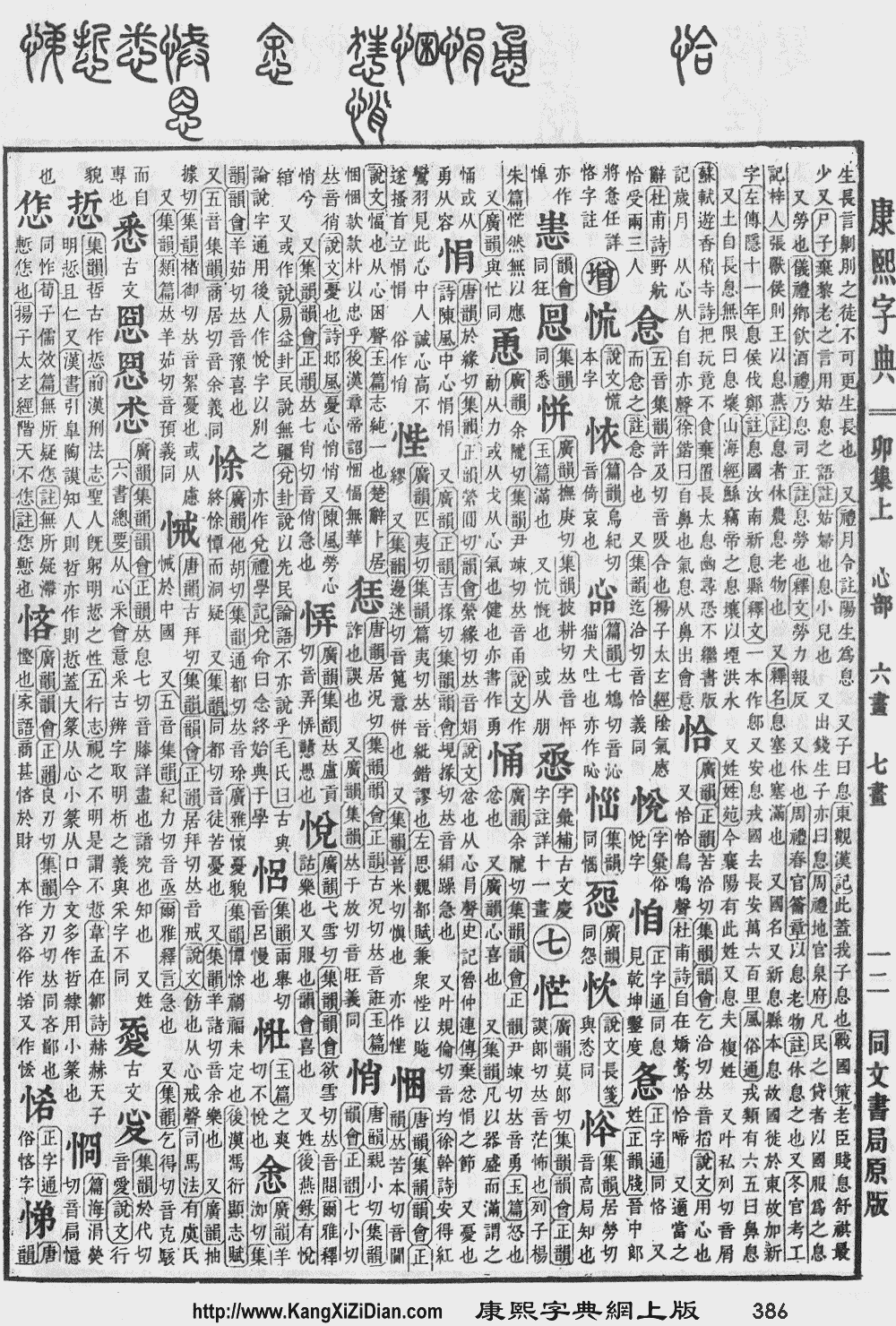
- KangXi: page 386, character 26
- Dai Kanwa Jiten: character 10629
- Dae Jaweon: page 718, character 26
- Hanyu Da Zidian (first edition): not present, would follow volume 4, page 2306, character 15
- Unihan data for U+6085
Chinese
| trad. | 悅/悦 | |
|---|---|---|
| simp. | 悦 | |
| alternative forms | 恱 說/说 兌/兑 | |
Glyph origin
Characters in the same phonetic series (兌) (Zhengzhang, 2003)
| Old Chinese | |
|---|---|
| 毤 | *l̥ʰoːds |
| 蛻 | *l'oːds, *l̥ʰoːds, *hljods, *lod, *lod |
| 娧 | *l̥ʰoːds, *lod |
| 駾 | *l̥ʰoːds |
| 裞 | *l̥ʰoːds, *hljods |
| 兌 | *l'oːds |
| 綐 | *l'oːds |
| 銳 | *l'oːds, *lods |
| 帨 | *stʰods, *hljods |
| 稅 | *hljods |
| 說 | *hljods, *hljod, *lod |
| 涚 | *hljods |
| 䫄 | *rtʰoːd |
| 脫 | *l̥ʰoːd, *l'oːd |
| 侻 | *l̥ʰoːd |
| 挩 | *l̥ʰoːd, *l'oːd |
| 莌 | *l̥ʰoːd, *l'oːd |
| 梲 | *l̥ʰoːd, *ʔljod, *l̥ʰuːd |
| 鮵 | *l'oːd |
| 敓 | *l'oːd |
| 痥 | *l'oːd |
| 悅 | *lod, *lod |
| 閱 | *lod |
Phono-semantic compound (形聲, OC *lod, *lod) : semantic 忄 (“heart”) + phonetic 兌 (OC *l'oːds).
Often written as 說 in pre-Qin texts.
Etymology
STEDT compares it to Proto-Sino-Tibetan *g/s-lwat (“free; release; slip; dislocate”). Cognate with 愉 (OC *lo, “happy; pleased”), 說 (OC *hljods, “to speak; to explain”), 脫 (OC *l̥ʰoːd, *l'oːd, “to take off (clothes); to escape”), 偷 (OC *l̥ʰoː, “to steal”).
Pronunciation
Compounds
Japanese
| 悦 | |
| 悅 |
Kanji
悅
(uncommon “Hyōgai” kanji, kyūjitai kanji, shinjitai form 悦)
- This term needs a translation to English. Please help out and add a translation, then remove the text
{{rfdef}}.
Usage notes
This character lacks JIS support and is not used in Japan. 悦 (U+60A6) is used instead.
Korean
Hanja
悅 (eum 열 (yeol))
- This term needs a translation to English. Please help out and add a translation, then remove the text
{{rfdef}}.
Vietnamese
This article is issued from Wiktionary. The text is licensed under Creative Commons - Attribution - Sharealike. Additional terms may apply for the media files.