掰
See also: 擘
| ||||||||
Translingual
Han character
掰 (Kangxi radical 64, 手+8, 11 strokes, cangjie input 竹手金竹手 (HQCHQ) or 手金竹手 (QCHQ), four-corner 22550, composition ⿲手分手)
References
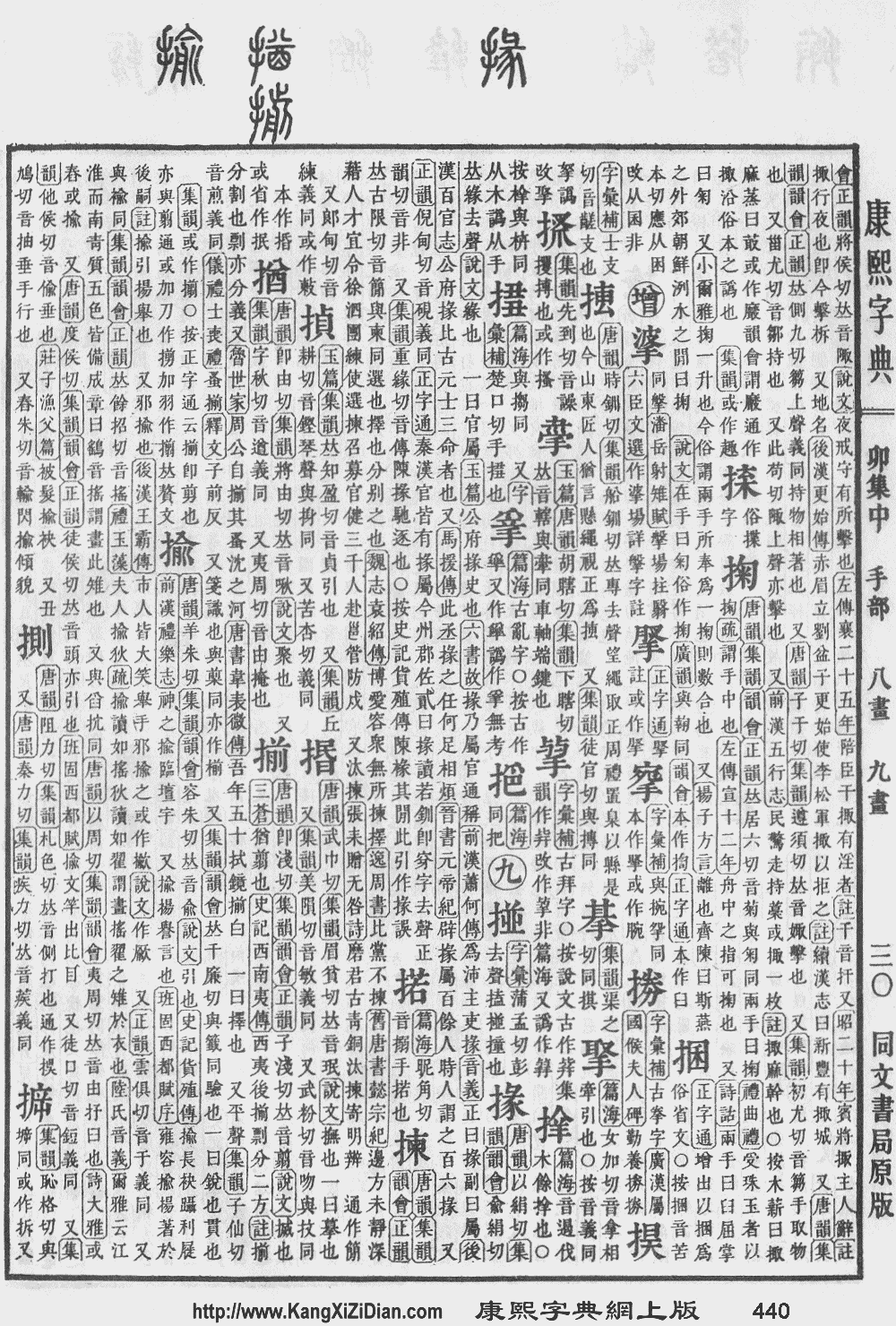
- KangXi: not present, would follow page 440, character 18
- Dai Kanwa Jiten: character 12310
- Hanyu Da Zidian (first edition): volume 3, page 1890, character 2
- Unihan data for U+63B0
Chinese
| trad. | 掰 | |
|---|---|---|
| simp. # | 掰 | |
Glyph origin
Characters in the same phonetic series (辟) (Zhengzhang, 2003)
| Old Chinese | |
|---|---|
| 嬖 | *peːɡs |
| 薜 | *beːɡs, *preːɡ |
| 鐾 | *beːɡs |
| 臂 | *peɡs |
| 譬 | *pʰeɡs |
| 避 | *beɡs |
| 檗 | *preːɡ |
| 擘 | *preːɡ |
| 糪 | *preːɡ, *pʰreːɡ |
| 掰 | *preːɡ |
| 繴 | *breːɡ, *peːɡ |
| 辟 | *peɡ, *pʰeɡ, *beɡ |
| 璧 | *peɡ |
| 鐴 | *peɡ |
| 躄 | *peɡ |
| 襞 | *peɡ |
| 僻 | *pʰeɡ, *pʰeːɡ |
| 癖 | *pʰeɡ, *pʰeːɡ |
| 廦 | *pʰeɡ, *peːɡ |
| 擗 | *beɡ |
| 躃 | *beɡ |
| 闢 | *beɡ |
| 壁 | *peːɡ |
| 鼊 | *peːɡ |
| 霹 | *pʰeːɡ |
| 劈 | *pʰeːɡ |
| 澼 | *pʰeːɡ |
| 憵 | *pʰeːɡ |
| 甓 | *beːɡ |
| 鷿 | *beːɡ |
| 幦 | *mbeːɡ |
Ideogrammic compound (會意) : 手 + 分 + 手, separation between two hands. A character of very recent[vague] creation.[1]
Etymology
bāi is the colloquial reading of 擘 (bò).[1]
Pronunciation
Definitions
掰
Compounds
References
- David Branner, A Neutral Transcription System for Teaching Medieval Chinese, T ̔ang Studies 17 (1999), p. 110.
Vietnamese
This article is issued from Wiktionary. The text is licensed under Creative Commons - Attribution - Sharealike. Additional terms may apply for the media files.