躃
| ||||||||
Translingual
Han character
躃 (Kangxi radical 157, 足+13, 20 strokes, cangjie input 口一尸口十 (RMSRJ), composition ⿰𧾷辟)
References
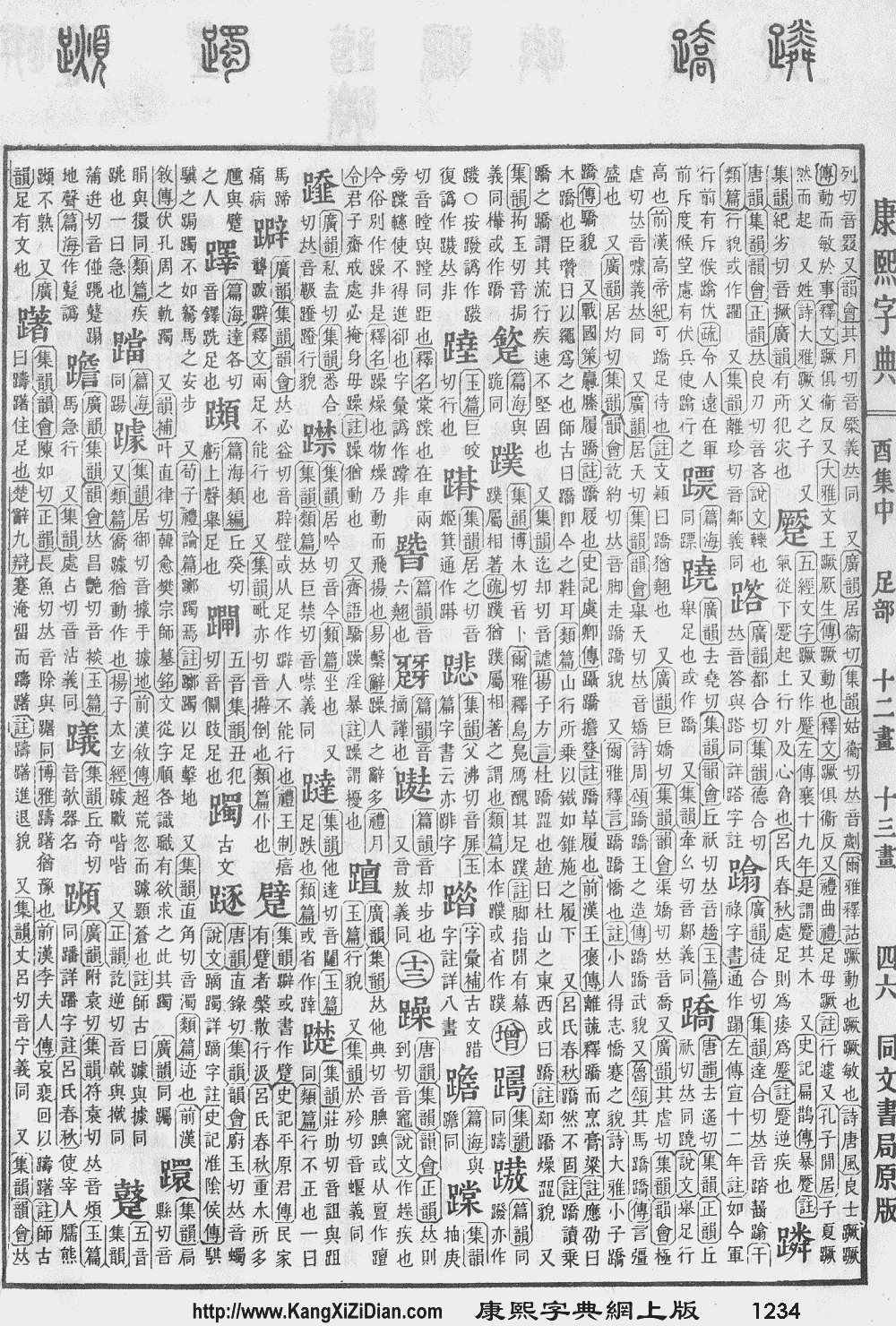
- KangXi: page 1234, character 27
- Dai Kanwa Jiten: character 37912
- Dae Jaweon: page 1707, character 3
- Hanyu Da Zidian (first edition): volume 6, page 3745, character 4
- Unihan data for U+8E83
Chinese
| simp. and trad. |
躃 | |
|---|---|---|
| alternative forms | 躄 | |
Glyph origin
Characters in the same phonetic series (辟) (Zhengzhang, 2003)
| Old Chinese | |
|---|---|
| 嬖 | *peːɡs |
| 薜 | *beːɡs, *preːɡ |
| 鐾 | *beːɡs |
| 臂 | *peɡs |
| 譬 | *pʰeɡs |
| 避 | *beɡs |
| 檗 | *preːɡ |
| 擘 | *preːɡ |
| 糪 | *preːɡ, *pʰreːɡ |
| 掰 | *preːɡ |
| 繴 | *breːɡ, *peːɡ |
| 辟 | *peɡ, *pʰeɡ, *beɡ |
| 璧 | *peɡ |
| 鐴 | *peɡ |
| 躄 | *peɡ |
| 襞 | *peɡ |
| 僻 | *pʰeɡ, *pʰeːɡ |
| 癖 | *pʰeɡ, *pʰeːɡ |
| 廦 | *pʰeɡ, *peːɡ |
| 擗 | *beɡ |
| 躃 | *beɡ |
| 闢 | *beɡ |
| 壁 | *peːɡ |
| 鼊 | *peːɡ |
| 霹 | *pʰeːɡ |
| 劈 | *pʰeːɡ |
| 澼 | *pʰeːɡ |
| 憵 | *pʰeːɡ |
| 甓 | *beːɡ |
| 鷿 | *beːɡ |
| 幦 | *mbeːɡ |
Pronunciation
Japanese
Kanji
躃
- This term needs a translation to English. Please help out and add a translation, then remove the text
{{rfdef}}.
This article is issued from Wiktionary. The text is licensed under Creative Commons - Attribution - Sharealike. Additional terms may apply for the media files.