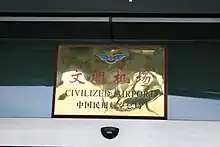
文明

Chinese

 
language; culture; writing
language; culture; writing; formal; literary; gentle
 
clear; bright; to understand
clear; bright; to understand; next; the Ming dynasty
simp. and trad.
(文明)
文 明
anagram 明文
文明机场
CIVILIZED AIRPORT

Etymology

(This etymology is missing or incomplete. Please add to it, or discuss it at the Etymology scriptorium.)

Pronunciation


Rime
Character 文 明
Reading # 1/1 1/1
Initial (聲) 明 (4) 明 (4)
Final (韻) 文 (59) 庚 (111)
Tone (調) Level (Ø) Level (Ø)
Openness (開合) Closed Open
Division (等) III III
Fanqie 無分切 武兵切
Reconstructions
Zhengzhang
Shangfang
/mɨun/ /mˠiæŋ/
Pan
Wuyun
/miun/ /mᵚiaŋ/
Shao
Rongfen
/miuən/ /miaŋ/
Edwin
Pulleyblank
/mun/ /miajŋ/
Li
Rong
/miuən/ /miɐŋ/
Wang
Li
/mĭuən/ /mĭɐŋ/
Bernard
Karlgren
/mi̯uən/ /mi̯ɐŋ/
Expected
Mandarin
Reflex
wén míng
Expected
Cantonese
Reflex
man4 ming4
Baxter–Sagart system 1.1 (2014)
Character 文 明
Reading # 1/1 1/1
Modern
Beijing
(Pinyin)
wén míng
Middle
Chinese
‹ mjun › ‹ mjæng ›
Old
Chinese
/*mə[n]/ /*mraŋ/
English ornate bright

Notes for Old Chinese notations in the Baxter–Sagart system:

* Parentheses "()" indicate uncertain presence;
* Square brackets "[]" indicate uncertain identity, e.g. *[t] as coda may in fact be *-t or *-p;
* Angle brackets "<>" indicate infix;
* Hyphen "-" indicates morpheme boundary;

* Period "." indicates syllable boundary.
Zhengzhang system (2003)
Character 文 明
Reading # 1/1 1/1
No. 13015 9188
Phonetic
component
文 明
Rime
group
文 陽
Rime
subdivision
1 0
Corresponding
MC rime
文 明
Old
Chinese
/*mɯn/ /*mraŋ/

Noun

文明

  1. civilization (Classifier: 個/个 m)
    中華文明/中华文明  ―  zhōnghuá wénmíng  ―  Chinese civilization
    四大文明古國/四大文明古国  ―  sì dà wénmíng gǔguó  ―  the Four Great Ancient Civilizations
    書是傳遞文明的工具。 [MSC, trad.]
    书是传递文明的工具。 [MSC, simp.]
    Shū shì chuándì wénmíng de gōngjù. [Pinyin]
    Books are the way in which civilization is transmitted.
    人與其他生物最大的不同,就是擁有文明。 [MSC, trad.]
    人与其他生物最大的不同,就是拥有文明。 [MSC, simp.]
    Rén yǔ qítā shēngwù zuìdà de bùtóng, jiùshì yōngyǒu wénmíng. [Pinyin]
    The ability to develop civilizations is the biggest difference between humans and other living things.
  2. civilized behaviour; manners
    加強文明意識/加强文明意识  ―  jiāqiáng wénmíng yìshí  ―  to improve people's awareness of civilized behaviour

Adjective

文明

  1. civilized
    文明行為/文明行为  ―  wénmíng xíngwéi  ―  civilized behaviour
    文明交往  ―  wénmíng jiāowǎng  ―  to socialize in a civilized manner
    舉止文明/举止文明  ―  jǔzhǐ wénmíng  ―  to behave in a civilized manner
  2. (dated) modern
  3. (Classical Chinese) having literary talent

Antonyms

Derived terms

Japanese

Kanji in this term
文 明
ぶん
Grade: 1
めい
Grade: 2
kan’on

Etymology

Learned borrowing from Middle Chinese 文明 (MC mɨun mˠiæŋ).

Pronunciation

  • (Tokyo) ぶんめー [bùńméé] (Heiban – [0])
  • IPA(key): [bɯ̟̃ᵝmːe̞ː]

Noun

文(ぶん)明(めい) • (bunmei) 

  1. civilization

Derived terms

Korean

Hanja in this term
文明

Noun

文明 • (munmyeong) (hangeul 문명)

  1. Hanja form? of 문명 (“civilization”).

Vietnamese

Hán tự in this term
文明

Adjective

文明

  1. chữ Hán form of văn minh (“civilized”).
This article is issued from Wiktionary. The text is licensed under Creative Commons - Attribution - Sharealike. Additional terms may apply for the media files.