法
| ||||||||
Translingual
| Stroke order | |||
|---|---|---|---|
 | |||
| Stroke order | |||
|---|---|---|---|
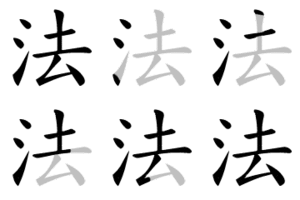 | |||
Han character
法 (Kangxi radical 85, 水+5, 8 strokes, cangjie input 水土戈 (EGI), four-corner 34131, composition ⿰氵去)
Related characters
- 灋 (Variant traditional form of 法)
References
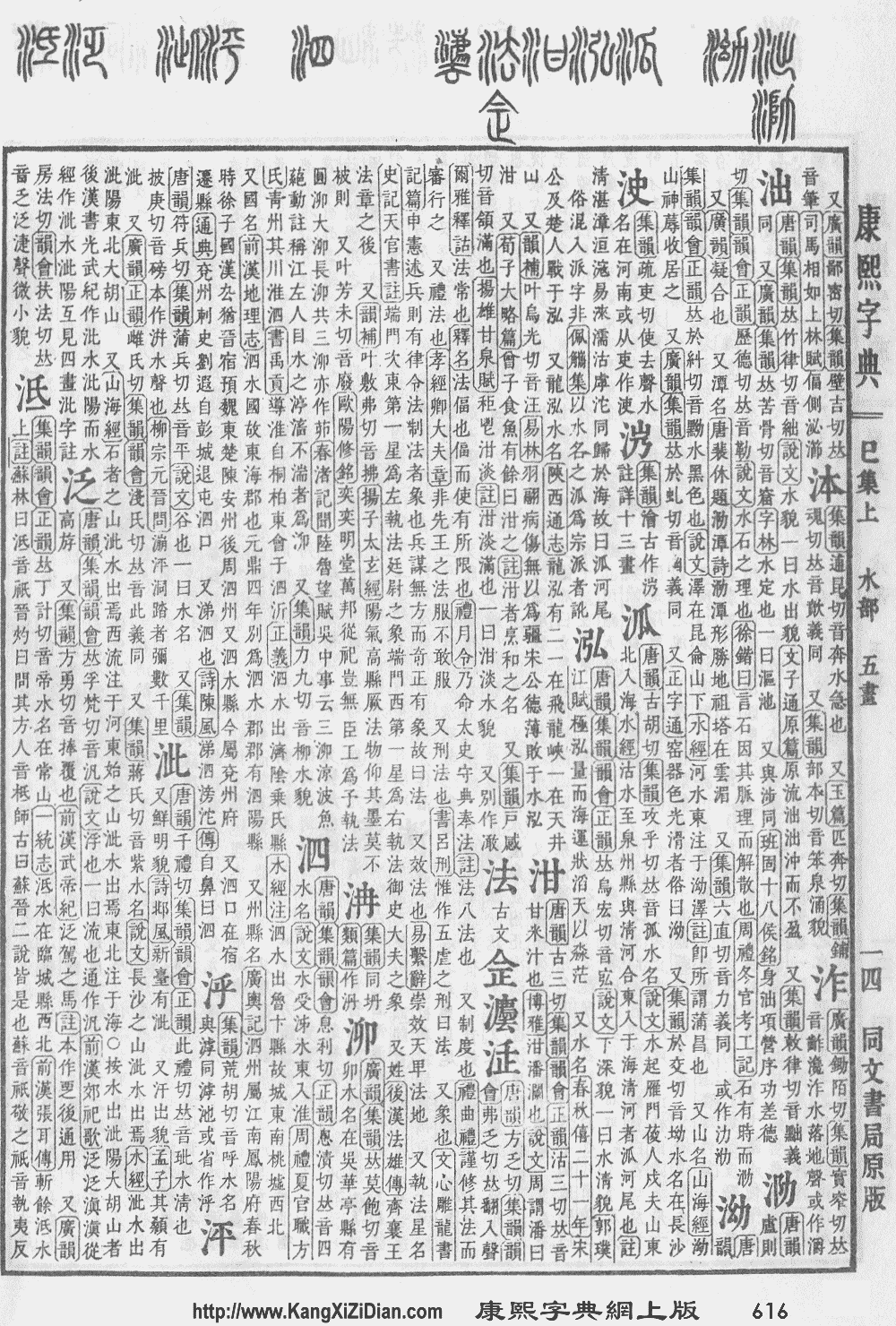
- KangXi: page 616, character 11
- Dai Kanwa Jiten: character 17290
- Dae Jaweon: page 1010, character 2
- Hanyu Da Zidian (first edition): volume 3, page 1579, character 4
- Unihan data for U+6CD5
Chinese
| simp. and trad. |
法 | |
|---|---|---|
| alternative forms | 㳒 灋 𢌇 佱 𣳴 | |
Glyph origin
| Historical forms of the character 法 | |
|---|---|
| Western Zhou | Shuowen Jiezi (compiled in Han) |
| Bronze inscriptions | Small seal script |
 |
 |
Simplified from earlier 灋, which was originally used to represent 廢 (OC *pads, “to cast aside; to abrogate”).
Etymology 1
Sino-Tibetan. Cognate with Tibetan བབས (babs, “shape, form, appearance”), དབྱིབས (dbyibs, “shape, form, figure”). Possibly cognate with 凡 (OC *bom, “all, general, every; pattern, general rule”); see there for more.
Pronunciation
Definitions
法
Usage notes
- Xiandai Hanyu Guifan Cidian (《现代汉语规范词典》) proscribes the use of the pronunciations fā and fá.
Compounds
|
|
|
Descendants
Others:
Pronunciation
Definitions
法
Usage notes
- Xiandai Hanyu Guifan Cidian (《现代汉语规范词典》) proscribes the use of the pronunciation fà.
Compounds
Pronunciation
References
- “法”, in 漢語多功能字庫 (Multi-function Chinese Character Database), 香港中文大學 (the Chinese University of Hong Kong), 2014–
Japanese
Readings
Compounds
- 永字八法 (eiji happō, “the Eight Principles of Yong”)
- 法号 (hōgō, “a dharma name”)
- 法案 (hōan)
- 法印 (hōin)
- 法衣 (hōe), 法衣 (hōi)
- 法医学 (hōigaku)
- 法王 (hōō)
- 法皇 (hōō)
- 法外 (hōgai)
- 法学 (hōgaku)
- 法規 (hōki)
- 法事 (hōji)
- 法術 (hōjutsu)
- 法人 (hōjin)
- 法則 (hōsoku)
- 法定 (hōtei)
- 法廷 (hōtei)
- 法典 (hōten)
- 法度 (hatto)
- 法要 (hōyō)
- 法螺 (hora)
- 法力 (hōriki), 法力 (hōryoku)
- 法律 (hōritsu)
- 法輪 (hōrin)
- 加法 (kahō)
- 家法 (kahō)
- 減法 (genpō)
- 憲法 (kenpō), 憲法 (kenbō)
- 刑法 (keihō)
- 公法 (kōhō)
- 国法 (kokuhō)
- 国際法 (kokusaihō)
- 司法 (shihō)
- 私法 (shihō)
- 除法 (johō)
- 商法 (shōhō)
- 乗法 (jōhō)
- 定法 (jōhō)
- 民法 (minpō)
- 寸法 (sunpō, “dimension, size”)
Etymology 1
| Kanji in this term |
|---|
| 法 |
| ほう Grade: 4 |
| on’yomi |
From Middle Chinese 法 (MC pɨɐp̚). Originally, the kan'on was はふ (fafu), and the goon was ほふ (fofu), although both became ほう (hō) in modern Japanese. It is suggested that the kan'on was used in the general senses, while the goon was used in Buddhist contexts.
Noun
Etymology 2
| Kanji in this term |
|---|
| 法 |
| のり Grade: 4 |
| kun’yomi |
References
- 2002, Ineko Kondō; Fumi Takano; Mary E Althaus; et. al., Shogakukan Progressive Japanese-English Dictionary, Third Edition, Tokyo: Shōgakukan, →ISBN.
Vietnamese
Han character
法: Hán Việt readings: pháp[1][2][3][4][5][6]
法: Nôm readings: pháp[1][2][3], phép[1][2][3], phấp[1][2][3], phăm[3], phắp[3], bắp[1], mép[1]
Derived terms
- 辦法 (biện pháp)
- 筆法 (bút pháp)
- 句法 (cú pháp)
- 解法 (giải pháp)
- 行法 (hành pháp)
- 憲法 (hiến pháp)
- 合法 (hợp pháp)
- 立法 (lập pháp)
- 療法 (liệu pháp)
- 律法 (luật pháp)
- 語法 (ngữ pháp)
- 犯法 (phạm pháp)
- 法制 (pháp chế)
- 法家 (pháp gia)
- 法輪 (pháp luân)
- 法律 (pháp luật)
- 法權 (pháp quyền)
- 法師 (pháp sư)
- 法術 (pháp thuật)
- 法醫 (pháp y)
- 非法 (phi pháp)
- 方法 (phương pháp)
- 拳法 (quyền pháp)
- 書法 (thư pháp)
- 司法 (tư pháp)
References
- Nguyễn (2014).
- Nguyễn et al. (2009).
- Trần (2004).
- Trần (1999).
- Nguyễn (1974).
- Thiều Chửu (1942).