乏

乏 U+4E4F, 乏
CJK UNIFIED IDEOGRAPH-4E4F
← 乎
[U+4E4E]
CJK Unified Ideographs 乐 →
[U+4E50]

Translingual

Han character

乏 (Kangxi radical 4, 丿+4 in traditional Chinese and Korean, 丿+3 in mainland China and Japanese, 5 strokes in traditional Chinese and Korean, 4 strokes in mainland China and Japanese, cangjie input 竹戈弓人 (HINO), four-corner 20307, composition ⿱㇒之)

Derived characters

References

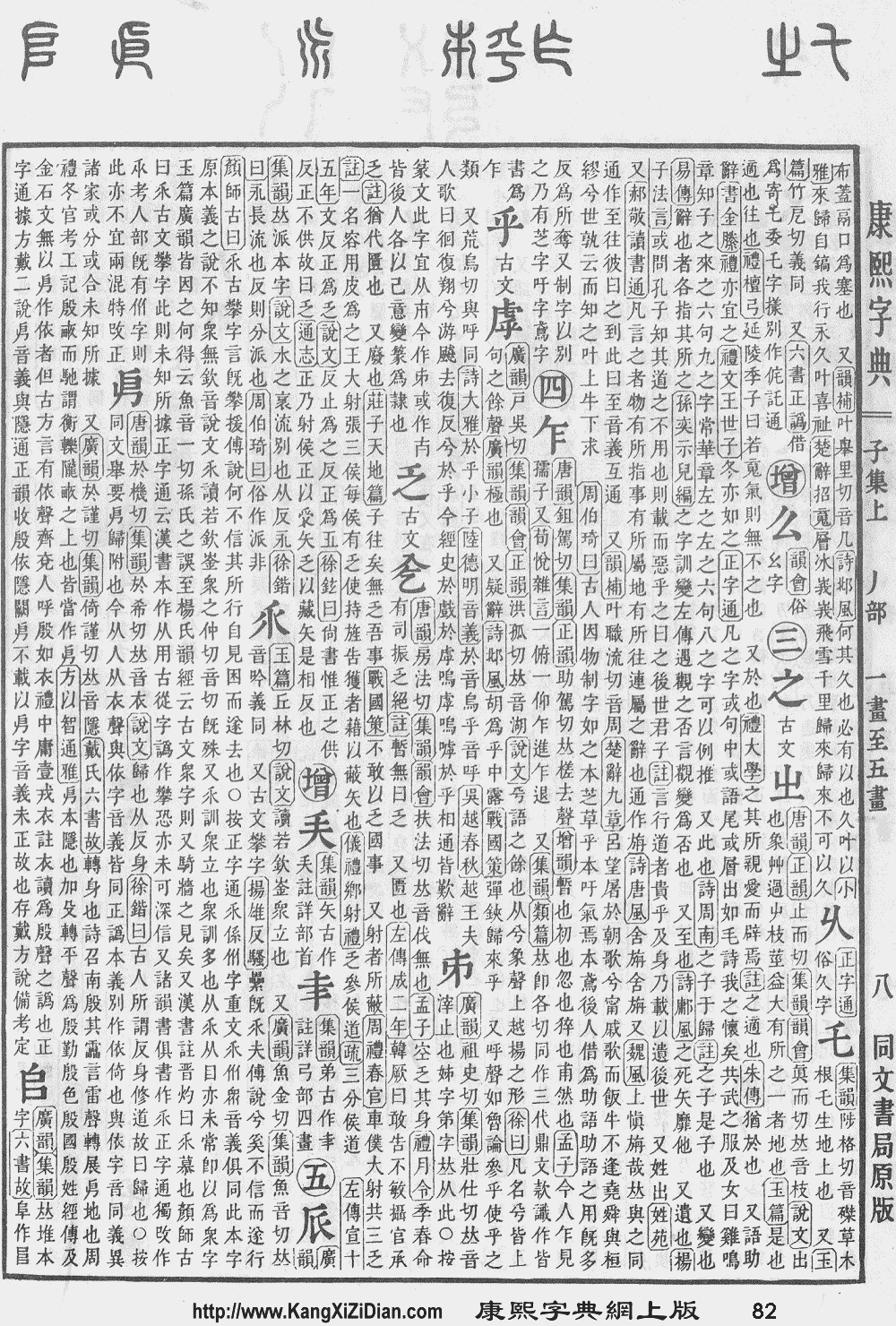
  • KangXi: page 82, character 10
  • Dai Kanwa Jiten: character 133
  • Hanyu Da Zidian (first edition): volume 1, page 34, character 3
  • Unihan data for U+4E4F

Chinese

simp. and trad.
乏
alternative forms 𠂜
𠓟
𣥄

Glyph origin

Historical forms of the character 乏


References:

Mostly from Richard Sears' Chinese Etymology site (authorisation),
which in turn draws data from various collections of ancient forms of Chinese characters, including:

  • Shuowen Jiezi (small seal),
  • Jinwen Bian (bronze inscriptions),
  • Liushutong (Liushutong characters) and
  • Yinxu Jiaguwen Bian (oracle bone script).

Possibly an ideogram (指事) generated by replacing uppermost stroke of 正 (“straight; right”) with a slanted stroke 丿 — not right; lacking.

According to Shuowen, an ideogram (指事) created from reversing 正 (“straight; right”). This is more evident in the Small Seal Script form.

Pronunciation


Note:
  • hoa̍t - literary;
  • ha̍t - vernacular.
    • (Teochew)
      • Peng'im: huag8 / huêg8 / hêg8 / hag8
      • Pe̍h-ōe-jī-like: hua̍k / hue̍k / he̍k / ha̍k
      • Sinological IPA (key): /huak̚⁴/, /huek̚⁴/, /hek̚⁴/, /hak̚⁴/
Note:
  • huag8/huêg8 - literary (huêg8 - Chaozhou);
  • hêg8 - vernacular (“tired”);
  • hag8 - vernacular (“to lack”).

Rime
Character 乏
Reading # 1/1
Initial (聲) 並 (3)
Final (韻) 凡 (148)
Tone (調) Checked (Ø)
Openness (開合) Closed
Division (等) III
Fanqie 房法切
Reconstructions
Zhengzhang
Shangfang
/bɨɐp̚/
Pan
Wuyun
/biɐp̚/
Shao
Rongfen
/biɐp̚/
Edwin
Pulleyblank
/buap̚/
Li
Rong
/biɐp̚/
Wang
Li
/bĭwɐp̚/
Bernard
Karlgren
/bʱi̯wɐp̚/
Expected
Mandarin
Reflex
fá
Expected
Cantonese
Reflex
faat6
Baxter–Sagart system 1.1 (2014)
Character 乏
Reading # 1/1
Modern
Beijing
(Pinyin)
fá
Middle
Chinese
‹ bjop ›
Old
Chinese
/*[b](r)[o]p/
English lack (v.)

Notes for Old Chinese notations in the Baxter–Sagart system:

* Parentheses "()" indicate uncertain presence;
* Square brackets "[]" indicate uncertain identity, e.g. *[t] as coda may in fact be *-t or *-p;
* Angle brackets "<>" indicate infix;
* Hyphen "-" indicates morpheme boundary;

* Period "." indicates syllable boundary.
Zhengzhang system (2003)
Character 乏
Reading # 1/1
No. 2852
Phonetic
component
乏
Rime
group
盍
Rime
subdivision
3
Corresponding
MC rime
乏
Old
Chinese
/*bob/

Definitions

乏

  1. to lack
    缺乏  ―  quēfá  ―  to lack; to be short of
  2. poor
    貧乏/贫乏  ―  pínfá  ―  poor
  3. tired
    疲乏  ―  pífá  ―  tired

Synonyms

Compounds

  • 不乏 (bùfá)
  • 不乏其人 (bùfáqírén)
  • 乏人
  • 乏倦
  • 乏味 (fáwèi)
  • 乏困 (fákùn)
  • 乏地
  • 乏手
  • 乏月
  • 乏桶
  • 乏煤
  • 乏用
  • 乏趣
  • 倦乏
  • 力乏兵衰
  • 力困筋乏
  • 困乏 (kùnfá)
  • 害乏
  • 家道消乏
  • 勞乏/劳乏
  • 匱乏/匮乏 (kuìfá)
  • 周急繼乏/周急继乏
  • 回天乏術/回天乏术
  • 回生乏術/回生乏术
  • 彈性疲乏/弹性疲乏
  • 後繼乏人/后继乏人
  • 後繼乏力/后继乏力
  • 振貧濟乏/振贫济乏
  • 疲乏強度/疲乏强度
  • 窮乏/穷乏 (qióngfá)
  • 絕乏/绝乏 (juéfá)
  • 謝乏/谢乏
  • 貧乏/贫乏 (pínfá)
  • 賑窮濟乏/赈穷济乏
  • 返魂乏術/返魂乏术 (fǎnhúnfáshù)
  • 銷乏/销乏
  • 闕乏/阙乏 (quēfá)
  • 養乏/养乏

References

Japanese

Kanji

乏

(common “Jōyō” kanji)

  1. poverty
  2. lack
  3. scarcity

Readings

Compounds

Korean

Etymology

From Middle Chinese 乏 (MC bɨɐp̚).

Hanja

乏 (eumhun 모자랄 핍 (mojaral pip))

  1. Hanja form? of 핍 (“lack”).

Compounds

References

  • 국제퇴계학회 대구경북지부 (國際退溪學會 大邱慶北支部) (2007). Digital Hanja Dictionary, 전자사전/電子字典.
  • Naver Hanja Dictionary: 乏

Vietnamese

Han character

乏: Hán Nôm readings: phạp, phạc

  1. This term needs a translation to English. Please help out and add a translation, then remove the text {{rfdef}}.
This article is issued from Wiktionary. The text is licensed under Creative Commons - Attribution - Sharealike. Additional terms may apply for the media files.