沒
See also: 没
| ||||||||
Translingual
| Stroke order | |||
|---|---|---|---|
 | |||
| Japanese | 没 |
|---|---|
| Simplified | 没 |
| Traditional | 沒 |
Han character
沒 (Kangxi radical 85, 水+4, 7 strokes, cangjie input 水弓水 (ENE), four-corner 37147, composition ⿰氵⿱勹又)
Related characters
- 没 (Japanese shinjitai and simplified Chinese)
- 𠬠 (Vietnamese chữ nôm)
References
- KangXi: page 611, character 10
- Dai Kanwa Jiten: character 17204
- Dae Jaweon: page 1004, character 3
- Hanyu Da Zidian (first edition): volume 3, page 1571, character 2
- Unihan data for U+6C92
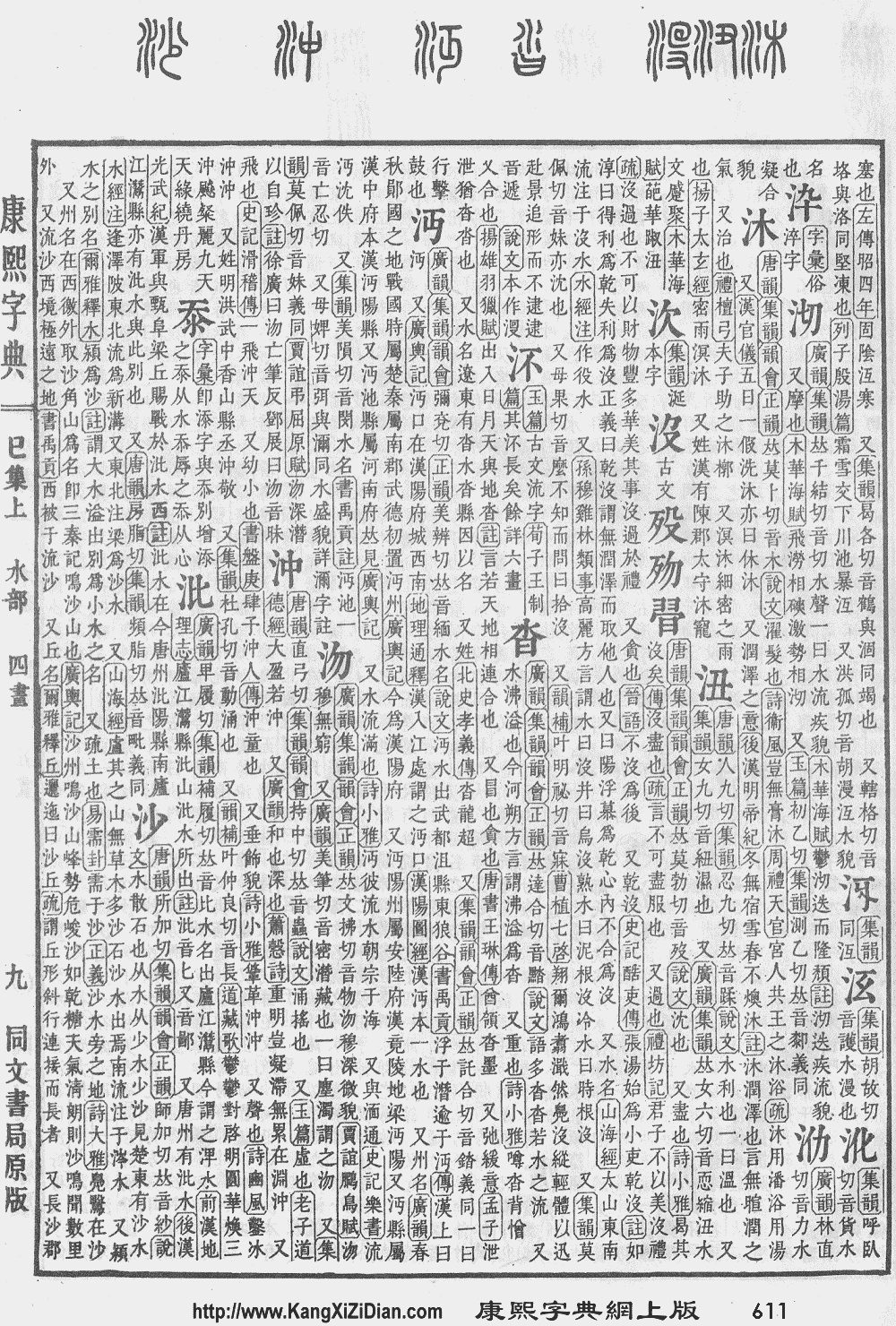
Chinese
Glyph origin
| Historical forms of the character 沒 | |
|---|---|
| Shuowen Jiezi (compiled in Han) | Liushutong (compiled in Ming) |
| Small seal script | Transcribed ancient scripts |
 |
 |
Phono-semantic compound (形聲, OC *mɯːd) : semantic 水 (“water”) + phonetic 𠬛 ().
Etymology 1
| trad. | 沒/没 | |
|---|---|---|
| simp. | 没 | |
| 2nd round simp. | 殳 | |
| alternative forms | ⿰氵𠬛 1981 2nd round simp. | |
Possibly a colloquial variant of 勿 (MC mɨut̚) or 未 (MC mʉiH), which fused with or was influenced by 有 (MC ɦɨuX); not derived from 沒 (OC *mɯːd, “to dive; to drown”) (Schuessler, 2007).
Pronunciation
Definitions
沒
Synonyms
Dialectal synonyms of 沒有 (“to not have (+ noun)”) [map]
Compounds
Derived terms from 沒
|
|
|
Etymology 2
| trad. | 沒/没 | |
|---|---|---|
| simp. | 没 | |
| alternative forms | 𣴬 𣳚 歿/殁 | |
According to Schuessler (2007), formed from the convergence of two etyma:
- Proto-Sino-Tibetan *mit (“to extinguish”). The i ~ u alternation is a common phenomenon in Sino-Tibetan.
- An etymon meaning "to dive", whence Burmese မြုပ် (mrup, “to sink; to be submerged”), which is a loan from Proto-Mon-Khmer *(b)ləp (“to immerse”) according to Shorto (1972).
Unrelated to etymology 1.
Pronunciation
Definitions
沒
- to drown; to sink; to submerge; to inundate
- to rise beyond; to cover; to overflow
- 照例到了冬天,野外全是灰黃色的枯草,又高又密,腳踏下去簌簌地響,有時沒到你的腿彎上。 [MSC, trad.]
- From: 1934 [2009], Mao Dun, in 方铭 (ed.), 茅盾散文选集, Tianjin: 百花文艺出版社, →ISBN, p. 115-118
- Zhàolì dào le dōngtiān, yěwài quán shì huī huáng sè de kūcǎo, yòu gāo yòu mì, jiǎo tà xiàqù sùsù dì xiǎng, yǒushí mò dào nǐ de tuǐwān shàng. [Pinyin]
- (please add an English translation of this example)
照例到了冬天,野外全是灰黄色的枯草,又高又密,脚踏下去簌簌地响,有时没到你的腿弯上。 [MSC, simp.]
- to end; to finish
- to disappear; to vanish
- to confiscate
- (literary) Alternative form of 歿/殁 (mò, “to die; to pass away”).
- 子曰:「父在,觀其志;父沒,觀其行;三年無改於父之道,可謂孝矣。」 [Classical Chinese, trad.]
- From: The Analects of Confucius, c. 475 – 221 BCE, translated based on James Legge's version
- Zǐ yuē: “Fù zài, guān qí zhì; fù mò, guān qí xíng; sān nián wú gǎi yú fù zhī dào, kěwèi xiào yǐ.” [Pinyin]
- The Master said, "While a man's father is alive, look at the bent of his will; when his father is dead, look at his conduct. If for three years he does not alter from the way of his father, he may be called filial."
子曰:“父在,观其志;父没,观其行;三年无改于父之道,可谓孝矣。” [Classical Chinese, simp.]
Compounds
Derived terms from 沒
Japanese
Korean
Vietnamese
This article is issued from Wiktionary. The text is licensed under Creative Commons - Attribution - Sharealike. Additional terms may apply for the media files.