瀾
See also: 澜
| ||||||||
Translingual
Han character
瀾 (Kangxi radical 85, 水+17, 20 strokes, cangjie input 水日弓田 (EANW), four-corner 37120, composition ⿰氵闌)
References
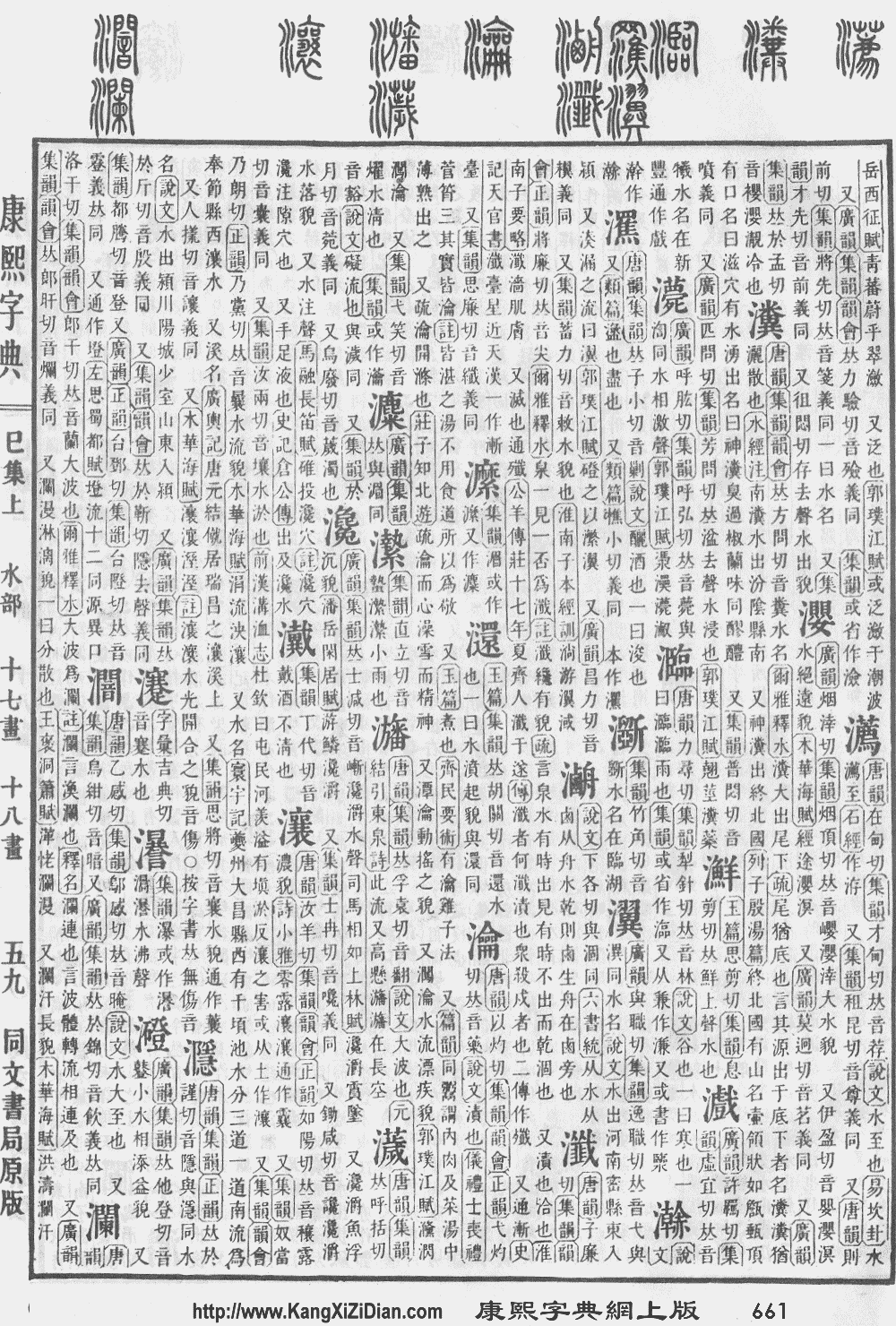
- KangXi: page 661, character 29
- Dai Kanwa Jiten: character 18722
- Dae Jaweon: page 1071, character 10
- Hanyu Da Zidian (first edition): volume 3, page 1790, character 9
- Unihan data for U+703E
Chinese
Glyph origin
| Historical forms of the character 瀾 |
|---|
| Shuowen Jiezi (compiled in Han) |
| Small seal script |
 |
Characters in the same phonetic series (柬) (Zhengzhang, 2003)
| Old Chinese | |
|---|---|
| 蘭 | *ɡ·raːn |
| 攔 | *ɡ·raːn |
| 欄 | *ɡ·raːn |
| 瀾 | *ɡ·raːn, *ɡ·raːns |
| 讕 | *ɡ·raːn, *ɡ·raːnʔ, *ɡ·raːns |
| 闌 | *ɡ·raːn |
| 韊 | *ɡ·raːn |
| 幱 | *ɡ·raːn |
| 籣 | *ɡ·raːn |
| 躝 | *ɡ·raːn |
| 爛 | *ɡ·raːns |
| 爤 | *ɡ·raːns |
| 鑭 | *ɡ·raːns |
| 糷 | *ɡ·raːns |
| 斕 | *ɡ·reːn |
| 揀 | *kreːnʔ, *ɡ·reːns |
| 柬 | *kreːnʔ |
| 暕 | *kreːnʔ |
| 諫 | *kraːns |
| 練 | *ɡ·reːns |
| 鍊 | *ɡ·reːns |
| 煉 | *ɡ·reːns |
| 楝 | *ɡ·reːns |
| 萰 | *ɡ·reːns |
| 堜 | *ɡ·reːns |
| 湅 | *ɡ·reːns |
Phono-semantic compound (形聲, OC *ɡ·raːn, *ɡ·raːns) : semantic 氵 (“water”) + phonetic 闌 (OC *ɡ·raːn).
Etymology 1
| trad. | 瀾 | |
|---|---|---|
| simp. | 澜 | |
| 2nd round simp. | 㳕 | |
| alternative forms | 灡/𬉠 | |
浪 (làng, “wave”) may be a colloquial variant. Phonetically too distant to be related to Thai คลื่น (klʉ̂ʉn, “wave”) (Schuessler, 2007).
Pronunciation
Definitions
瀾
Compounds
Etymology 2
| trad. | 瀾 | |
|---|---|---|
| simp. | 澜 | |
| 2nd round simp. | 㳕 | |
Pronunciation
Etymology 3
| trad. | 瀾 | |
|---|---|---|
| simp. | 澜 | |
| alternative forms | 涎 灠/𰜐 漤 潾 㘓/𪢌 | |
A dialectal variant of 涎 (OC *ljan, “saliva”) in the South (Schuessler, 2007; Xu and Iwata, 2014).
Pronunciation
Synonyms
Dialectal synonyms of 口水 (“saliva; drool”) [map]
References
- “瀾”, in 漢語多功能字庫 (Multi-function Chinese Character Database), 香港中文大學 (the Chinese University of Hong Kong), 2014–
- “Entry #13003”, in 臺灣閩南語常用詞辭典 [Dictionary of Frequently-Used Taiwan Minnan] (in Chinese and Min Nan), Ministry of Education, R.O.C., 2011.
Japanese
Korean
Etymology
From Middle Chinese 瀾 (MC lɑn, lɑnH). Recorded as Middle Korean 란 (lan) (Yale: lan) in Hunmong Jahoe (訓蒙字會 / 훈몽자회), 1527.
Vietnamese
Han character
- This term needs a translation to English. Please help out and add a translation, then remove the text
{{rfdef}}.
Readings
- Nôm: lan, tràn
References
- Thiều Chửu : Hán Việt Tự Điển Hà Nội 1942
- Trần Văn Chánh: Từ Điển Hán Việt NXB Trẻ, Ho Chi Minh Ville, 1999
- Vũ Văn Kính: Đại Tự Điển Chữ Nôm, NXB Văn Nghệ, Ho Chi Minh Ville, 1999
This article is issued from Wiktionary. The text is licensed under Creative Commons - Attribution - Sharealike. Additional terms may apply for the media files.