熏

See also: 燻, 爋, and 薰
熏 U+718F, 熏
CJK UNIFIED IDEOGRAPH-718F
← 熎
[U+718E]
CJK Unified Ideographs 熐 →
[U+7190]

Translingual

Han character

熏 (Kangxi radical 86, 火+10, 14 strokes, cangjie input 竹土火 (HGF), four-corner 20331)

Derived characters

References

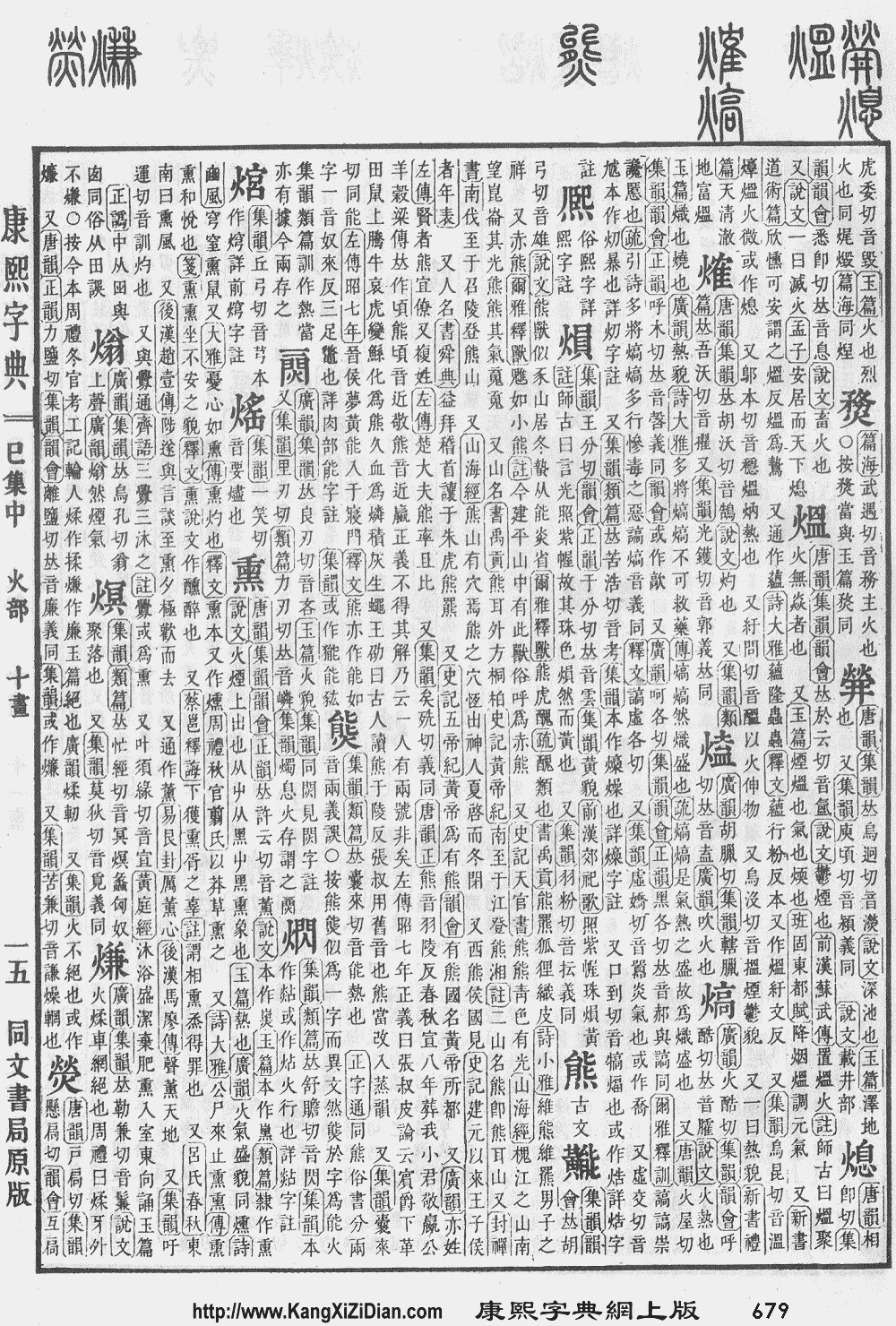
  • KangXi: page 679, character 17
  • Dai Kanwa Jiten: character 19300
  • Dae Jaweon: page 1091, character 3
  • Hanyu Da Zidian (first edition): volume 3, page 2226, character 10
  • Unihan data for U+718F

Chinese

simp. and trad.
熏
alternative forms 燻
爋
𤑕
煇

Glyph origin

Historical forms of the character 熏
Western Zhou Shuowen Jiezi (compiled in Han) Liushutong (compiled in Ming)
Bronze inscriptions Small seal script Transcribed ancient scripts

Etymology 1

From Proto-Sino-Tibetan *kəw-n/t (“smoke”). Compare also 葷 (OC *qʰun, “smelling vegetables”).

Pronunciation


Note:
  • hung1 - Chaozhou, Shantou, Chenghai;
  • hang1 - Jieyang, Pontianak.

Rime
Character 熏
Reading # 1/1
Initial (聲) 曉 (32)
Final (韻) 文 (59)
Tone (調) Level (Ø)
Openness (開合) Closed
Division (等) III
Fanqie 許云切
Reconstructions
Zhengzhang
Shangfang
/hɨun/
Pan
Wuyun
/hiun/
Shao
Rongfen
/xiuən/
Edwin
Pulleyblank
/hun/
Li
Rong
/xiuən/
Wang
Li
/xĭuən/
Bernard
Karlgren
/xi̯uən/
Expected
Mandarin
Reflex
xūn
Expected
Cantonese
Reflex
fan1
Baxter–Sagart system 1.1 (2014)
Character 熏
Reading # 1/1
Modern
Beijing
(Pinyin)
xūn
Middle
Chinese
‹ xjun ›
Old
Chinese
/*qʰu[n]/
English smoke (v.); vapor, odor

Notes for Old Chinese notations in the Baxter–Sagart system:

* Parentheses "()" indicate uncertain presence;
* Square brackets "[]" indicate uncertain identity, e.g. *[t] as coda may in fact be *-t or *-p;
* Angle brackets "<>" indicate infix;
* Hyphen "-" indicates morpheme boundary;

* Period "." indicates syllable boundary.
Zhengzhang system (2003)
Character 熏
Reading # 1/1
No. 14110
Phonetic
component
熏
Rime
group
文
Rime
subdivision
2
Corresponding
MC rime
薰
Old
Chinese
/*qʰun/
Notes 金文象香囊,或加火表薰香

Definitions

熏

  1. smoke; fog
  2. warm (used in 熏風)
  3. to smoke (same as 薰); to cure meat (same as 燻)
  4. to infuse tea with scented flowers (same as 窨)
  5. a surname: Xun

Compounds

  • 熏熏
  • 熏肉
  • 熏腐
  • 熏蒸
  • 熏陶
  • 熏香
  • 氣勢熏灼/气势熏灼
  • 氣焰熏天/气焰熏天
  • 煙熏火燎/烟熏火燎
  • 熏籠/熏笼
  • 熏習/熏习
  • 熏草紙/熏草纸
  • 熏製/熏制
  • 熏鑪/熏𬬻
  • 熏風/熏风 (xūnfēng)
  • 眾口熏天/众口熏天
  • 錦熏籠/锦熏笼

Pronunciation


Definitions

熏

  1. suffocation due to coal gas

Japanese

Kanji

熏

(uncommon “Hyōgai” kanji)

  1. smoke
  2. darken

Readings

  • On (unclassified): くん (kun)
  • Kun: ふすべる (fusuberu), くすべる (kusuberu)

Korean

Hanja

熏 • (hun) (hangeul 훈, revised hun, McCune–Reischauer hun, Yale hwun)

  1. This term needs a translation to English. Please help out and add a translation, then remove the text {{rfdef}}.

Vietnamese

Han character

熏: Hán Nôm readings: hun, huân

  1. This term needs a translation to English. Please help out and add a translation, then remove the text {{rfdef}}.
This article is issued from Wiktionary. The text is licensed under Creative Commons - Attribution - Sharealike. Additional terms may apply for the media files.