薰
See also: 薫
| ||||||||
Translingual
Han character
薰 (Kangxi radical 140, 艸+14, 20 strokes, cangjie input 廿竹土火 (THGF), four-corner 44331, composition ⿱艹熏)
References
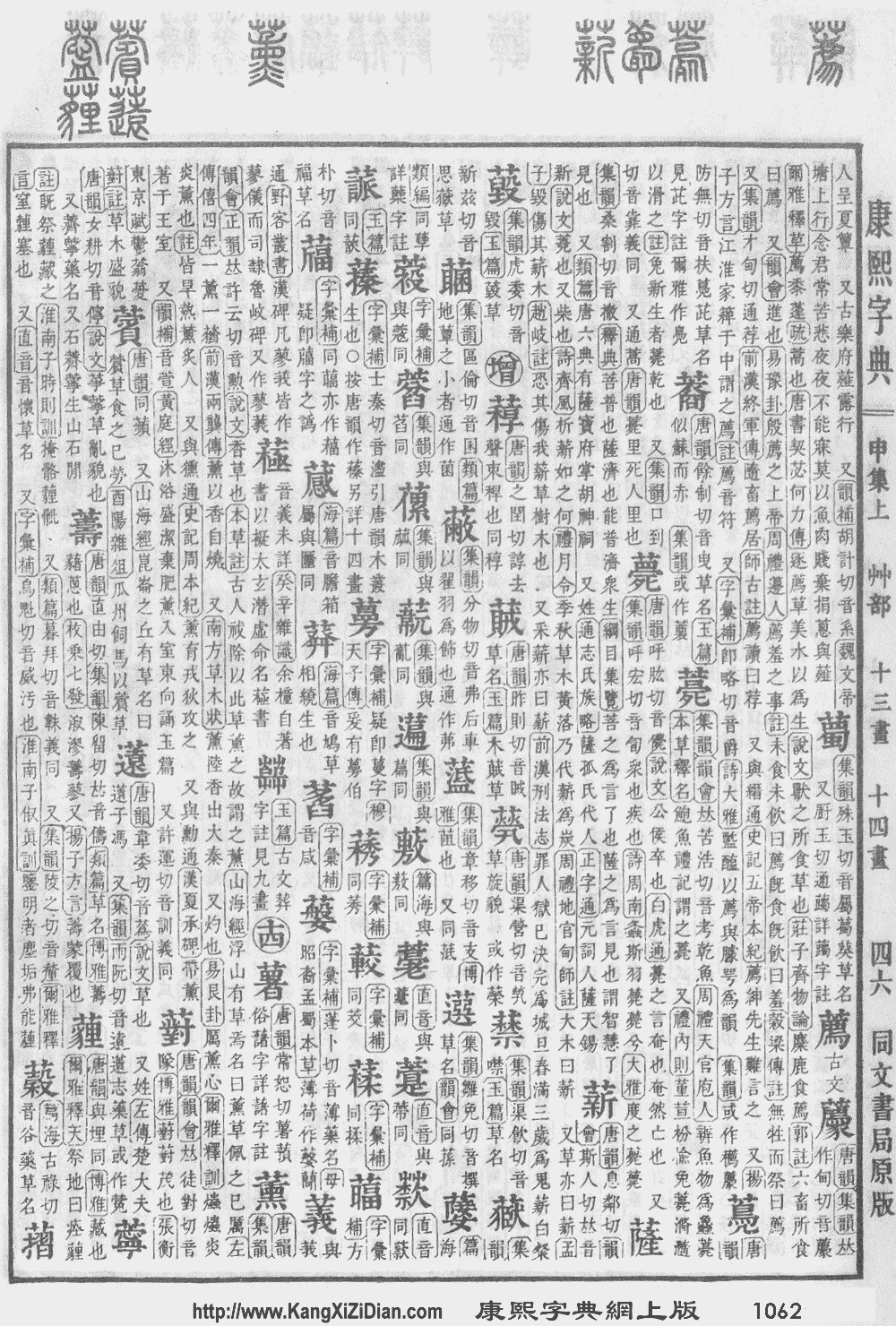
- KangXi: page 1062, character 46
- Dai Kanwa Jiten: character 32192
- Dae Jaweon: page 1527, character 23
- Hanyu Da Zidian (first edition): volume 5, page 3313, character 14
- Unihan data for U+85B0
Chinese
| trad. | 薰 | |
|---|---|---|
| simp. # | 薰 | |
| alternative forms | 薫 蘍 | |
Glyph origin
Characters in the same phonetic series (熏) (Zhengzhang, 2003)
Phono-semantic compound (形聲, OC *qʰun, *qʰuns) : semantic 艹 + phonetic 熏 (OC *qʰun).
Pronunciation
Definitions
薰
- fragrance of flowers
- coumarou, tonka bean
- (Min) cigarette; smoke (Classifier: 支 mn)
- 我已經決定欲做一个善良的歹囝 薰莫閣食酒袂閣焦 [Taiwanese Hokkien, trad.]
- From: 2018, 茄子蛋 (EggPlantEgg), 《浪流連》 (“Waves Wandering”)
- Góa í-keng koat-tēng beh chòe chi̍t ê siān-liông ê pháiⁿ-kiáⁿ, Hun mài koh chia̍h chiú bōe koh ta [Pe̍h-ōe-jī]
- I have decided to be a good-hearted hooligan, no more smoking or drinking again.
我已经决定欲做一个善良的歹囝 薰莫阁食酒袂阁焦 [Taiwanese Hokkien, simp.]
- to smoke
- See also: 熏
- to cauterize
Synonyms
Dialectal synonyms of 香煙 (“cigarette”) [map]
Korean
Hanja
薰 • (hun) (hangeul 훈, revised hun, McCune–Reischauer hun, Yale hwun)
- This term needs a translation to English. Please help out and add a translation, then remove the text
{{rfdef}}.
Vietnamese
Han character
薰: Hán Nôm readings: huân
- This term needs a translation to English. Please help out and add a translation, then remove the text
{{rfdef}}.
This article is issued from Wiktionary. The text is licensed under Creative Commons - Attribution - Sharealike. Additional terms may apply for the media files.