緡
See also: 缗
| ||||||||
Translingual
Han character
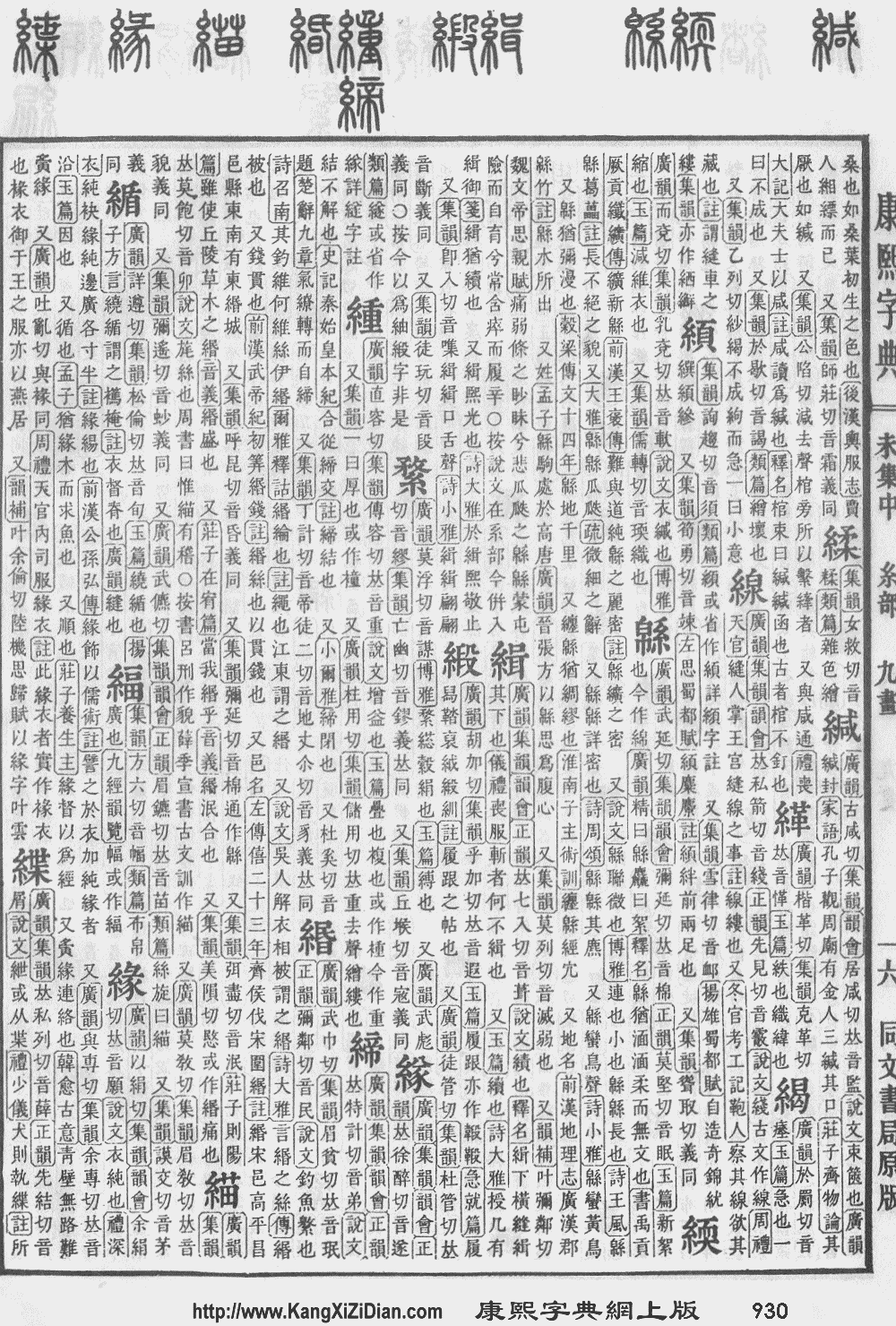
緡 (Kangxi radical 120, 糸+9, 15 strokes, cangjie input 女火口心日 (VFRPA), four-corner 27964, composition ⿰糹昬)
- fishing-line
- cord
- string of coins
References
- KangXi: page 930, character 15
- Dai Kanwa Jiten: character 27652
- Dae Jaweon: page 1368, character 14
- Hanyu Da Zidian (first edition): volume 5, page 3432, character 3
- Unihan data for U+7DE1
Chinese
| trad. | 緡 | |
|---|---|---|
| simp. | 缗 | |
| alternative forms | 緍/𦈏 | |
Glyph origin
Pronunciation 1
Definitions
緡
- (archaic) fishing line
- (archaic) cord for stringing coins
- (literary) string of coins; money
- (archaic) Classifier for a string of money, equals to 1000 文 (wén).
- 初算緡錢。 [Classical Chinese, trad.]
- From: The Book of Han, circa 1st century CE
- Chū suàn mín qián. [Pinyin]
- (Emperor Wu of Han) started the levying of the "1000 wén" tax.
初算缗钱。 [Classical Chinese, simp.]
- (historical) Name of a country at the northeast of what is now Jinxiang county, Shandong province.
- (dialectal, obsolete) to apply; to cover
- 緡、緜,施也。秦曰緡,趙曰緜,吴、越之間脱衣相被謂之緡緜。 [Classical Chinese, trad.]
- From: Yang Xiong, Fangyan, c. 1st century BCE
- Mín, mián, shī yě. Qín yuē mín, zhào yuē mián, wú, yuè zhījiān tuōyī xiàng bèi wèi zhī mínmián. [Pinyin]
- Both mín and mián signify to apply—mín is used in the Qin region, and mián in Zhao. In Wu and Yue, mínmián refers to the act of taking off one's clothes and covering something with it.
缗、绵,施也。秦曰缗,赵曰绵,吴、越之间脱衣相被谓之缗绵。 [Classical Chinese, simp.]
- a surname
Pronunciation 2
| For pronunciation and definitions of 緡 – see 緜 (“silk floss; to continue; to be continuous; etc.”). (This character, 緡, is a variant form of 緜.) |
Pronunciation 3
| For pronunciation and definitions of 緡 – see 愍 (“pity, sympathize with”). (This character, 緡, is a variant form of 愍.) |
Japanese
Kanji
緡
- This term needs a translation to English. Please help out and add a translation, then remove the text
{{rfdef}}.
Korean
Hanja
緡 • (min) (hangeul 민, revised min, McCune–Reischauer min, Yale min)
- This term needs a translation to English. Please help out and add a translation, then remove the text
{{rfdef}}.
This article is issued from Wiktionary. The text is licensed under Creative Commons - Attribution - Sharealike. Additional terms may apply for the media files.