豫
See also: 予
| ||||||||
Translingual
| Japanese | 予 |
|---|---|
| Simplified | 豫 |
| Traditional | 豫 |
Han character
豫 (Kangxi radical 152, 豕+9, 16 strokes, cangjie input 弓弓弓日人 (NNNAO), four-corner 17232, composition ⿰予象)
References
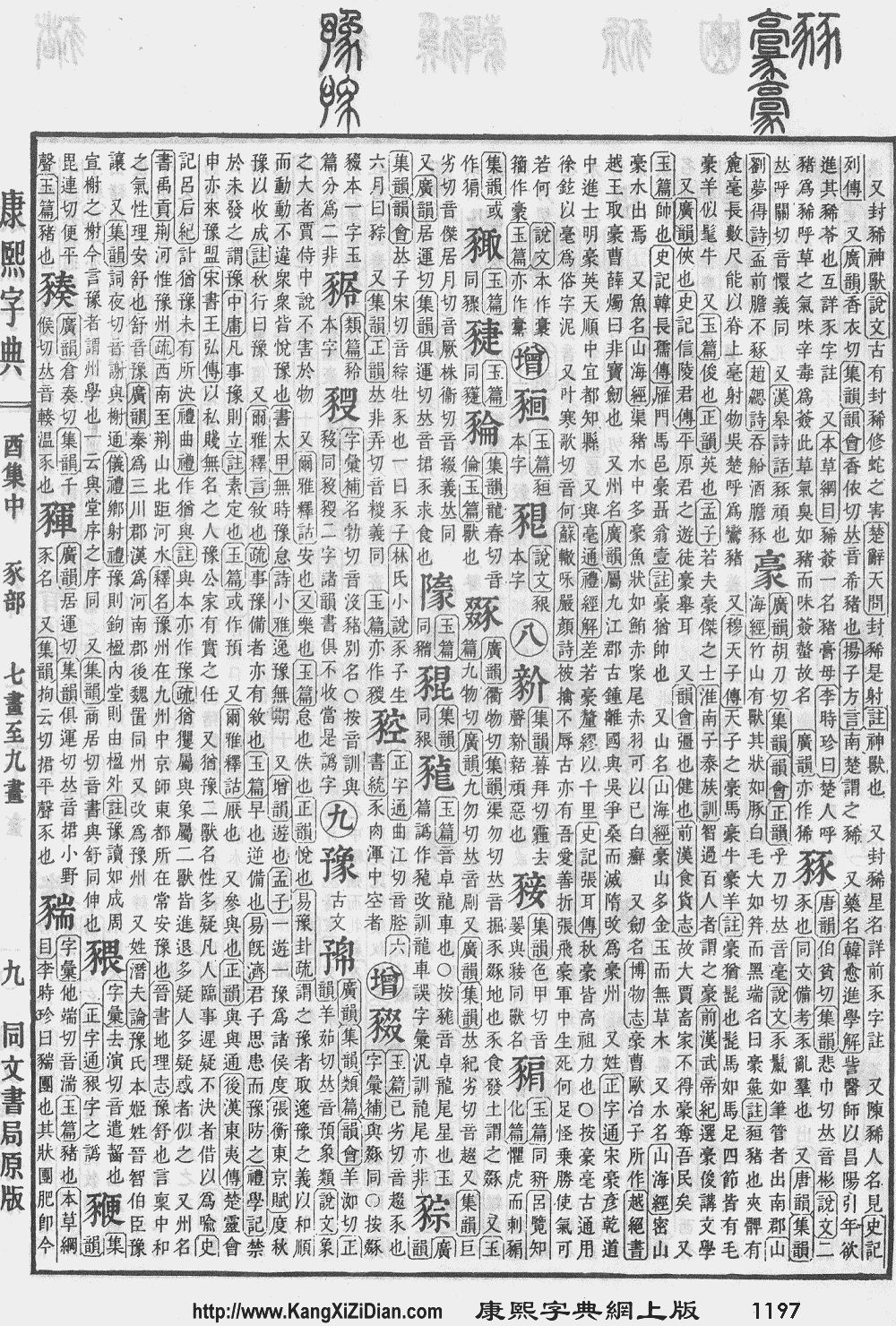
- KangXi: page 1197, character 20
- Dai Kanwa Jiten: character 36425
- Dae Jaweon: page 1659, character 20
- Hanyu Da Zidian (first edition): volume 6, page 3617, character 7
- Unihan data for U+8C6B
Chinese
| trad. | 豫 | |
|---|---|---|
| simp. # | 豫 | |
| 2nd round simp. | 予 | |
Glyph origin
Pronunciation
Definitions
豫
- Used in 猶豫/犹豫 (yóuyù).
- † relaxed; comfortable; at ease
- † content and happy
- 16th hexagram of the I Ching
- Short for 河南 (Hénán).
- † Alternative form of 預/预 (“to prevent, to take precautions”).
- (archaic) to speculate (to profit from artificially inflated prices); to manipulate the market; to engage in price gouging
- 商通物而不豫,工致牢而不偽。 [Classical Chinese, trad.]
- From: Huan Kuan (桓寬), editor, p. 73 BCE, Discourses on Salt and Iron (《鹽鐵論》).
- Shāng tōng wù ér bù yù, gōng zhì láo ér bù wěi. [Pinyin]
- Merchants made the goods flow and did not speculate; artisans commanded a firm income without resorting to cheating.
商通物而不豫,工致牢而不伪。 [Classical Chinese, simp.]
Japanese
| 予 | |
| 豫 |
Kanji
豫
(uncommon “Hyōgai” kanji, kyūjitai kanji, shinjitai form 予)
- In modern Japanese 予 is used instead.
Korean
Hanja
豫 • (ye) (hangeul 예, revised ye, McCune–Reischauer ye, Yale yey)
- This term needs a translation to English. Please help out and add a translation, then remove the text
{{rfdef}}.
Vietnamese
This article is issued from Wiktionary. The text is licensed under Creative Commons - Attribution - Sharealike. Additional terms may apply for the media files.