野
| ||||||||
Translingual
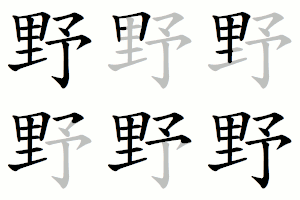
| Stroke order | |||
|---|---|---|---|
 | |||
Han character
野 (Kangxi radical 166, 里+4, 11 strokes, cangjie input 田土弓戈弓 (WGNIN), four-corner 67122, composition ⿰里予)
References
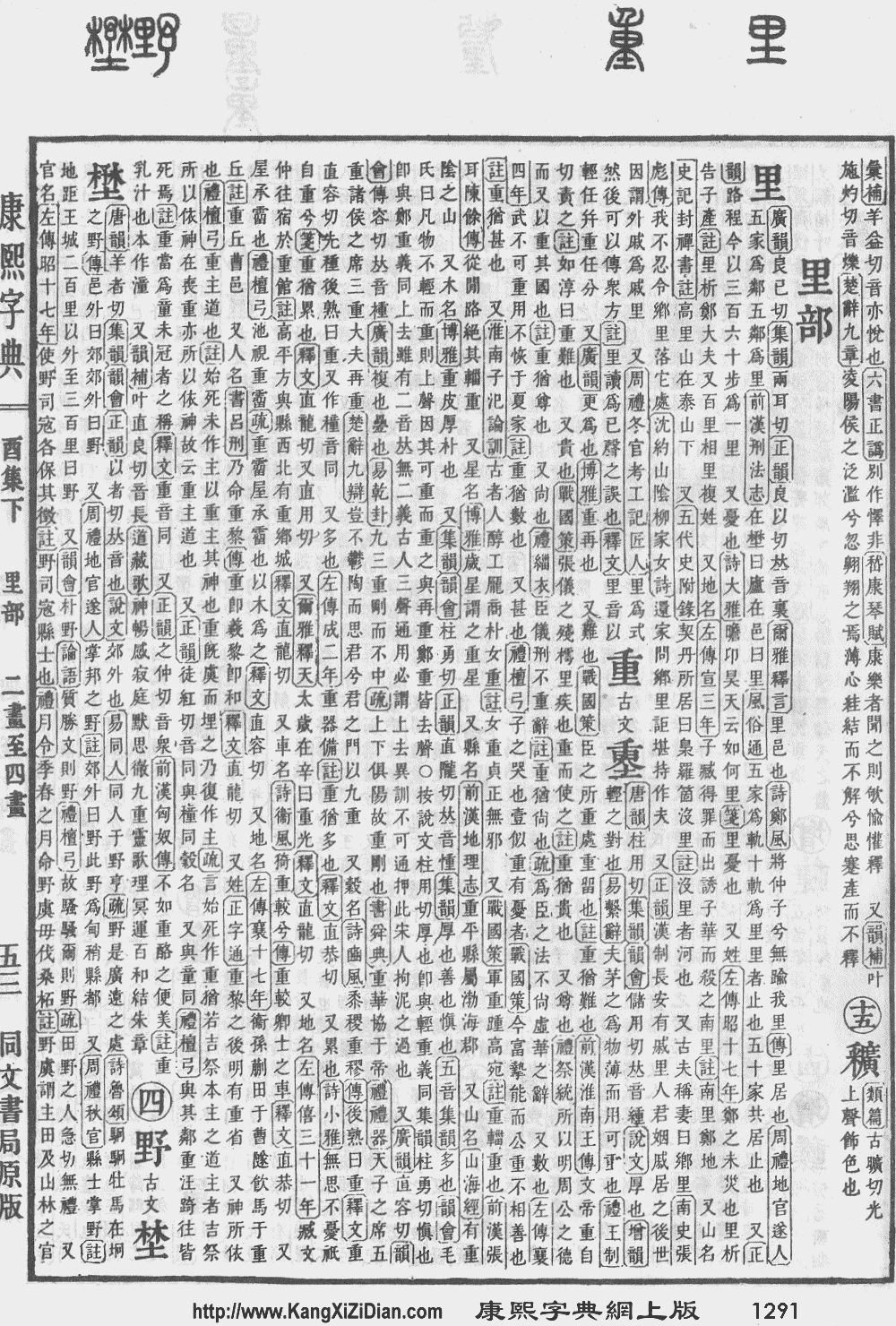
- KangXi: page 1291, character 5
- Dai Kanwa Jiten: character 40133
- Dae Jaweon: page 1793, character 2
- Hanyu Da Zidian (first edition): volume 6, page 3683, character 1
- Unihan data for U+91CE
Chinese
| simp. and trad. |
野 | |
|---|---|---|
| alternative forms | ||
Glyph origin
Phono-semantic compound (形聲, OC *laːʔ, *ɦljaʔ) : semantic 田 (“field”) + semantic 土 (“earth”) + phonetic 予 (OC *la, *laʔ).
Etymology 1
Various etymologies have been proposed:
- From a hypothetical common Sino-Tibetan *la (“area far from settlements; wilderness”): compare Tibetan ལ (la, “mountain pass; hillside; mountainslope”) (Schuessler, 2007);
- Related to Proto-Mon-Khmer *laʔ (“to spread, extend”): compare Khmer លា (liə, “to unfold, spread, open out”) (Schuessler, 2007);
- From a Sino-Tibetan root meaning “hut; pantry”: compare Tibetan ལྷས (lhas, “pen; fold; cattle enclosure”) (Starostin).
Pronunciation
Definitions
野
- countryside; field; outskirts; wilderness
- plain; open country; open space
- area; region; boundary
- (among) the people; not in power; out of office
- unadorned; unaffected; simple; plain
- wild; not domesticated; stray
- feral; untamed; unrestrained
- rough; coarse; violent; boorish; rude
- unofficial; informal; illegal
- (literary or Min Dong, Xiamen and Quanzhou Hokkien, Wu) very; quite
- a surname
Synonyms
Compounds
|
|
|
Pronunciation
Etymology 3
| For pronunciation and definitions of 野 – see 嘢 (“thing; matter; stuff; etc.”). (This character, 野, is a variant form of 嘢.) |
References
- “野”, in 漢語多功能字庫 (Multi-function Chinese Character Database), 香港中文大學 (the Chinese University of Hong Kong), 2014–
- Dictionary of Chinese Character Variants (教育部異體字字典), A04258
Japanese
Readings
- Go-on: や (ya, Jōyō)
- Kan-on: や (ya, Jōyō)
- Kun: の (no, 野, Jōyō); いなかや (inakaya, 野); いやしい (iyashī, 野しい)
- Nanori: とお (tō)←とほ (tofo, historical); なお (nao)←なほ (nafo, historical); ひろ (hiro)
As the original form of 墅:
- Go-on: じょ (jo)←じよ (zyo, historical)
- Kan-on: しょ (sho)←しよ (syo, historical)
Noun
野 • (no)
Idioms
- 野に置く (no ni oku)
Proverbs
- 野暮れ山暮れ (no kure yama kure)
- 野に伏し山に伏す (no ni fushi yama ni fusu)
- 後は野となれ山となれ (ato wa no to nare yama to nare)
Affix
野 • (ya)
Noun
野 • (ya)
Idioms
- 野に遺賢無し (ya ni iken nashi)
- 野に下る (ya ni kudaru)
Inflection
| Stem forms | ||||
|---|---|---|---|---|
| Irrealis (未然形) | 野なら | やなら | yanara | |
| Continuative (連用形) | 野に[1] 野なり[2] | やに やなり | yani yanari | |
| Terminal (終止形) | 野なり | やなり | yanari | |
| Attributive (連体形) | 野なる | やなる | yanaru | |
| Realis (已然形) | 野なれ | やなれ | yanare | |
| Imperative (命令形) | 野なれ | やなれ | yanare | |
| Key constructions | ||||
| Negative | 野ならず | やならず | yanarazu | |
| Contrasting conjunction | 野なれど | やなれど | yanaredo | |
| Causal conjunction | 野なれば | やなれば | yanareba | |
| Conditional conjunction | 野ならば | やならば | yanaraba | |
| Past tense (firsthand knowledge) | 野なりき | やなりき | yanariki | |
| Past tense (secondhand knowledge) | 野なりけり | やなりけり | yanarikeri | |
| Adverbial | 野に | やに | yani | |
| [1]Without auxiliary verb. [2]With auxiliary verb. | ||||
Korean
Alternative forms
Etymology
From Middle Chinese 野 (MC jiaX).
| Historical Readings | ||
|---|---|---|
| Dongguk Jeongun Reading | ||
| Dongguk Jeongun, 1448 | 양〯 (Yale: yǎ) | |
| Middle Korean | ||
| Text | Eumhun | |
| Gloss (hun) | Reading | |
| Hunmong Jahoe, 1527 | ᄆᆡ〮 (Yale: móy) | 야〯 (Yale: yǎ) |
Pronunciation
- (SK Standard/Seoul) IPA(key): [ja̠(ː)]
- Phonetic hangul: [야(ː)]
- Though still prescribed in Standard Korean, most speakers in both Koreas no longer distinguish vowel length.
Compounds
Old Japanese
Etymology 1
From Proto-Japonic *no.
Pronunciation appears to be distinct from の (no2, possessive and case-marker particle).
Derived terms
- 野つ鳥 (no1 tu to2ri, pillow word)
- 野守 (no1mori)
- 毛野 (Ke1no1)
- 小野 (wono1)
Descendants
- Japanese: 野 (no)
Etymology 2
The second sense is based on 国学 (kokugaku) scholars' reading of man'yōgana 努, 怒, 弩, etc. as ⟨nu⟩ instead of ⟨no1⟩ before regional differences in Old Japanese terms of were discovered.
Noun
野 (nu) (kana ぬ)
- (regional, Eastern Old Japanese) an area, field
- Misspelling of 野 (no1), from the view of an Edo-period scholar of the Man'yōshū and other Old Japanese literature
Derived terms
- 毛野 (Ke1nu)
Vietnamese
Han character
野: Hán Việt readings: dã (
野: Nôm readings: dã[2][4][6], nhả[1][2], rã[1]
References
- Nguyễn (2014).
- Nguyễn et al. (2009).
- Trần (2004).
- Bonet (1899).
- Génibrel (1898).
- Taberd & Pigneau de Béhaine (1838).