冓

See also: 黃, 黄, 再, and 爯
冓 U+5193, 冓
CJK UNIFIED IDEOGRAPH-5193
← 冒
[U+5192]
CJK Unified Ideographs 冔 →
[U+5194]

Translingual

Han character

冓 (Kangxi radical 13, 冂+8, 10 strokes, cangjie input 廿廿土月 (TTGB), four-corner 55557, composition ⿱𠀎冉)

Derived characters

Further reading

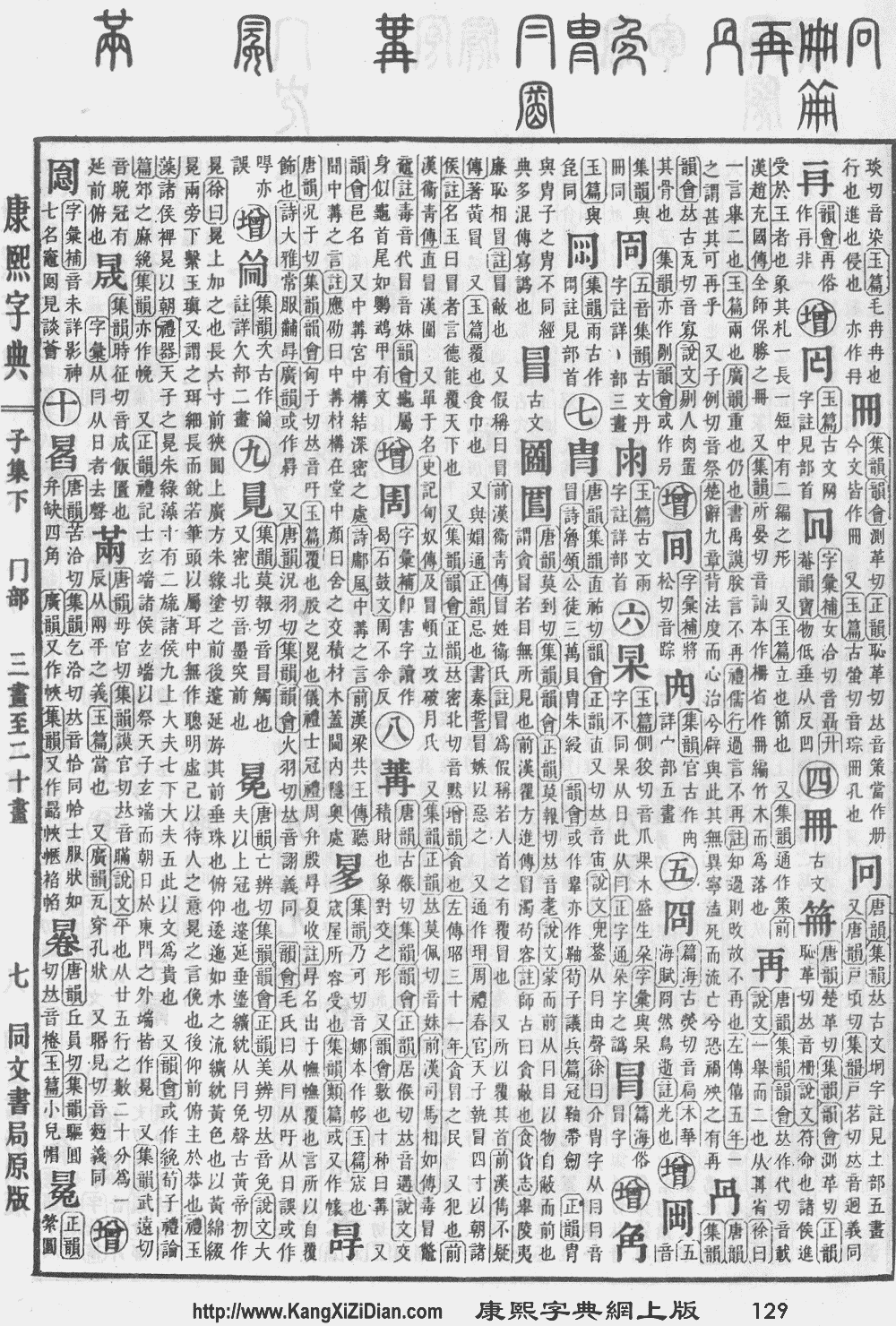
  • KangXi: page 129, character 25
  • Dai Kanwa Jiten: character 1540
  • Dae Jaweon: page 291, character 16
  • Hanyu Da Zidian (first edition): volume 1, page 100, character 17
  • Unihan data for U+5193

Chinese

simp. and trad.
冓

Glyph origin

Historical forms of the character 冓
Shang Western Zhou Shuowen Jiezi (compiled in Han)
Oracle bone script Bronze inscriptions Small seal script

Ideogrammic compound (會意) – two fish (魚) with their mouths facing each other – original script of 遘 (OC *koːs, *koːs, “to meet; to encounter”).

The erroneous interpretation of "crossly accumulated woods" given in Shuowen is a result of the corruption of the form of the character after Western Zhou.

Pronunciation


Rime
Character 冓
Reading # 2/2
Initial (聲) 見 (28)
Final (韻) 侯 (137)
Tone (調) Departing (H)
Openness (開合) Open
Division (等) I
Fanqie 古候切
Reconstructions
Zhengzhang
Shangfang
/kəuH/
Pan
Wuyun
/kəuH/
Shao
Rongfen
/kəuH/
Edwin
Pulleyblank
/kəwH/
Li
Rong
/kuH/
Wang
Li
/kəuH/
Bernard
Karlgren
/kə̯uH/
Expected
Mandarin
Reflex
gòu
Expected
Cantonese
Reflex
gau3
Baxter–Sagart system 1.1 (2014)
Character 冓
Reading # 1/1
Modern
Beijing
(Pinyin)
gòu
Middle
Chinese
‹ kuwH ›
Old
Chinese
/*kˁ(r)o-s/
English 中冓 inner chamber

Notes for Old Chinese notations in the Baxter–Sagart system:

* Parentheses "()" indicate uncertain presence;
* Square brackets "[]" indicate uncertain identity, e.g. *[t] as coda may in fact be *-t or *-p;
* Angle brackets "<>" indicate infix;
* Hyphen "-" indicates morpheme boundary;

* Period "." indicates syllable boundary.
Zhengzhang system (2003)
Character 冓
Reading # 2/2
No. 4196
Phonetic
component
冓
Rime
group
侯
Rime
subdivision
0
Corresponding
MC rime
遘
Old
Chinese
/*koːs/

Definitions

冓

  1. † Original form of 遘 (gòu, “to meet”).
  2. ‡ crossly accumulated woods
  3. Used in 內冓/内冓 (“inner chamber”).

Pronunciation


Rime
Character 冓
Reading # 1/2
Initial (聲) 見 (28)
Final (韻) 侯 (137)
Tone (調) Level (Ø)
Openness (開合) Open
Division (等) I
Fanqie 古侯切
Reconstructions
Zhengzhang
Shangfang
/kəu/
Pan
Wuyun
/kəu/
Shao
Rongfen
/kəu/
Edwin
Pulleyblank
/kəw/
Li
Rong
/ku/
Wang
Li
/kəu/
Bernard
Karlgren
/kə̯u/
Expected
Mandarin
Reflex
gōu
Expected
Cantonese
Reflex
gau1
Zhengzhang system (2003)
Character 冓
Reading # 1/2
No. 4190
Phonetic
component
冓
Rime
group
侯
Rime
subdivision
0
Corresponding
MC rime
鉤
Old
Chinese
/*koː/

Definitions

冓

  1. Alternative form of 溝/沟 (gōu, “a numeral that refers to 1032 or others”).

References

Japanese

Kanji

冓

(uncommon “Hyōgai” kanji)

  1. To combine, to join up, to join together, to dovetail together.

Readings

  • On (unclassified): こう (kō)
  • Kun: くむ (kumu); くみあわす (kumiawasu); かまえる (kamaeru)

Korean

Hanja

冓 (eum 구 (gu))

  1. This term needs a translation to English. Please help out and add a translation, then remove the text {{rfdef}}.

Vietnamese

Han character

冓: Hán Nôm readings: cấu

  1. This term needs a translation to English. Please help out and add a translation, then remove the text {{rfdef}}.
This article is issued from Wiktionary. The text is licensed under Creative Commons - Attribution - Sharealike. Additional terms may apply for the media files.